What sets these appliances apart?
The right format depends first on how much space your fresh and frozen portions take up, and then on how much room you have for the appliance. If you’re adding a freezer to an existing fridge, remember that you’ll have a second appliance running all the time.
Fridge-freezer
Consider this if: you need fresh and frozen storage in one appliance.
The trade-off: check the freezer capacity separately from the total capacity.
Small freezer compartment
Consider this if: you keep most of your meals chilled and only freeze a few portions at a time.
The trade-off: a small freezer compartment is less suited to storing large batches.
Upright freezer as an extra
Consider this if: you’re happy with your fridge but want to organise more frozen portions in drawers.
The trade-off: you’ll need to install and power a second appliance.
Chest freezer as an extra
Consider this if: you store large batches and have a dedicated floor space for the appliance.
The trade-off: you’ll need to organise the portions in the open compartment so you can reach those at the bottom.
| Criteria |
What to check |
Consumers concerned |
| Capacity split |
Compare the usable capacity of each compartment with the number and size of your containers, rather than focusing on total capacity alone. |
If I keep some meals chilled and others frozen, I want enough space in both compartments. Around 36% of consumers put this balance at the top of their list. |
| Storage and access |
Check the height and opening of the drawers, the shelves and, for a chest freezer, how easy it is to reach the bottom. |
When I regularly take out a portion, I want to find it without moving all my other food. Around 29% of consumers put organisation first. |
| Available space |
Measure the space, the route the appliance will take to get there and the clearance needed for the doors to open. Follow the clearances specified in the manual. |
In a narrow kitchen, I need to be able to install the appliance and open its doors before looking for more capacity. Available space is the top priority for around 21% of consumers. |
| Energy use and maintenance |
Check the annual consumption in kWh on the energy label and read the model’s defrosting instructions. |
If I already have an appliance running all the time to keep food cold, I want to understand what adding or replacing an appliance will involve. Around 14% of consumers prioritise energy use and maintenance. |
Brands to consider
These examples show configurations worth comparing; they’re not features shared by every appliance from a particular brand.
Bosch
Bosch’s freestanding fridge-freezers let you compare how the capacity is divided and what storage options are available in a single appliance.
- Bosch lists 237 L of fridge space, 89 L of freezer space and a noise level of 39 dB(A) for the KGN36VLED.
- These figures apply to the KGN36VLED. Check the capacity, dimensions and energy label of the model you’re considering.
Whirlpool
Some Whirlpool fridge-freezers offer a fridge-freezer capacity split worth considering if you want to store lots of containers in one appliance.
- Whirlpool lists 340 L of fridge space and 150 L of freezer space for the WHK2 6494 X6E.
- According to Whirlpool, this model is 70 cm wide. Check that you have enough space and don’t assume the same specifications apply to other models.
Electrolux
Electrolux integrated fridge-freezers are worth looking at when the dimensions of your cabinet niche determine which appliance you can choose.
- For the ENV9GB18S, Electrolux specifies a niche measuring 1 780 × 560 × 550 mm and annual energy consumption of 125 kWh.
- Its freezer capacity is listed as 62 L. Compare this with the space you need for your portions before choosing this model.
Appliances for storing your portions
These fridge-freezers combine chilled and frozen storage in a single appliance, with different formats and stated capacities. Compare the space actually available for your portions and the installation requirements of each model.
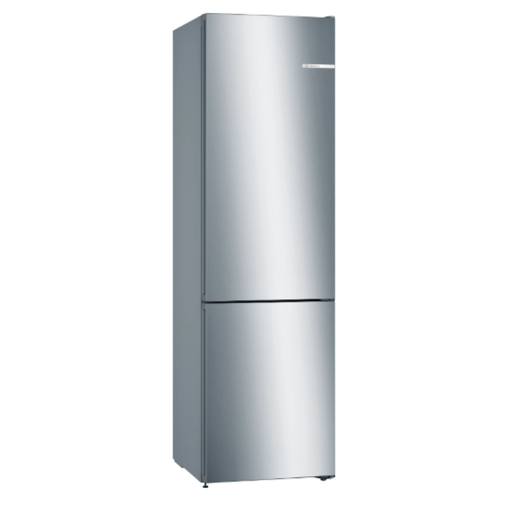 Image unavailable
Bosch KGN39VLEB, 368 L fridge-freezer, E energy rating, stainless steel
Worth considering if you want to store fresh and frozen portions in one appliance.
The model name indicates a total capacity of 368 L and an E energy rating. Before choosing, compare the freezer space separately with the size of your containers and measure the space where you plan to put it.
View on Joybuy
 Image unavailable
AEG NSC6M18FES, 249 L integrated fridge-freezer, TwinTech No Frost, E energy rating, white
Worth considering if your kitchen needs an integrated fridge-freezer to divide your portions between fresh and frozen storage.
The stated total capacity is 249 L, and the model features TwinTech No Frost and an E energy rating. Before choosing it, confirm the usable capacity of each compartment and the required niche dimensions.
View on Joybuy
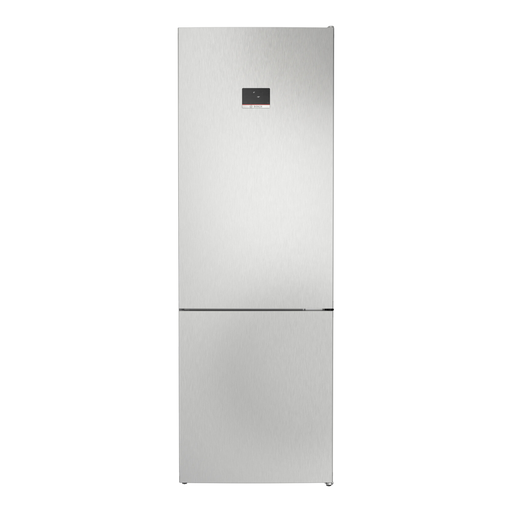 Image unavailable
Bosch KGN497LDF, 440 L fridge-freezer, D energy rating, grey
Worth comparing if you store lots of portions and want to keep fresh and frozen food in one appliance.
This model is listed with a total capacity of 440 L and a D energy rating. Check how the capacity is divided, how the freezer is laid out and how much room is needed for installation.
View on Joybuy
 Image unavailable
Samsung RF50C530EB1, 495 L multi-door fridge, E energy rating, black
Worth considering if you’re looking at a multi-door appliance for storing meals you’ve prepared in advance.
Its stated total capacity is 495 L and it has an E energy rating. Before buying, check the capacity and access of the compartments you need, as well as the route to its location and the space available there.
View on Joybuy
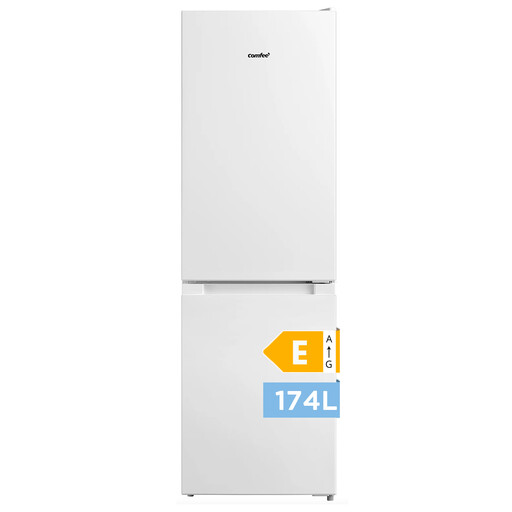 Image unavailable
Comfee' RCB169WH2(E), 174 L 70/30 fridge-freezer, Low Frost, E energy rating, white
Worth considering when space is limited and you only freeze a modest number of portions.
This freestanding model is listed with a capacity of 174 L, a 70/30 split and a height of 150 cm. Low Frost doesn’t replace the need to follow the maintenance instructions. Check these, along with the usable capacity and annual energy consumption, before comparing appliances.
View on Joybuy
Frequently asked questions
How much capacity do I need for meals prepared in advance?
Compare the usable capacity of the fridge and freezer separately with the size of your containers and the number of portions you keep in each. UFC-Que Choisir gives 100 to 150 L for one person as a general guide, plus 50 L for each additional person. Adjust this guideline if you regularly freeze meals.
Is the energy rating enough to compare two appliances?
No. Check their annual energy consumption in kWh on the energy label too. For a useful comparison, look at appliances of a similar size and capacity. If you add a freezer, factor in the energy use of this second appliance. ADEME presents the energy label as a guide to choosing household appliances.
What should I measure before installing a fridge-freezer?
Measure the space, the route to get the appliance there and the clearance needed to open the doors. Also allow for the ventilation clearances specified in the model’s manual. These matter just as much for a freestanding appliance as niche dimensions do for an integrated one.
Does No Frost mean there’s no maintenance?
No. No Frost can reduce frost and, depending on the model, eliminate the need for manual defrosting. However, you still need to follow the installation requirements, allow air to circulate and keep an eye on the condition of the door seals. Check the manual for maintenance instructions specific to your appliance.
What should I do with my old fridge when replacing it?
Arrange for it to be taken back or collected before your new appliance is delivered. In France, the Ministry for Ecological Transition explains the ‘one-for-one’ take-back scheme, which applies when you buy an appliance of the same type, as well as other ways to dispose of electrical equipment, including recycling centres and social and solidarity economy organisations. Ask the retailer how the take-back service works.


