Households that cook for the week
If you keep some dishes chilled and freeze others, compare the capacity available for each use separately. A generous total capacity doesn’t guarantee enough room in the compartment you use most.


When planning your meals in advance, start by considering how much fridge and freezer space you actually need, rather than the total capacity. A fridge-freezer is a good choice if you use both compartments regularly; a fridge with a small freezer compartment is better suited to occasional freezing. If you regularly freeze large quantities for longer periods, consider a separate appliance after checking that you have space for it and adding together the annual energy consumption of both appliances.
The right format depends mainly on how long you keep your portions and how much space they take up in each compartment.
If you keep some dishes chilled and freeze others, compare the capacity available for each use separately. A generous total capacity doesn’t guarantee enough room in the compartment you use most.
If frozen portions take up a lot of space for long periods, a separate freezer is worth considering. You’ll need a suitable place to install it, and should factor in the energy consumption of both appliances.
To organise your meals without crowding the room, check the dimensions, door clearance and interior layout. Also look at how many litres are actually allocated to the fridge and freezer compartments.
Worth considering: if keeping dishes chilled and freezing portions are both part of your routine.
The trade-off: freezer capacity is limited to that of the model you choose, even if you start making larger batches.
Worth considering: if you mainly keep your prepared meals chilled and only freeze food occasionally.
The trade-off: UFC-Que Choisir says a small freezer compartment isn’t enough if you eat a lot of frozen food.
Worth considering: if you need more room for frozen portions in the long term and have a suitable place to install a separate appliance.
The trade-off: two appliances take up more space, and you’ll need to add together their annual energy consumption.
Before increasing capacity, take note over one or two typical weeks of how much room your containers take up in the fridge and freezer. You can then compare appliances that meet the same storage needs.
| Priority | What to check | What I need |
|---|---|---|
| Capacity split | Compare the fridge and freezer capacities separately on the energy label. Also check that your dishes and containers will fit in the drawers and on the shelves. | I prepare several portions, so the space available in each compartment matters more to me than the total capacity shown. |
| Energy consumption | Compare the kWh/year figures for appliances with capacities suited to your needs. The European Commission says the label also shows an energy efficiency class from A to G; ADEME points out that refrigeration appliances run continuously. | I want to take the electricity used each year into account, rather than choosing based on the energy efficiency class alone. |
| Space and installation | Measure the space, access route and clearance needed to open the door. If you’re installing a freezer outside the kitchen, check that its climate class is suitable for the room temperature. UFC-Que Choisir also notes that a chest freezer takes up more floor space than an upright model. | I need more room for freezing, but the appliance must fit and remain accessible in my home. |
| Access and maintenance | Check the drawers, shelves and internal dimensions to make sure they suit your containers. For the exact model, check whether it has No Frost and which compartment this applies to; the European energy label also shows the noise level. | I want to find my meals without having to empty the shelves. If manual defrosting would be a hassle, I’ll check that the feature is listed rather than assume it’s included. |
A large total capacity can hide a freezer that’s too small for your portions, or more fridge space than you need.
For one or two typical weeks, note what you keep chilled and what you freeze, then compare the separate capacities shown on the label.
Two appliances with different capacities won’t necessarily meet the same storage needs. The energy efficiency class alone doesn’t tell you their annual energy consumption.
For formats and capacities suited to your meals, compare the kWh/year figures shown on the energy label too.
A second appliance takes up space and adds to your fridge’s energy consumption. According to UFC-Que Choisir, a chest freezer takes up more floor space than an upright model.
Measure the access route and door clearance, check the clearances specified in the manual, and make sure the climate class is suitable if the appliance will be installed in another room.
No Frost, specialist compartments and freezing functions vary from model to model. A feature on one appliance doesn’t mean it’s available on another.
Check the specification sheet and manual for the exact model number, especially if you’re relying on a feature to avoid manual defrosting.
These examples highlight features to look for in specific models; they don’t describe every range from these brands.
Worth considering if a dedicated fresh food compartment or No Frost is important to you when choosing a fridge-freezer.
Worth considering if you’re looking for a fridge-freezer with specialist compartments and plenty of capacity.
Worth considering if you want to compare how a fridge-freezer is organised and its installation requirements.
These models are fridge-freezers to consider if you want to keep some meals chilled and freeze others. To choose between them, check how the capacity is divided on the version being sold, then consider its dimensions and annual energy consumption.
 Image unavailable
This fridge-freezer could suit you if you divide your prepared meals between chilled and frozen; check the capacity of each compartment rather than looking only at its total capacity of 360 L. Its name indicates Total No Frost and an energy efficiency class of E. Measure the space available before choosing this three-door format.
 Image unavailable
With a stated width of 54 cm, this fridge-freezer is worth measuring up for a narrow kitchen. Its name indicates a 70/30 split and Low Frost technology. Check the capacity of each compartment and how defrosting works on this model before making your choice.
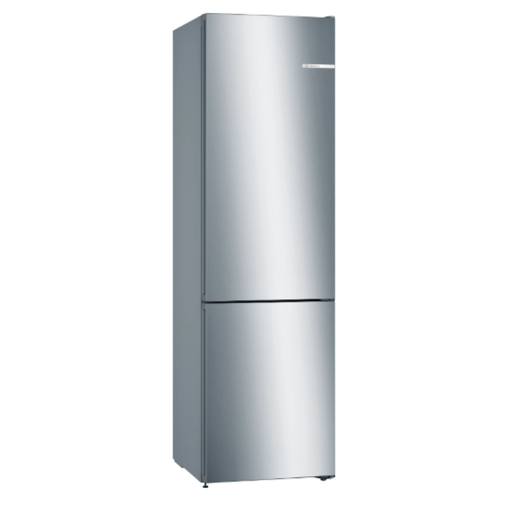 Image unavailable
If you’re comparing this fridge-freezer for chilled dishes and frozen portions, check the capacity of each compartment rather than relying on the total of 368 L. Also check the available height and access route, along with its freezing capacity if you often prepare large batches.
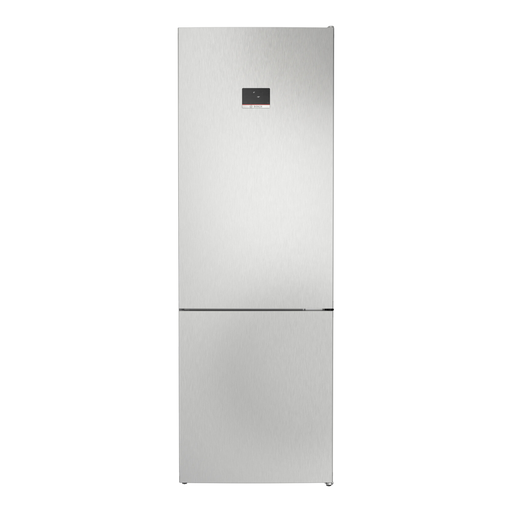 Image unavailable
To decide whether this total capacity of 440 L suits your batch cooking, compare the capacity allocated to the fridge and freezer. Also measure the space needed for installation. If freezer maintenance or freezing large quantities matters to you, check the defrosting system and freezing capacity.
 Image unavailable
This 282 L fridge-freezer can be compared with other formats based on the space your chilled and frozen meals take up. Check the separate capacities and the clearance needed for installation. If you prepare large batches or have limited space, also check the freezing capacity and which way the door opens.
First compare the fridge and freezer capacities separately, then look at appliances that meet your needs for both compartments. The European Commission says the energy label shows, among other things, capacity, annual energy consumption, energy efficiency class and noise level.
It may be suitable if you mainly keep your dishes chilled and only freeze food occasionally. If frozen portions take up a lot of space every week, check the capacity before choosing: UFC-Que Choisir says a small freezer compartment isn’t enough if you eat a lot of frozen food.
Consider one if, in the long term, you need more frozen storage than a fridge-freezer suited to your household can offer. Check the space it will take up, the climate class for the room you have in mind and the combined annual energy consumption of both appliances. According to UFC-Que Choisir, a chest freezer takes up more floor space than an upright model.
No Frost is worth considering if avoiding manual defrosting of the relevant compartment is important to you. Gifam describes this feature as eliminating the need to defrost; check that it’s listed for the model and compartment you’re considering.