Households preparing several portions in advance
If you’ll eat some portions soon and freeze others, compare the available space in each compartment separately. Total capacity won’t show you how that space is divided.


If you’re preparing several meals and want to shop less often, start by working out how much fresh and frozen storage space you need, rather than focusing on total capacity alone. A fridge-freezer is a good choice if you regularly use both compartments; a small freezer compartment can meet more limited freezing needs, while a larger frozen food reserve may justify a separate appliance if you have room for one. If your current appliance has enough space without being overloaded, organising what you store more effectively could mean you don’t need another one.
If you’ll eat some portions soon and freeze others, compare the available space in each compartment separately. Total capacity won’t show you how that space is divided.
You need enough room for fresh food and frozen supplies without overfilling the shelves. Anses recommends not overloading your fridge, so cold air can circulate.
A fridge with a freezer compartment may be enough if you only need to freeze small amounts. Before planning to store prepared meals in it, check the compartment’s capacity and specifications for the model you’re considering.
Start with the space you already have, then work out which foods you’ll keep chilled and which portions you plan to freeze.
Consider one if: you regularly need separate spaces for fresh shopping and frozen portions.
Bear in mind: the space in each compartment is fixed, even if your habits change.
Consider one if: you mainly store fresh food and only freeze small amounts.
Bear in mind: according to Electrolux France, freezer space is generally more limited than in a fridge-freezer.
Consider one if: you need more room for frozen meals than your current appliance can provide.
Bear in mind: you’ll need to install and maintain a second appliance, then compare its stated energy consumption.
Consider this if: your prepared meals already fit in your existing appliance without overloading it.
Bear in mind: this won’t give you any extra space, so you’ll need to adjust how much you prepare.
| What to consider | What to check | Who is this important for? |
|---|---|---|
| Space for chilled and frozen food | Check the usable capacity of both compartments and look at the shelf layout. | If I need to fit my shopping and meal containers in the appliance, I want to know how much space is actually available in each compartment. Around 36% of consumers prioritise how the space is divided. |
| Space for frozen meals | Check the freezer capacity and, if you’ll be freezing prepared meals, the model’s freezing specifications. | When I prepare portions for later, I need enough room to freeze them when I plan to. This is the main consideration for around 29% of consumers. |
| Fitting it in your kitchen | Measure the height, width and depth, as well as the access route and the space needed to open the doors. | In a small kitchen, I need to make sure I can fit the appliance in and open its doors before I think about gaining extra capacity. Size comes first for around 21% of consumers. |
| Maintenance and energy consumption | Compare the annual energy consumption and noise level of the specific models; check which compartments the frost-free function applies to. | If I’m running a second appliance at home or want to spend less time defrosting, its day-to-day demands matter just as much as its capacity. Around 14% of consumers prioritise these usage and maintenance details. |
This figure won’t tell you how much space will be left for fresh food once you’ve made room for frozen supplies.
Compare the usable capacity of each compartment with your usual shopping and the number of portions you need to store.
According to Anses, overloading your fridge makes it harder for cold air to circulate. So, a larger capacity doesn’t mean you can skip organising its contents.
Leave space around your food and check the manual to find the coldest area for perishable items.
This function doesn’t replace choosing the right time to freeze food.
Anses recommends freezing food as soon as you buy or prepare it if you’re not planning to eat it soon.
A separate freezer takes up space and adds another appliance, so you’ll need to consider its energy consumption and noise level.
Measure the space and access route, then compare the specifications of the models you’re considering.
As a model-specific example, Whirlpool France gives the WHFF6403W4E a width of 70 cm, a depth of 81,3 cm and an annual energy consumption of 292 kWh.
These examples of product ranges and models can help you identify which features to compare. Always check the specifications of the version you’re considering.
The range includes freestanding fridge-freezers and built-in fridges with freezer compartments.
The RB34C670DSA/EF fridge-freezer is an example of a range whose product details list the capacity of each compartment separately.
Some fridge-freezers in the range combine dedicated fresh food zones with frost-free features.
The range includes fridge-freezers with a bottom freezer and, on some models, a fast-freeze function.
The range lets you compare a fridge-freezer with a separate upright freezer.
These models combine refrigeration and freezing in one appliance. Compare their size with your kitchen and check the usable capacity of each compartment against the portions you plan to store.
 Image unavailable
The four-door design may suit a household looking to keep shopping and prepared portions organised separately. The product name lists Total No Frost and an energy rating of E. Check the usable capacity of each compartment and the space needed to install it.
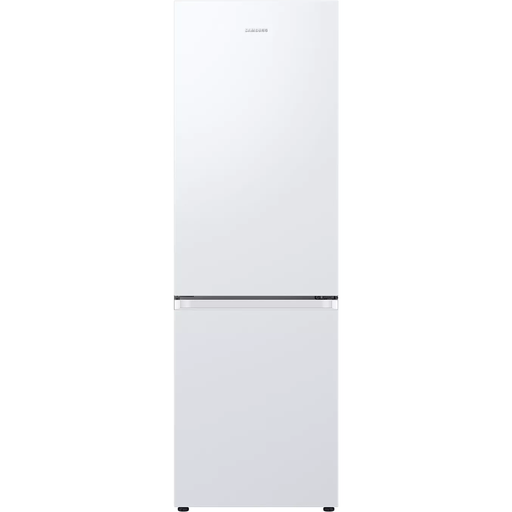 Image unavailable
This fridge-freezer is designed for those who want to keep fresh shopping and frozen supplies in one appliance. The product name lists an energy rating of E. Check the usable capacity of the fridge and freezer separately, along with the available height in your kitchen.
 Image unavailable
Its stated width of 54 cm is worth considering if space is limited. The product name divides the 227 L capacity into 153 L of fridge space and 74 L of freezer space, and lists a 4-star freezer compartment, Low Frost and a reversible door. Check that the freezer compartment can hold your usual portions, and confirm the full dimensions and annual energy consumption.
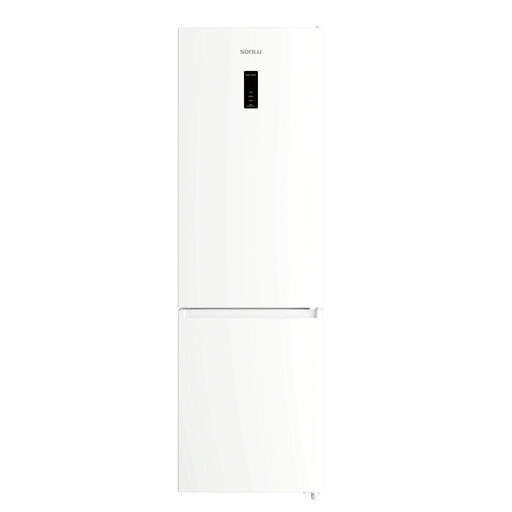 Image unavailable
This fridge-freezer is worth considering if you’re looking for more chilled storage while still having a separate freezer compartment. The product name lists 252 L for the fridge and 103 L for the freezer, along with a width of 60 cm and a reversible door. If you regularly freeze prepared meals, also check the model’s freezing specifications and annual energy consumption.
Anses recommends keeping an eye on the temperature in the coldest area, which should be 4 °C. Use your appliance manual to find this area and avoid overloading the shelves.
If you plan to freeze it rather than eat it soon, Anses recommends doing so as soon as it’s prepared, rather than waiting until its use-by date. Follow its advice on defrosting the meal before serving it, too.
It may be enough for small amounts, but according to Electrolux France, freezer capacity is generally more limited than in a fridge-freezer. Compare the capacity with your portions and check the compartment’s specifications if you plan to freeze food in it.
No. Manufacturers use No Frost to describe how the appliance manages frost, but Anses still recommends checking the temperature in the coldest area and not overloading the fridge.