Households that cook for several days
If you prepare meals to eat throughout the week, first consider how much fridge space you have for meals and ingredients, then how much room you need for frozen portions.


When preparing meals in advance, choose an appliance based on how much room you need for food to keep chilled and portions to freeze. A fridge-freezer combines both, while a separate freezer is worth considering if you regularly build up large stocks. A small ice box cannot replace a freezer for freezing your own meals, so check the capacity of each compartment, the space available for installation and the annual energy consumption of the model you’re considering.
If you prepare meals to eat throughout the week, first consider how much fridge space you have for meals and ingredients, then how much room you need for frozen portions.
If you cook in batches and freeze some of the food, distinguish between the capacity of a freezer and that of an ice box. The Ministry of Agriculture explains that an ice box is for temporarily storing products that are already frozen, not for freezing food.
In a narrow kitchen, the stated capacity isn’t enough to help you choose between formats. Measure the space where the appliance will go, the delivery route and the room needed to open the doors. Ventilation requirements depend on the instructions for the model you choose.
If fresh meals take up most of your space, start by checking the fridge capacity. If you often freeze large batches, consider a dedicated freezer too. Whichever you choose, check the installation requirements before opting for a larger capacity.
| What matters | What to check | What shoppers say |
|---|---|---|
| Capacity split | Compare the usable litres of the fridge and freezer separately, based on the meals and shopping for a typical week. | When I’m storing meals for the next few days alongside portions to freeze, I need room for both and can’t rely on the total capacity alone. Around 31% of shoppers put this split first. |
| Freezing portions | Check whether the compartment can freeze food, including its four-star rating and the model’s stated freezing capacity. | If I cook several portions at once to freeze, a space intended only for food that’s already frozen won’t meet my needs. For around 25% of shoppers, freezing performance comes before other criteria. |
| Space and installation | Measure the space, access routes and door clearance; check the instructions for clearance and ventilation requirements. | A suitable capacity won’t help if the appliance won’t fit in my kitchen or the doors can’t open properly. Space and installation requirements are the top priority for around 25% of shoppers. |
| Energy use and maintenance | When comparing appliances of similar formats and capacities, check the stated kWh/year and noise level. See which compartment, if any, has a No Frost function. | For an appliance that runs continuously, I want to consider energy use and the time needed for defrosting, rather than choosing based only on the energy label rating. Around 19% of shoppers prioritise these factors. |
A small compartment may be suitable for products bought already frozen, but that doesn’t necessarily mean it can freeze your own meals. The Ministry of Agriculture distinguishes between these two uses.
If you prepare portions to freeze, check the compartment’s rating and the freezing capacity of the exact model.
Fridge space and freezer space serve different needs. An overall capacity that suits your household may still include a compartment that’s too small for your meals or portions.
Compare the usable capacity of each compartment separately, thinking about a typical week of shopping and meal prep.
An appliance may fit in the space you’ve set aside without leaving enough room to open the doors or meet the installation requirements. Electrolux’s instructions, for example, remind users not to block the ventilation openings on the appliance concerned.
Measure the delivery access route too, and check the installation instructions for the exact model before ordering.
The European Commission says that the energy label shows the energy rating and consumption. For appliances with different capacities, the rating letter alone doesn’t tell you how much space is available or what the stated annual energy consumption is.
Compare the kWh/year for models with similar formats and capacities, then consider the noise level and maintenance features that matter to you.
One option to consider when comparing freestanding fridge-freezers. Check the specifications for each model rather than assuming they apply to the brand as a whole.
A brand to consider if you’re looking for a high-capacity fridge-freezer, provided the format you choose suits your available space.
Another option to consider when comparing the capacity of the two compartments in a freestanding fridge-freezer.
These models combine refrigeration and freezing in one appliance. For meal prep, focus on how much space you need in each compartment. If you’d prefer a separate freezer or only have a small alcove, decide on the format before choosing a model.
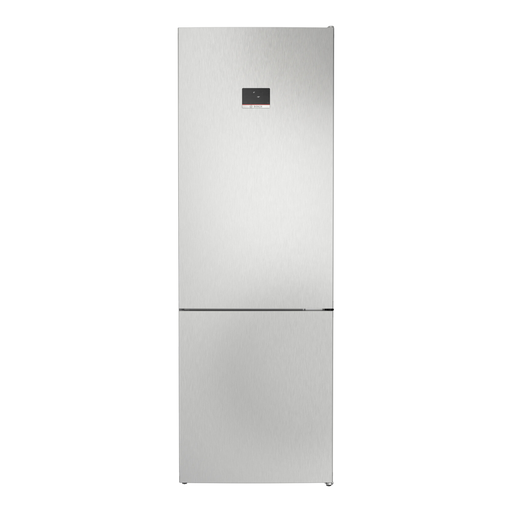 Image unavailable
Worth considering if you want to keep fresh meals and frozen portions in one fridge-freezer. The model name states a capacity of 440 L and an energy rating of D. Compare the space available in each compartment, and check the height and clearance requirements in the instructions.
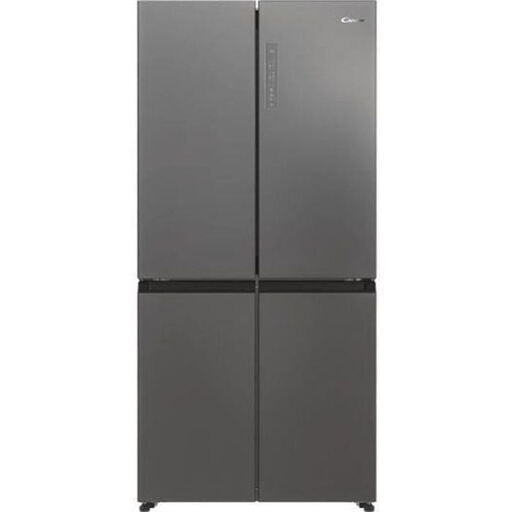 Image unavailable
This four-door model could be an option if you want to keep fresh meals and frozen portions separate. The model name specifies Total No Frost and an energy rating of E. Be sure to check its width, door clearance and installation requirements.
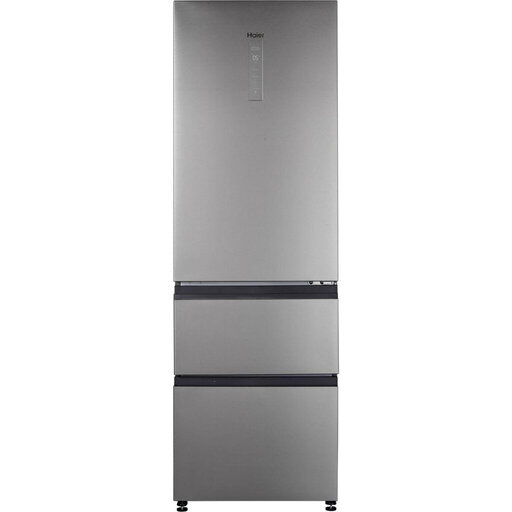 Image unavailable
This three-door fridge-freezer is worth comparing if you’re looking for a total capacity of 360 L for both uses. Its name mentions Total No Frost, My Zone and an energy rating of E. Check the capacity of each compartment and make sure the dimensions suit your kitchen.
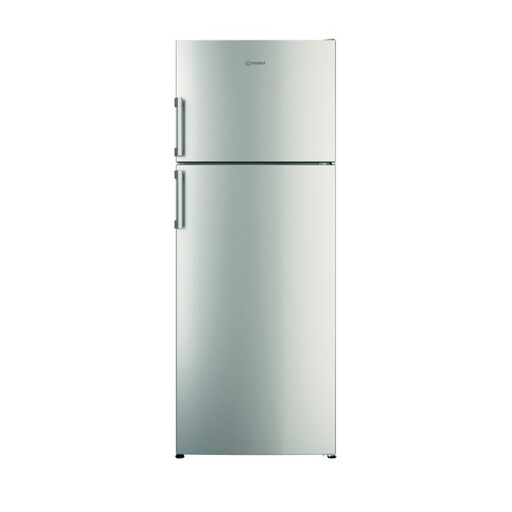 Image unavailable
This freestanding model is worth considering if you need to keep fresh meals chilled while also having space to freeze food. Its name states a total capacity of 437 L and an energy rating of E. Check how the capacity is split between compartments, what freezer maintenance is required and the installation clearances in the instructions.
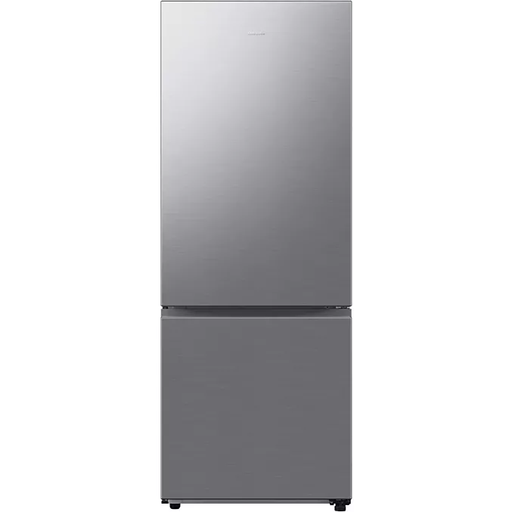 Image unavailable
This 538 L fridge-freezer could be an option if you need plenty of space for fresh meals and frozen food. Before choosing it to freeze home-cooked meals, check the compartment’s rating, the dimensions and the energy rating on the label for the exact model.
No. The Ministry of Agriculture distinguishes an ice box, which is intended for temporarily storing products that are already frozen, from a freezer. If you want to freeze your own portions, look for a suitable compartment and check its rating and the instructions.
The Ministry of Agriculture gives −18 °C as the reference temperature for frozen storage. Follow the settings recommended in the instructions too, as well as the storage guidance on food packaging.
Only if the model’s installation instructions allow it. Check the required clearances, ventilation and door opening space in the instructions. Installation guidance for another appliance doesn’t necessarily apply to the one you’re buying.
According to the European Commission, the EU energy label includes an A to G rating and energy consumption. Compare the kWh/year for appliances of a similar format and capacity, while keeping the capacity of each compartment in mind.
Make sure you maintain the cold chain and follow the food’s storage instructions. The DGCCRF recommends putting leftovers in sealed containers and eating them promptly. The appliance’s capacity doesn’t replace these safe-use precautions.