A few brands and ranges to compare
These examples show formats and features to check on each model; they don’t represent every range from a brand.
Bosch
Its fridge freezers let you compare different balances between fridge and freezer capacity.
- Bosch France lists 189 L of fridge capacity and 90 L of freezer capacity for the KGN33NWDA, compared with 311 L and 129 L for the KGN492IAF.
- Check the installation requirements and capacity split for each model; don’t assume they apply to the whole brand.
Liebherr
Depending on the model, the brand’s fridge freezers include features such as SmartFrost or NoFrost.
- Liebherr lists a total capacity of 296 L for the CUe331-26 and 371 L for the CNsfc 574i.
- Liebherr says SmartFrost reduces the need to defrost the CUe331-26. Check which feature the model you choose has rather than assuming it comes with every fridge freezer in the range.
Beko
Its upright freezers are worth considering if your main aim is to add more space for frozen food.
- Beko describes the RFNE448E35W as a No Frost model.
- Beko says the B5RFNE315G can be used at ambient temperatures as low as −15 °C. This model-specific information doesn’t apply to every Beko freezer or to every garage installation.
Whirlpool
Its upright freezers offer examples of capacities to compare with the space available and the model’s energy consumption.
- Whirlpool France lists a capacity of 286 L, a D energy class and 34 dB(A) for the WHMFF 6312 W5E.
- The WHFF 6403 W4E specifications list a capacity of 404 L and an energy consumption of 292 kWh/year. More space doesn’t remove the need to compare annual energy consumption and dimensions.
Fridge freezers on Joybuy
These models combine fridge and freezer storage in one appliance. To choose between them, start with the space available and how you divide your food stocks. If your main aim is to add a large amount of freezer space, consider that option separately.
 Image unavailable
Haier HTW5618ENMG, 360 L three-door fridge freezer
This three-door fridge freezer is worth considering if you want one appliance for fresh food and frozen portions. The product name lists a capacity of 360 L, an E energy class and Total No Frost. Compare the capacity of each compartment with your food stocks and check the required installation clearances.
View on Joybuy
 Image unavailable
LG GBBSJ1CCSW, 333 L fridge freezer, energy class C
This model is worth comparing with other fridge freezers if you want to keep fresh and frozen food in one appliance. The product name lists a capacity of 333 L and an energy class of C. Before comparing its capacity with another model, check the energy label to see how the space is divided between compartments.
View on Joybuy
 Image unavailable
Candy CFQQ5T817EPS, 467 L four-door fridge freezer
This multi-door design is worth considering if you’re looking for a large capacity in one appliance. The product name lists a capacity of 467 L, four doors, Total No Frost and an E energy class. Check the space needed to open the doors, as well as the separate capacities for fresh and frozen food.
View on Joybuy
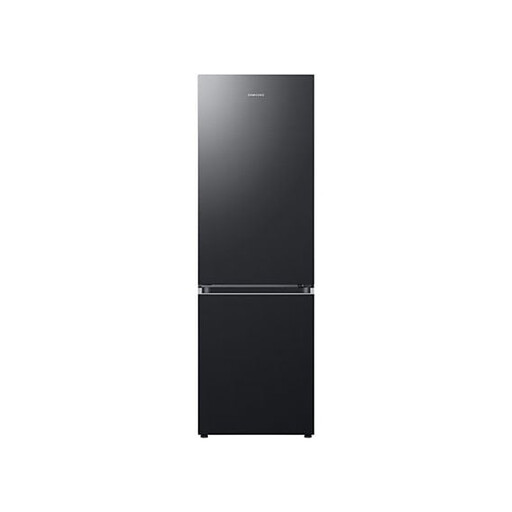 Image unavailable
Samsung RB34C704DB1, 344 L fridge freezer, energy class D
This fridge freezer is another option to compare with your fresh and frozen food stocks. The product name lists a capacity of 344 L and an energy class of D. Check the kWh/year on the energy label and the full dimensions, especially the depth, before comparing its energy consumption or planning its installation.
View on Joybuy
 Image unavailable
CHiQ JR227LSE, 227 L fridge freezer, 54 cm wide
At 54 cm wide, this model is worth a look if space is limited. Joybuy lists 153 L of fridge capacity and 74 L of freezer capacity; the product name also mentions Low Frost and an E energy class. Check the full height and kWh/year before deciding whether this model suits your space and food stocks.
View on Joybuy
Frequently asked questions
How do you compare the energy consumption of a fridge freezer and a separate freezer?
Start by comparing appliances of the same type and similar capacity. According to the European Commission, the energy label shows information including the energy class, kWh/year, capacity and noise level. Look at annual energy consumption and usable capacity in litres, not just the energy class. If you keep your fridge and add a freezer, take the energy consumption of both appliances into account.
What temperatures should you check for chilled and frozen food?
Anses recommends keeping the coldest part of the fridge between 0 °C and +4 °C. It also explains that freezing food at home at −18 °C stops bacteria multiplying, but doesn’t destroy most microorganisms. Freeze food in good time rather than waiting until it’s close to its use-by date.
Is No Frost a good reason to buy a large freezer?
No: a function that reduces frost doesn’t determine how much capacity your household needs. First work out how much space your frozen food takes up and how you’ll organise the drawers. Then compare maintenance features, kWh/year and noise levels across suitable models.
Do you need a separate freezer to prepare several meals in advance?
Not necessarily. It may be worth considering if frozen portions regularly fill your fridge freezer’s freezer compartment, while the fridge section still meets your needs. If the main problem is finding food, start by creating clearly visible storage areas and checking your stocks before shopping, as ADEME recommends.


