Households that cook several portions in advance
If you keep some dishes in the fridge while freezing others, compare the usable capacity of each compartment separately. The total capacity doesn’t show how much room you’ll have for each purpose.


If you mainly keep your meals chilled, start by comparing fridge-only models. If you also regularly freeze portions, check the capacity of each compartment in a fridge-freezer. A separate freezer is worth considering if your frozen stock regularly exceeds that capacity, but it means adding an appliance that runs continuously. In every case, check the storage layout, dimensions and stated energy consumption of the model you’re considering.
If you keep some dishes in the fridge while freezing others, compare the usable capacity of each compartment separately. The total capacity doesn’t show how much room you’ll have for each purpose.
Checking what you already have before shopping can help you avoid buying duplicates, as ADEME recommends. Shelves and drawers that suit your containers also make it easier to see and reach the food you already have.
If your frozen portions and food regularly take up more room than a fridge-freezer can offer, it’s worth considering a separate freezer. You’ll also need to make room for it and factor in its energy consumption: ADEME points out that refrigeration appliances run continuously.
Consider this if: you mainly keep food shopping and prepared meals chilled, and don’t build up a stock of frozen food.
Limitation: it won’t meet your freezing needs unless you have another appliance.
Consider this if: you want one appliance for both chilled food and portions to freeze.
Limitation: its total capacity can hide a freezer compartment that’s too small for your usual stock.
Consider this if: your frozen stock regularly exceeds the freezer compartment in a fridge-freezer.
Trade-off: it takes up extra space and runs continuously. It won’t replace a fridge for food you need to keep chilled.
| Criteria | What to check | What I need |
|---|---|---|
| Fridge and freezer capacity | Compare the usable capacity in litres of each compartment, then check the shelf height and drawer size against the containers you usually use. | I keep food shopping and meals chilled, while making sure there’s enough room for the portions I freeze. |
| Temperature and storage | Check the temperature settings and the temperature in the coldest part: Anses recommends a range of 0 to +4 °C. Also check the storage zones and the space needed for air to circulate. | I need to store prepared meals and perishable food in a suitably cold area, without packing the shelves to the brim. |
| Energy consumption and installation | Compare the annual energy consumption in kWh on the energy label for models that meet your needs. Measure the space, delivery route and clearances required in the instruction manual. | I need enough capacity without adding another appliance or choosing a model that’s too large for my kitchen. |
| Maintenance | Check which compartment the advertised No Frost function applies to. Also see whether the drawers and shelves are easy to remove for cleaning. | I often open the freezer to add or take out portions, and want to understand what maintenance the model needs. |
Two fridge-freezers can have very different capacity splits. Bosch’s specifications for the KGN36VLED and Whirlpool’s for the WHK26494X6E list 237 L and 340 L respectively for the fridge, compared with 89 L and 150 L for the freezer. These figures apply to these specific models.
Estimate how much you’ll need to keep chilled and frozen at the same time over a typical week, then compare the usable capacity and internal layout of both compartments.
According to ADEME, fridges and freezers run continuously; choosing a large model or one with more capacity than you need can increase energy consumption.
First check whether your frozen stock regularly exceeds the fridge-freezer compartment. If it does, compare the stated annual energy consumption, dimensions and installation space required.
An appliance needs to fit through doors and corridors as well as into its intended space. Once it’s installed, you’ll also need room to open the doors and drawers.
Measure the delivery route and the space where the appliance will go, then check the dimensions and clearances required in the manual for the model you’ve chosen.
An energy rating or smart feature is only useful when the information applies to the exact model you’re considering. Any savings advertised for a connected mode will also depend on the conditions specified by the manufacturer.
Check that the full model number matches on the energy label and product listing. If you’re considering an app-based feature, read the requirements and terms of use before taking it into account.
These examples show different configurations to compare. The features listed apply to the named models, not to each brand’s entire range.
The freestanding KGN36VLED fridge-freezer is one example of how chilled and frozen capacity can be split.
The WHK26494X6E is an example of a fridge-freezer with a sizeable freezer compartment.
The RB38C7B6AS9/EF is an example of a fridge-freezer with Wi-Fi connectivity through SmartThings.
These models combine fridge and freezer storage for households that split food shopping and prepared meals between the two. If you only need one of these functions, also consider whether a fridge-only model or separate freezer would suit your current appliances better.
 Image unavailable
This fridge-freezer is worth considering if you split food shopping and prepared portions between chilled and frozen storage. The product title lists Total No Frost, an E energy rating, Wi-Fi and My Zone. Check the capacity of each compartment and the temperature settings to make sure they suit your needs.
 Image unavailable
This four-door model is worth comparing if you store both large food shops and meals to freeze. The product title lists Total No Frost and an E energy rating. Check the width, delivery route and available space for opening the doors.
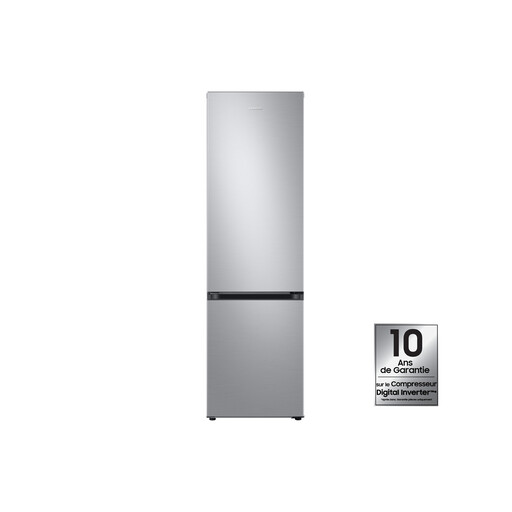 Image unavailable
To organise fresh food and frozen portions, compare the space in each compartment of this 390 L fridge-freezer. It has a C energy rating. Also check that the layout suits your containers and see how to adjust the temperature.
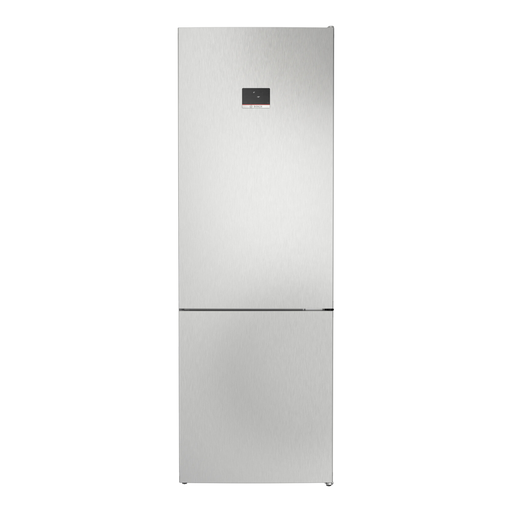 Image unavailable
This 440 L fridge-freezer is worth comparing if you want to keep some meals chilled and freeze other portions. It has a D energy rating. If freezer maintenance matters to you, check its defrosting method rather than assuming it’s the same as the fridge’s.
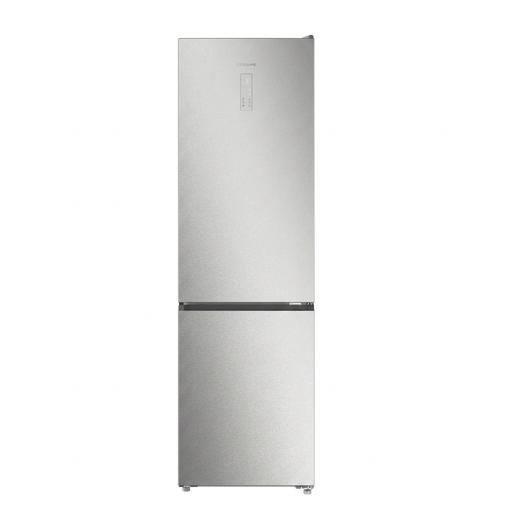 Image unavailable
If you expect to store a large food shop and plenty of portions for freezing, take a look at the internal layout of this 456 L fridge-freezer. It has a D energy rating. Check that the shelves and drawers suit the containers you use.
Anses recommends keeping the temperature between 0 and +4 °C in the coldest part of the fridge. Check this area, avoid overfilling the fridge and follow the storage instructions on food packaging too.
Not necessarily: a fridge-only model may be suitable if you mainly keep meals chilled. A fridge-freezer can handle both needs if you regularly freeze portions. Consider a separate freezer if your frozen stock regularly exceeds the freezer capacity you’d need in a fridge-freezer.
Check that it matches the exact model you’re considering, then compare the energy rating and annual consumption in kWh. According to economie.gouv.fr, an energy label is required for fridges sold both in shops and online; the product information sheet can help you compare further.
No. First check which compartment the function applies to on the model you’ve chosen. It doesn’t replace checking the temperature in the coldest part of the fridge, for which Anses recommends 0 to +4 °C, or arranging food so that air can circulate.