How do the different types compare?
For meals prepared ahead, start with how much you need to store and how often you’ll access it, then compare each type with the space available. If you’re considering a larger fridge freezer, compare the capacity of its freezer compartment alone with the extra space you need.
Upright freezer
Consider it if: you often take out individual portions and want to organise them in drawers.
Bear in mind: drawers offer less flexibility for bulky containers; check the height and door clearance too.
Chest freezer
Consider it if: you mainly store large batches or bulky containers and have enough floor space.
Bear in mind: you’ll need to organise the inside to find a small portion at the bottom.
Top or under-counter freezer
Consider it if: a small amount of extra storage is enough and space is limited in your kitchen.
Bear in mind: its capacity needs to suit how often you prepare food; this type may not provide enough storage for larger batches.
Larger fridge freezer
Consider it if: you also need to replace your fridge and the new freezer compartment is large enough.
Bear in mind: the total capacity of a fridge freezer isn’t the same as its freezer space.
| Factor |
What to check |
Who is this for? |
| Access to portions |
Layout and size of drawers or baskets; access to food stored at the bottom. |
If I regularly take out just one portion, I want to find it without moving other meals. Around 37 % of consumers would prioritise easy everyday access. |
| Capacity and space |
Net freezer capacity, dimensions, delivery access and clearance needed to open the door. |
If I prepare large batches, I need storage that will genuinely fit in the space available. For around 36 % of consumers, this balance between capacity and space would be the main consideration. |
| Use and installation |
Energy consumption in kWh/year, ambient temperature range specified in the manual and stated storage time in the event of a power cut. |
If the room isn’t heated much, I want to know whether the appliance can operate there and how much energy it uses over time. These factors would come first for around 27 % of consumers. |
The European Commission says the energy label includes information such as energy consumption, capacity and noise. As ADEME points out, a freezer runs continuously: compare kWh/year with the usable freezer capacity, rather than looking at the energy rating letter alone.
Freezers for different needs
These Joybuy appliances show three ways to add freezer space for prepared meals: an upright freezer with drawers, chest freezers in different sizes and a compact upright model. First choose the type that suits your portions and available space, then check the details for the specific model.
 Image unavailable
Heinrich´s, 161 L upright freezer, stainless steel
Worth considering if you want to keep portions separate in an upright appliance. The product title lists a capacity of 161 L, three freezer drawers, No Frost protection and energy rating C.
Before putting it in a cold room, check the permitted ambient temperature range in the manual; the temperature settings shown in the title aren’t a substitute for this information.
View on Joybuy
 Image unavailable
AUCMA, 291 L convertible chest freezer
Consider it for large batches or bulky containers if you have enough floor space. The title lists a capacity of 291 L, a convertible fridge or freezer mode, a removable basket and energy rating E.
Plan how you’ll organise smaller portions and measure the clearance needed to open the lid. If the room isn’t heated much, check the installation requirements in the manual.
View on Joybuy
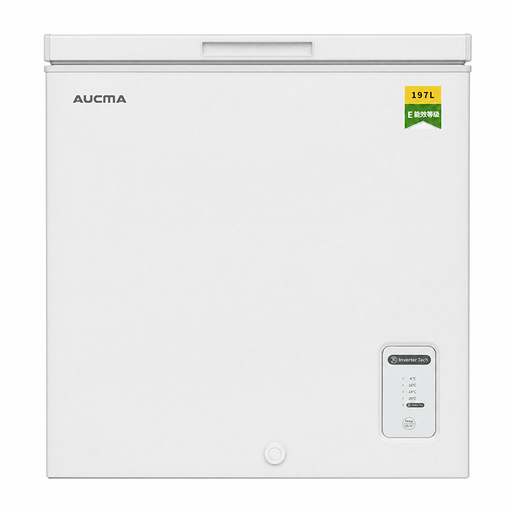 Image unavailable
AUCMA, 197 L convertible chest freezer
Worth considering if you want separate freezer space but don’t need the 291 L chest freezer featured here. The title lists a capacity of 197 L, a convertible fridge or freezer mode, a removable basket and energy rating E.
Check the footprint and lid clearance in your chosen location. The basket helps with storage, but you’ll need to move things around more to reach portions underneath.
View on Joybuy
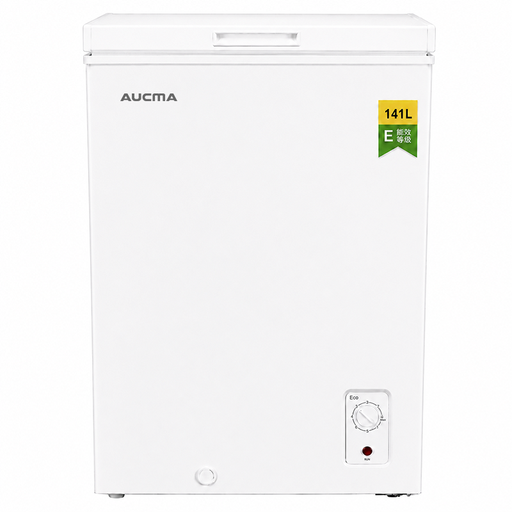 Image unavailable
AUCMA, 141 L convertible chest freezer
Worth considering if a 141 L chest freezer is big enough for the meals you want to store ahead of time. The title lists a convertible fridge or freezer mode, a removable basket, a seven-setting thermostat and energy rating E.
Although it has a smaller capacity, this chest freezer still needs clearance for the lid. Before installing it in a garage or cellar, check the recommended ambient temperature range.
View on Joybuy
 Image unavailable
COMFEE' RCU60WH2(E), 60 L upright freezer
Worth considering for a small amount of extra storage when space is limited. The title lists a capacity of 60 L, three drawers, a reversible door and energy rating E.
If you regularly prepare large batches, compare this capacity with the amount you need to store. Also measure the space and clearance needed to open the door.
View on Joybuy
Frequently asked questions
What should I compare on a freezer’s energy label?
Compare the A to G energy rating, annual consumption in kWh, freezer capacity and noise level. According to the European Commission, the QR code on the label links to detailed product information for the model; kWh/year figures are more useful when considered alongside the capacity you need.
Can I put any freezer in an unheated garage?
No. Check the ambient temperature range specified for the exact model. The climate class defines the ambient conditions the appliance is designed for; claims about certain models don’t apply to every freezer made by that brand.
Does storage time during a power cut matter for prepared meals?
Yes, it’s worth comparing if you store a lot of prepared meals, but it varies by model. Beko France states 17 h for the RFNE448E45W, while the Haier H4F306WDH1 product information lists 12 h; check the figure and the conditions in the documentation for the appliance you’re considering.
Can a large freezer make it safe to refreeze a defrosted meal?
No. Its capacity doesn’t change the rules for safe food storage. Anses points out that at −18 °C, bacteria stop multiplying but most micro-organisms survive; it recommends not refreezing food once it has been defrosted.


