Households that prepare several meals in advance
If portions quickly fill your freezer, check its usable capacity, the number of drawers and how much room they leave for your containers.


To choose between a fridge freezer, a multi-door fridge and a separate freezer, first work out how much room you need for fresh food and frozen portions: total capacity alone isn’t enough. A fridge freezer is suitable if its freezer compartment can hold your usual stock; a multi-door model lets you keep everything in one appliance when you need more space and have room for it. If your frozen food regularly exceeds the space available in an integrated appliance, consider a separate freezer, provided you have somewhere suitable to install it with adequate ventilation.
The right format depends mainly on what your household keeps chilled and how much it freezes between shops.
If portions quickly fill your freezer, check its usable capacity, the number of drawers and how much room they leave for your containers.
After a big shop, you need room for fresh and frozen food at the same time. Compare the capacity of both compartments, rather than looking only at the total capacity.
A large integrated model means you won’t need to install a second freezer, but its width, depth and door clearance must suit your kitchen.
First choose a format that suits your frozen food stock and available space. Then compare the features of models that can actually be installed in your home.
Worth considering if: you want one appliance and your prepared portions will fit in its integrated freezer.
Things to check: a large total capacity may still leave too little room for frozen food.
Worth considering if: you want to store plenty of fresh and frozen food in one appliance.
Things to check: make sure it will fit through to the kitchen and that its doors and drawers can open fully.
Worth considering if: your prepared portions and frozen food regularly take up more space than an integrated appliance can offer.
Things to check: you’ll need a suitable space for a second appliance, with the necessary power supply and ventilation.
| Criteria | What to check | What I need |
|---|---|---|
| Capacity and storage | Compare the usable capacity in litres of the fridge and freezer separately, then check the size and layout of the drawers. If you freeze lots of fresh food at once, also check the freezing capacity in kg/24 h: this is not a substitute for storage capacity. | I want to fit in a big shop and my prepared portions without one pushing out the other. For fridge space, Que Choisir suggests an average guide of 100 to 150 L for one person, then 50 L for each additional person; your own habits are what matter most. |
| Temperature and air circulation | Check the temperature controls and where the coldest zone is. Leave enough space between items for air to circulate: Anses recommends keeping this zone at 4 °C and advises against overfilling the fridge. | My cooked meals and more delicate foods need a suitable place, even straight after a shop. |
| Installation and noise | Measure the appliance, delivery route and clearance needed for doors and drawers. Check the climate class, ventilation requirements in the manual and the noise level in dB(A). | I need to be able to move around my kitchen and access the freezer without blocking the cupboards. If the kitchen is open-plan, noise matters too. |
| Energy and features | Compare the energy class and annual consumption shown on the energy label for appliances with a similar function and capacity. Then consider features such as a water dispenser or smart connectivity, based on how you’ll use them. | I’m looking for an appliance that suits my food stock, without choosing an extra feature instead of the capacity I need. |
A spacious appliance may still have too little freezer space for your portions; the reverse may leave you short of room for fresh food shopping.
Make a note of what you have after a shop and compare the usable capacity of each compartment, as well as the space available in the drawers.
A large model may fit in the space you’ve planned for it but not through the access route, or its drawers may not pull all the way out. For example, Bosch lists its KFN96APEA multi-door model as 90,5 cm wide.
Measure the delivery route, the installation space and the clearance from nearby walls and furniture before choosing a model.
The location must meet the appliance’s operating requirements. Electrolux recommends allowing air to circulate around the fridge and keeping it away from heat sources.
Check the manual for ventilation clearances, the permitted ambient temperature range and suitable locations. If your kitchen is open-plan, compare noise levels too.
A defrosting function or smart feature won’t create space for your portions, or remove the need for air to circulate in a full fridge.
First work out the capacity and layout you need, as well as any installation constraints. Then consider the features that suit the way you’ll use the appliance.
These ranges and models give you an idea of the available formats; their features won’t necessarily apply to every appliance from the same brand.
Two Bosch models illustrate the choice between a high-capacity integrated appliance and a separate freezer.
The HFR3718ENMM multi-door model shows that a model with several doors isn’t necessarily 90 cm wide.
Electrolux’s range includes built-in and freestanding fridge freezers, which you can compare based on the space available in your kitchen.
Samsung’s French range includes fridge freezers and high-capacity multi-door models.
These models combine refrigeration and freezing in one appliance, across a range of formats. If you’re storing prepared meals, focus on how much space is set aside for the freezer, then check whether the appliance can be delivered and installed in your home.
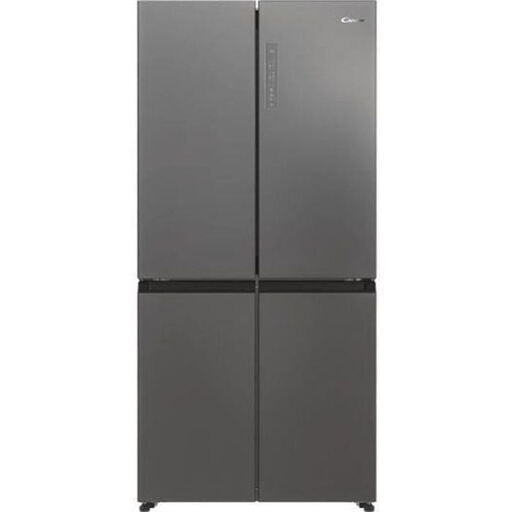 Image unavailable
This four-door format keeps fresh and frozen food in one appliance. The product listing gives a total capacity of 467 L, Total No Frost and an energy rating of E. Check the usable capacity of each compartment and the door clearance you’ll need for your containers and kitchen layout.
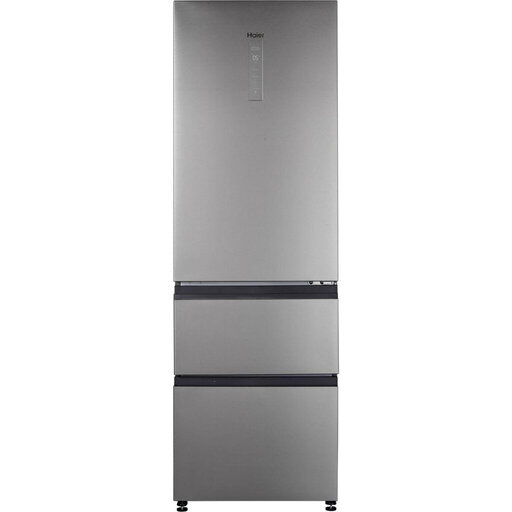 Image unavailable
The three doors offer a way to store fresh food and frozen portions in one appliance. The product listing gives a total capacity of 360 L, Total No Frost, an E energy rating, Wi-Fi and My Zone. Compare the capacity of each compartment and the clearance needed to open the doors.
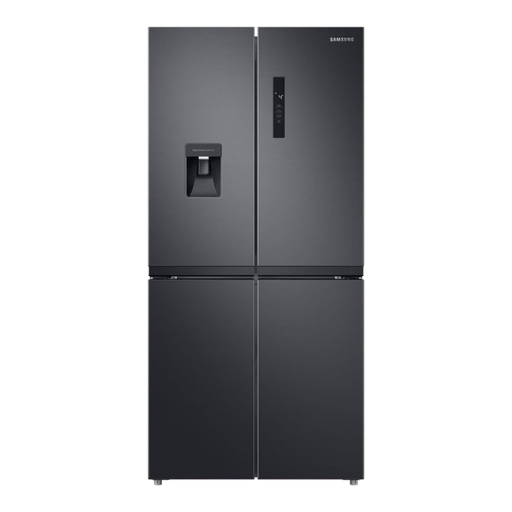 Image unavailable
If you’re considering a high-capacity integrated appliance, compare how its space is divided between fresh and frozen food with your shopping and portion sizes. The product listing gives a total capacity of 488 L and an energy rating of E. Also check the delivery route, noise level and door clearance.
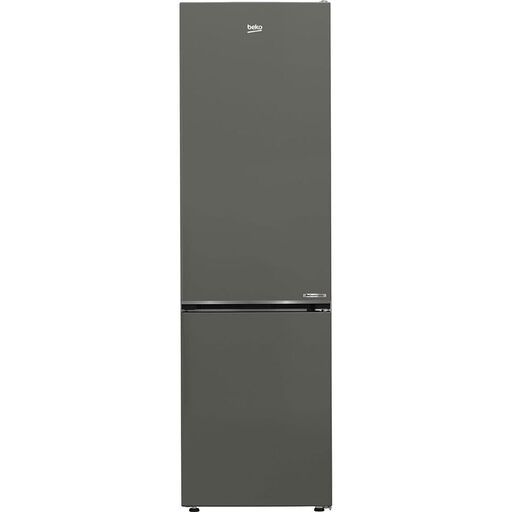 Image unavailable
This fridge freezer combines chilled and frozen storage in one appliance. Check that its freezer can hold your usual portions and containers. The product listing gives a total capacity of 355 L, Total No Frost and an energy rating of C. Check the drawer layout before you choose.
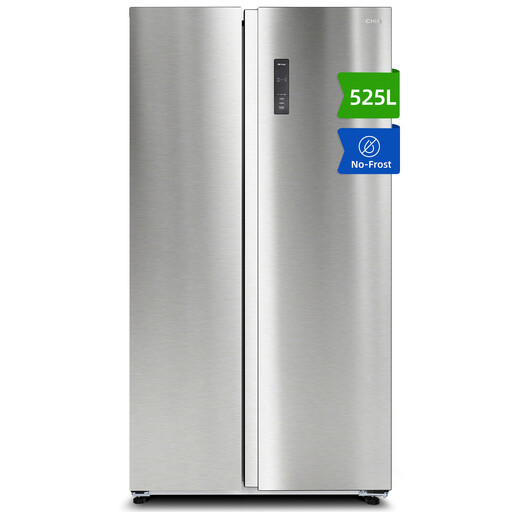 Image unavailable
This side-by-side model may suit you if you want to keep a large stock of food in one appliance: the product listing gives 333 L for the fridge and 192 L for the freezer. It also lists No Frost, 37 dB and an E energy rating. Check its dimensions, door clearance and freezer layout to make sure it suits your containers.
Make two lists after a big shop: the food that needs to go in the fridge and the portions or frozen food that need to go in the freezer. For fridge space, Que Choisir suggests an average guide of 100 to 150 L for one person, then 50 L for each additional person. For prepared meals, compare the freezer capacity and drawers with the actual size of your containers.
Place cooked meals in the coldest zone, which you can identify in your appliance manual. Anses recommends keeping it at 4 °C and avoiding overfilling the fridge, so air can circulate between the food.
Measure the final space and the entire delivery route, then allow enough room to open the doors and pull out the drawers. For each appliance, also check the ventilation requirements and climate class: Electrolux recommends allowing air to circulate around the appliance and keeping it away from heat sources.
Check with the retailer or a collection point before delivery. France’s Ministry for the Ecological Transition distinguishes between ‘1 for 1’ take-back, linked to a purchase, and ‘1 for 0’ take-back, which does not require a purchase. Ask which arrangements apply at the location where you plan to hand over the appliance.