What should you check before choosing?
First work out whether you’re short of space for frozen food, fresh food or simply need to organise your supplies better. Then measure the space available before comparing model specifications.
Upright freezer
Worth considering: you take out portions often and want to organise them in drawers.
The trade-off: check that the door opens wide enough to pull out the drawers and reach your containers.
Chest freezer
Worth considering: you store large dishes or bulk buys and have a suitable place to put it.
The trade-off: food at the bottom takes more organising to keep it accessible.
Larger fridge-freezer
Worth considering: you’re also short of space for fresh food or can’t install a second appliance.
The trade-off: check the freezer compartment capacity: according to Bosch’s product specifications, the Bosch KIV87NSE0 has a 70 l freezer compartment and 200 l of fridge space.
Better organisation, no new appliance
Worth trying: you mainly run out of space after shopping or find portions difficult to locate.
The limit: dating, listing and rotating your supplies won’t create extra capacity if the compartment is consistently full.
| Criterion | What to check | What I need |
|---|
| Capacity and access |
Compare the usable capacity of the freezer compartment, then consider how much room your containers and large dishes take up. Look at the layout of the drawers or baskets and how easy it is to reach the bottom. |
I prepare several portions at once, so I want to find them without having to empty part of the appliance every time I take something out. |
| Where it will go |
Measure the available space and the delivery route. Allow for the door or lid to open, as well as the ventilation clearances specified in the model’s manual. |
An extra appliance needs to fit in my home and still be easy to use once it’s installed. |
| Room temperature |
Compare the room’s minimum and maximum temperatures with the model’s climate class or stated operating range. Don’t assume it’s suitable for a garage just because of its design. |
If I keep supplies in an unheated cellar or garage, I need to know whether the appliance can operate at the temperatures in that room. |
| Energy use |
Check the model’s kWh/year and usable capacity. Compare appliances with similar capacities and formats, rather than looking at the energy rating letter alone. ADEME points out that a freezer runs continuously. |
I want the extra capacity to suit the supplies I actually use, as the appliance will stay plugged in all year round. |
| Maintenance and food storage |
Check the defrosting method and the stated storage time in the event of a power cut. According to Anses, freezing food at −18 °C stops bacteria multiplying but does not destroy most micro-organisms. |
I want to maintain the appliance without letting portions build up, so I’ll date them and plan to rotate them. |
Which brands and ranges should you consider?
These ranges and models give you examples of the features to compare. A feature listed for one model won’t necessarily apply to other appliances from the same brand.
Bosch
The range includes upright freezers and fridge-freezers, so you can compare options depending on whether you need dedicated freezer space or more room for fresh food.
- Bosch’s product specifications for the GSN58AWCV upright freezer state a usable capacity of 366 l and a No Frost function.
- The Bosch KIV87NSE0 fridge-freezer has 70 l of freezer space and 200 l of fridge space. Check both compartments separately before replacing an existing appliance.
Liebherr
Its chest freezers are worth considering for their capacity, footprint and, depending on the model, suitability for use in a cold room.
- Liebherr states that the CFd 2505 Plus chest freezer has a capacity of 359 l and a FrostProtect function rated for temperatures down to −15 °C.
- According to its specifications, this model is 167 cm wide. Also allow enough space to open the lid and reach your supplies.
Beko
Beko’s chest freezer specifications are worth checking if you’re considering separate storage, particularly in an unheated room.
- Beko states that the HSM14540 chest freezer has a capacity of 205 l and uses 202 kWh/year. This model is also rated to operate down to −15 °C.
- Beko describes the MinFrost function as reducing frost build-up; it doesn’t mean you’ll never need to defrost the appliance manually.
Whirlpool
The French range includes chest freezers, upright freezers and fridge-freezers, so you can compare different formats to suit the space you have available.
- Whirlpool highlights the access and organisation offered by its upright freezers. Check the layout of the model you’re interested in.
- For ventilation clearances, follow the manual for the appliance you choose rather than relying on general guidance for a different range.
Appliances to add extra capacity
These Joybuy options include convertible chest freezers and an upright freezer. To choose between them, consider how much you need to store, how easily you want to access portions and where the appliance will go. If you’re also short of space for fresh food, compare the compartments of any fridge-freezer you’re considering separately.
 Image unavailable
AUCMA, 291 L convertible chest freezer
With a stated capacity of 291 L and a removable basket, this top-opening chest freezer is designed for bulk buys and large dishes. It can switch between freezer and fridge modes. Its specifications list an E energy rating, LED lighting, five-level digital temperature control and a defrost drain. Check the space needed to open the lid and the permitted ambient temperature range before planning to install it in a cold room.
View on Joybuy
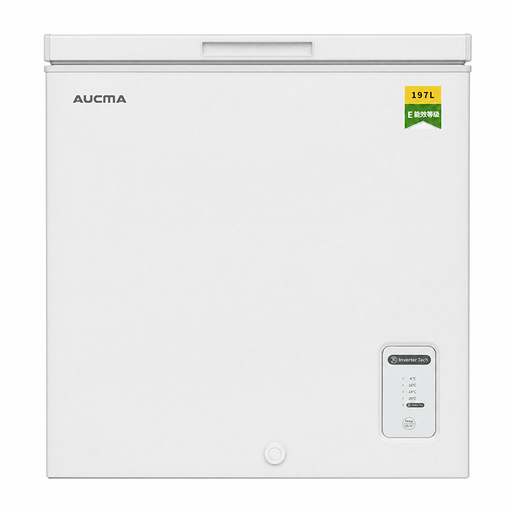 Image unavailable
AUCMA, 197 L convertible chest freezer
This chest freezer has a stated capacity of 197 L and can store portions or supplies organised with its removable basket. It offers fridge and freezer modes, five-level digital temperature control and a defrost drain. Its stated energy rating is E. Bear in mind that you’ll need access from above, and check the model’s ambient temperature range if you plan to put it in a cellar or garage.
View on Joybuy
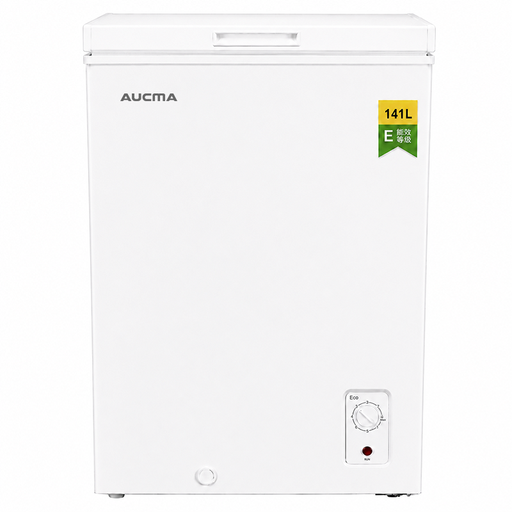 Image unavailable
AUCMA, 141 L convertible chest freezer
With a stated capacity of 141 L, this chest freezer could be a good option if it’s large enough for your portions and supplies. Its removable basket helps separate some foods. It offers fridge and freezer modes, a seven-level thermostat and a defrost drain. Check that the lid can open fully and that the ambient temperature is suitable for the planned location.
View on Joybuy
 Image unavailable
AUCMA, 95 L convertible chest freezer
This chest freezer has a stated capacity of 95 L and is worth considering if you only need a little extra storage. Compare its capacity with the size of your bulkiest dishes. It has a removable basket, a seven-level thermostat, a defrost drain and fridge and freezer modes. Check the lid clearance and permitted ambient temperature range before choosing where to put it.
View on Joybuy
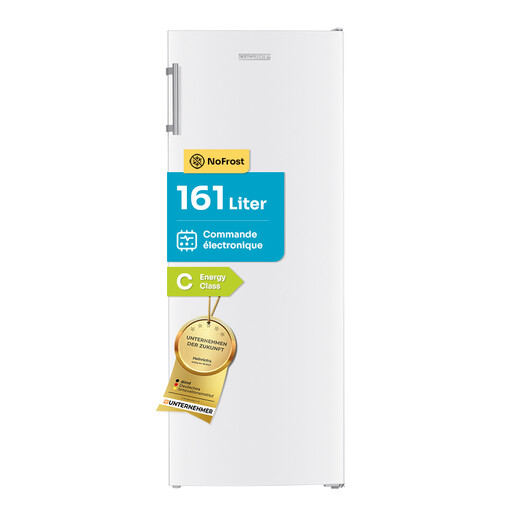 Image unavailable
Heinrich´s, 161 L upright freezer, white
The upright design and drawers make it easy to organise portions you access often. The model name specifies a capacity of 161 L, a No Frost function, a reversible hinged door, a temperature range of −14 °C to −22 °C and a C energy rating. Before choosing a spot, check its dimensions, required clearances and permitted ambient temperature range.
View on Joybuy
Frequently asked questions
Do you need an extra freezer if you only run out of space after shopping?
Not necessarily. Date your portions, take stock of what you have and see whether the compartment stays full after several shopping trips. If the problem persists, compare the extra capacity you need with the space required and energy use of an appliance that will run continuously, as ADEME points out.
Can you put a freezer in a garage or cellar?
Yes, as long as the model’s permitted ambient temperature range covers the temperature of the room. Some Liebherr and Beko appliances are rated to operate down to −15 °C, but this doesn’t apply to every freezer from those brands. Check the specifications, rating plate and manual for the model you’re considering.
How much clearance should you leave for ventilation?
Follow the clearance requirements in the manual for the appliance you choose. For example, in its FAQ Whirlpool recommends 5 cm above and 10 cm behind certain freestanding fridges. These measurements don’t replace the instructions for another model or a built-in appliance.
How should you freeze and defrost prepared dishes?
Anses recommends freezing food as soon as you buy or prepare it, rather than waiting until it’s close to its use-by date. To defrost food, it advises using the fridge, the microwave’s defrost setting, or cooking or reheating it quickly. Eat it within three days and don’t refreeze food once it has defrosted.
How do you compare the energy use of two freezers?
Compare the kWh/year alongside the usable capacity and appliance type. The energy rating letter alone doesn’t show what storage needs each model can meet. The European Commission provides public access to its EPREL database, where you can look up energy information for listed models.


