A fridge-freezer is a good choice if you only have space for one appliance and freeze a moderate number of portions. If you regularly build up a larger stock, consider a separate or additional freezer, provided you have room and a suitable power supply for a second appliance. Either way, compare the usable chilled and frozen capacities separately, then check the models’ kWh/year, noise levels and installation requirements.
Who are these configurations for?
Kitchens with space for just one appliance
If you prepare several meals in advance, a fridge-freezer gives you chilled and frozen storage in one appliance. Check that both compartments have enough room for your portions as well as the food you use every day.
Households that freeze portions every week
If your frozen stock regularly takes up a lot of room, compare a dedicated freezer with the freezer compartment of a fridge-freezer. You’ll also need to consider where a second appliance could go and how easily you can reach your portions.
Anyone who wants to find meals easily
When chilled meals, shopping and frozen portions all need to fit, take a look at the shelves, drawers and storage areas. Total capacity alone won’t tell you how easy it will be to organise your food.
What should you compare before choosing?
First work out how much chilled and frozen storage you need, then compare appliances that can accommodate that balance.
Fridge-freezer
Consider this if: you only have room for one appliance and freeze a moderate number of portions while keeping fresh food close to hand.
The trade-off: both uses share the same appliance’s capacity, so check the volume of each compartment.
Separate fridge and freezer
Consider this if: your frozen stock needs more space and you can fit two appliances.
The trade-off: you’ll need two suitable spaces and should check the annual energy consumption of each appliance.
An additional freezer
Consider this if: your current fridge meets your chilled storage needs, but doesn’t offer enough room for your frozen portions.
The trade-off: an upright freezer with drawers gives you different access to food than a chest freezer. A second appliance also takes up space and uses electricity.
| What to compare | What to check | My needs |
|---|
| Capacity split |
Compare the litre capacities of the chilled and frozen compartments separately, then look at the layout of the shelves and drawers. The European Commission says these capacities are shown on the energy label for refrigeration appliances. |
I want to store my prepared portions without losing space for the fresh food I use every day. |
| Frozen storage |
Estimate how much space your portions take up and how often you take them out. For the models you’re considering, check the freezer capacity and how easy it is to access food in the drawers or chest. |
If my stock grows every week, I’d like to be able to organise it and find a meal easily. |
| Energy use and noise |
For appliances with similar storage capacity, compare their energy ratings, kWh/year and noise levels. The European Commission says this information appears on the energy label for refrigeration appliances; if you’re buying two appliances, check both labels. |
An appliance that runs all the time needs to suit my electricity usage. Noise also matters if the kitchen is close to my living space. |
| Chilled storage layout |
Check there’s enough room for your containers without blocking air circulation. Anses recommends covering food and keeping the temperature between 0 and +4 °C at the coldest point in the fridge. |
My prepared meals need to fit in sealed containers, with enough room for shopping and for cold air to circulate. |
What pitfalls should you avoid?
-
Looking only at the total capacity
A high total capacity could hide a freezer compartment that’s too small for your portions, or leave too little room for fresh food.
Make a list of the meals and shopping you need to store over a week, then compare the chilled and frozen capacities shown for each model separately.
-
Choosing based on the energy rating alone
Appliances with different capacities won’t meet the same needs. The rating letter doesn’t replace the annual energy consumption figures on the label.
Compare the energy rating, kWh/year, capacity and noise levels of configurations that can actually hold your food.
-
Adding a freezer without thinking about access
An upright freezer with drawers and a chest freezer without drawers won’t organise your portions in the same way, especially if you take them out often.
Check the location, lid or door opening and how you plan to organise the food before choosing an upright or chest freezer.
A second appliance also needs a suitable space and uses electricity throughout the year.
-
Packing too many containers into an overloaded fridge
Containers help protect food, but overfilling the fridge can restrict the circulation of cold air, as Anses points out.
Use sealed containers without filling every space, and check the temperature at the coldest point.
A few brands worth considering
Bosch
The freestanding KGN36VXCT fridge-freezer is an example of a configuration that combines chilled and frozen storage in one appliance.
- Bosch Home Appliances France lists 218 l of fridge capacity, 103 l of freezer capacity and a noise level of 35 dB for this model.
- These figures apply to the KGN36VXCT, not to all Bosch fridge-freezers. Check its dimensions and installation instructions too.
Liebherr
The CBNsda 572i Plus is worth considering if you’re looking for a fridge-freezer with dedicated storage compartments.
- Liebherr lists a total capacity of 360 l and a noise level of 34 dB for this model.
- The total capacity alone doesn’t tell you how much room there is for frozen portions. Check the capacity of each compartment in the model you choose.
Haier
Haier France’s range of freezers includes both upright and chest models, which you could add to a fridge.
- Haier France’s catalogue includes an upright freezer with a 240 l capacity and four drawers, as well as a 196 l chest freezer without drawers.
- These examples differ in both capacity and storage layout. Check the dimensions and how easily you can reach the food in the model you’re considering.
Beko
The B3RCNE564HDG is worth considering if the layout of the fridge compartment matters when choosing a fridge-freezer.
- Beko describes the AeroFlow function on this model as a system for distributing the temperature throughout the fridge.
- This model-specific description doesn’t tell you how much room there is for your portions. Check the usable capacities and the energy label.
Fridge-freezers on Joybuy
These fridge-freezers combine chilled and frozen storage in one appliance. Compare their internal layout with the amount of food you plan to freeze before deciding whether this configuration will work for you or a separate freezer would be more suitable.
 Image unavailable
Candy CFQQ5T817EPS, 467 l, four doors
If you want to keep chilled shopping and frozen portions in one four-door appliance, check that the internal layout suits your needs. The product title lists a capacity of 467 l, Total No Frost and an E energy rating. Check the dimensions and installation requirements too.
View on Joybuy
 Image unavailable
Haier HTW5618ENMG, 360 l, three doors
If you want to store prepared meals and everyday food in a three-door fridge-freezer, compare the capacity of its compartments. The product title lists a capacity of 360 l, Total No Frost, an E energy rating, Wi-Fi and My Zone. Check that it will fit in your kitchen too.
View on Joybuy
 Image unavailable
CHiQ JR263LGE, 262 l, 54 cm wide
Its listed width of 54 cm is worth considering if you have limited space. The product title also gives a height of 176 cm, a 70/30 split and Low Frost. Compare the actual freezer capacity with the space you need for your portions.
View on Joybuy
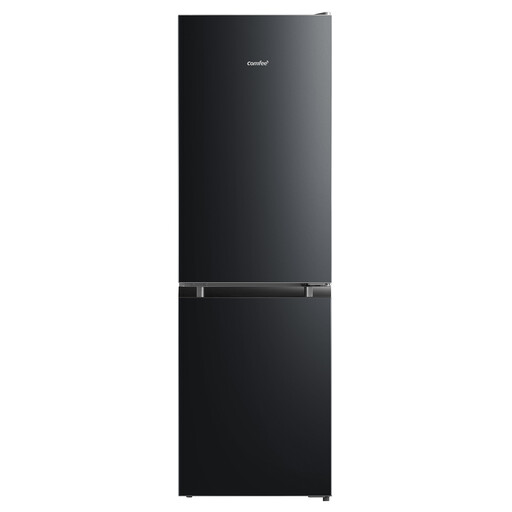 Image unavailable
Comfee' by Midea RCB230BL2EU(E), 174 l
If you want to store portions in a 174 l fridge-freezer, check that the chilled and frozen capacities suit your typical week. The product title lists Low Frost, an adjustable thermostat and a reversible door. Check the energy label to compare kWh/year.
View on Joybuy
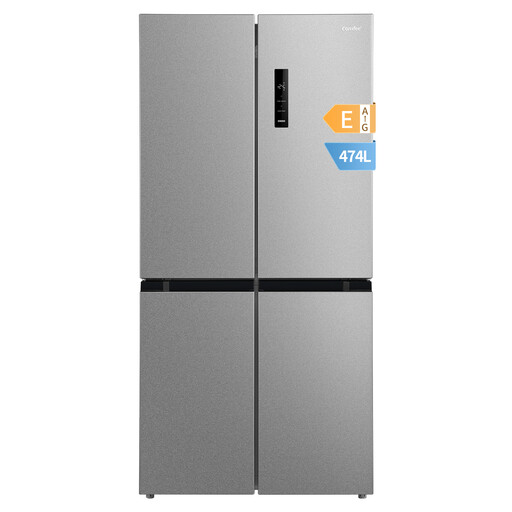 Image unavailable
COMFEE' RCF470LS2EU(E), 474 l, four doors
This four-door model may be worth considering if you want to organise chilled and frozen food in one appliance. The product title lists a capacity of 474 l, Vario Box and an E energy rating. Check how the capacity is split between the two uses, the kWh/year on the energy label and the space needed for installation.
View on Joybuy
Frequently asked questions
Which figures should I compare when storing prepared meals?
First compare the chilled and frozen capacities separately, then check the kWh/year and noise levels of appliances that meet your storage needs. The European Commission says this information appears on the energy label for refrigeration appliances. The energy rating alone doesn’t tell you how much room there is for your portions.
How should I store prepared meals in the fridge?
Put them in sealed containers without overfilling the appliance. Anses recommends allowing air to circulate and keeping the temperature between 0 and +4 °C at the coldest point in the fridge.
What should I check before installing a fridge-freezer or an additional freezer?
Measure the space and the delivery route, then check the instructions for the exact model to find out how the doors open and what ventilation clearance is needed. If you’re buying two appliances, check the requirements for both before deciding on a configuration.
Does a new fridge sold in France have to display an energy label?
Yes. According to the French Ministry of the Economy, new fridges sold in shops or online in France must display an energy label. Use it to compare the features of the model you’re considering, rather than looking at its rating alone.


