What sets the different formats apart?
Make a note of the portions, leftovers and shopping you need to store during your busiest period. Then compare the formats based on what matters most to you, and check the installation requirements and features of the specific model.
Upright freezer
Consider it: if you often take out different portions and want to keep them separate in drawers.
Bear in mind: the drawers may limit the space available for your bulkiest dishes.
Chest freezer
Consider it: if large containers or bulk buys make up most of your supplies.
Bear in mind: you’ll need to organise the food carefully to find and retrieve items at the bottom.
Large fridge-freezer
Consider it: if you also need to replace your fridge and the freezer compartment has enough capacity for your supplies.
Bear in mind: only part of the total capacity is available for freezing meals.
| Criteria |
What to check |
Who it matters to |
| Freezer capacity |
Count how many containers you need to store at once and compare the litres available for freezing, especially with a fridge-freezer. |
When prepared meals and planned shopping build up, I want to fit everything in without confusing total capacity with space for frozen food; around 31% of consumers prioritise this capacity. |
| Access to portions |
Measure your largest dishes and check the usable height, drawers or baskets, and how easy they are to access when full. |
If I often take out a particular portion, I want to find it without moving everything else; access and organisation are priorities for around 31% of consumers. |
| Location |
Measure the appliance, the route to its location and the space needed to open it. Compare the room’s temperatures with the range specified for the model. |
If space is limited or the room is unheated, my main concern is whether I can install and use the appliance there; around 23% of consumers put this constraint ahead of other criteria. |
| Everyday use |
Check the product details for annual energy consumption in kWh, noise, defrosting and storage time in the event of a power cut. |
For an appliance that runs all the time, I mainly keep an eye on maintenance, noise and energy consumption; these are the top priorities for around 15% of consumers. |
The European Commission says that the energy label for refrigeration appliances provides information including energy consumption, capacity and noise. To compare energy consumption, look at appliances of a similar type and capacity rather than judging them on their energy rating alone.
Joybuy models for your storage needs
These models cover the three options explored here: a fridge-freezer if you’re replacing your fridge too, a chest freezer for supplies you can organise, and an upright freezer for separating portions. Compare each appliance’s freezer capacity with the amount you actually need to store.
 Image unavailable
Candy CFQQ5T817EPS, 467 L four-door fridge-freezer
Worth considering if you’re replacing your fridge too and want to keep a supply of frozen meals. The product description lists 156 L for freezing, with two drawers, out of a total capacity of 467 L; check that this is enough for your needs.
Listed features include Total No Frost, energy consumption of 290 kWh/year and dimensions of 181,5 × 83,3 × 65 cm. Check the clearance needed and the ambient temperature range required for installation.
View on Joybuy
 Image unavailable
Haier HTW5618ENMG, 360 L three-door fridge-freezer
This fridge-freezer could be a good fit if you’re replacing your fridge and want to organise portions in several drawers. Of the stated total capacity of 360 L, 125 L is for freezing, split across three drawers.
The product description lists Total No Frost, 271 kWh/year and dimensions of 185 × 59,5 × 66,7 cm. Compare the 125 L capacity with your stock and check the model’s installation requirements.
View on Joybuy
 Image unavailable
AUCMA, 291 L convertible chest freezer
If you want to store a batch of prepared meals in a chest freezer, this model has a stated capacity of 291 L and a removable basket. It’s described as convertible between fridge and freezer modes; plan how you’ll organise portions in its open interior.
Its stated dimensions are 1100 × 597 × 872 mm and its energy consumption is 226 kWh/year. Before installing it in a garage or cellar, check the permitted ambient temperature range and defrosting requirements.
View on Joybuy
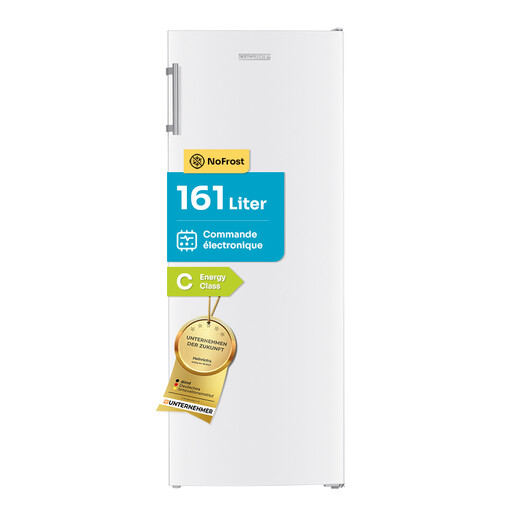 Image unavailable
Heinrich´s, 161 L upright freezer
If you want to separate portions in an upright freezer, this model has a stated capacity of 161 L, three drawers and two shelves. Check that your containers will fit in this layout.
The product description lists No Frost and an energy rating of C. Check the external dimensions, ambient temperature range and annual energy consumption in kWh to compare it with other appliances and plan its installation.
View on Joybuy
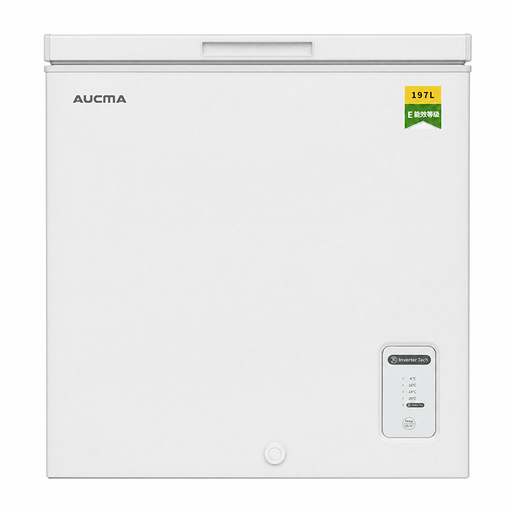 Image unavailable
AUCMA, 197 L convertible chest freezer
This 197 L chest freezer is worth considering if you want a separate supply and can organise your meals in an open space with a removable basket. The product is described as convertible between fridge and freezer modes.
The product description lists energy consumption of 197 kWh/year and dimensions of 816 × 554 × 848 mm. Check the clearance needed to open the lid, the room’s temperature range and defrosting requirements.
View on Joybuy
Frequently asked questions
How can I tell if a large fridge-freezer will have enough space for my frozen meals?
Compare your maximum stock with the capacity of the freezer compartment alone, and check that your containers will fit in its drawers. For example, the Joybuy product listing for the Whirlpool WB70E973W gives a freezer capacity of 153 L out of a total capacity of 462 L.
Can I keep a chest freezer in an unheated garage?
Yes, if the ambient temperature range specified for the model covers the temperatures the garage actually reaches. Check its climate class and manual: the chest freezer format alone doesn’t guarantee it’s suitable.
What should I look for on the energy labels of two appliances?
Compare annual energy consumption in kWh, compartment capacities and noise levels, focusing on appliances of a similar type and capacity. The European Commission also says the label shows their energy rating; don’t base your decision on that letter alone.
Can freezing preserve a dish that’s close to its use-by date?
Don’t rely on freezing to make food safe once it’s close to its use-by date. Anses recommends freezing food as soon as you buy or prepare it and points out that most micro-organisms survive at -18 °C; it also recommends not refreezing food once it has been defrosted.


