What should you compare?
If you prepare meals regularly, first choose a format that can store what you have between sessions: a small compartment for occasional use, a fridge-freezer if its freezer is large enough, or a separate appliance if you need more storage. Then consider how easy it is to access the contents, along with installation and day-to-day requirements.
| Priority |
What to check |
Depending on your needs |
| Freezer capacity |
Count the portions, containers and ingredients you store at the same time. Compare the usable freezer capacity in litres, separately from the fridge capacity; UFC-Que Choisir points out that a small freezer compartment may not be enough if you use a lot of frozen food. |
I cook several batches before replenishing my stock, so all my containers need to fit without filling the compartment to capacity. |
| Access to portions |
Look at the drawers in a fridge-freezer or upright freezer, and any baskets in a chest freezer. Check that larger containers will fit and remain easy to reach. |
If I take out a meal every day, I want to find my portions without moving the whole stock around; a chest freezer needs more organising if food is stacked. |
| Energy consumption and noise |
Compare the kWh/year shown on the energy label and the noise level of the specific models, making sure they have a similar capacity and function. ADEME points out that both fridges and freezers run continuously, so adding an appliance means considering the consumption of both. |
If I add a freezer to my existing fridge, I want to know how much extra energy the new appliance will use. Noise also matters in an open-plan kitchen. |
| Space and installation |
Measure the height, width, depth, access route and clearance needed to open the door or lid. Follow the manual’s ventilation guidance; if you’re placing the appliance in a cold room, check the permitted ambient temperature range for that model. |
Capacity won’t help if the appliance won’t fit through the door, lacks clearance or isn’t suitable for the temperature of the room where I plan to put it. |
A few examples from popular brands
These examples show different formats; the features listed apply to the specific models and don’t describe every product range from each brand.
Bosch
These two freestanding fridge-freezers let you compare how much space is given to the fridge and freezer sections.
- According to Bosch Electroménager France, the KGN492IAF offers 311 l of fridge capacity and 129 l of freezer capacity; the KGV36VLEAS offers 214 l and 94 l respectively.
- Their stated energy ratings also differ: A for the KGN492IAF and E for the KGV36VLEAS. Check the dimensions and product details for the exact model rather than making assumptions about the brand as a whole.
Liebherr
The FNe 5006 is an example of a separate upright freezer, which makes it easy to organise food vertically.
- Liebherr lists a total capacity of 238 l, NoFrost and a noise level of 36 dB for this model.
- You’ll need a dedicated space for it: its stated external dimensions are 165,5 × 59,7 × 67,5 cm. Check its annual energy consumption too before adding it to an existing fridge.
Beko
The HSM46740 is an example of a chest freezer for storing larger quantities, provided you have enough room for it.
- Beko France lists a net freezer capacity of 451 l and a minimum operating ambient temperature of -15 °C for this model.
- Top access means you’ll need to allow room for the lid to open and organise food stored at the bottom. Don’t assume the stated temperature range applies to another model.
Appliances to explore on Joybuy
These options include fridge-freezers for storing fresh and frozen food in one appliance, as well as a chest freezer to consider as extra storage. Compare the usable freezer capacity of your chosen model with the space your portions need: a fridge-freezer’s total capacity isn’t the same as the capacity of its freezer section.
 Image unavailable
Candy CFQQ5T817EPS, 4 doors, 467 L
A fridge-freezer to consider if you want one appliance for fresh food and frozen portions. The title lists a total capacity of 467 L, Total No Frost technology and an energy rating of E; check the space available in the freezer section and the installation dimensions separately.
View on Joybuy
 Image unavailable
Haier HTW5618ENMG, 3 doors, 360 L
This fridge-freezer combines fridge and freezer storage in a three-door appliance. The title lists a total capacity of 360 L, Total No Frost and an energy rating of E; compare the freezer’s capacity with the size of your containers before choosing.
View on Joybuy
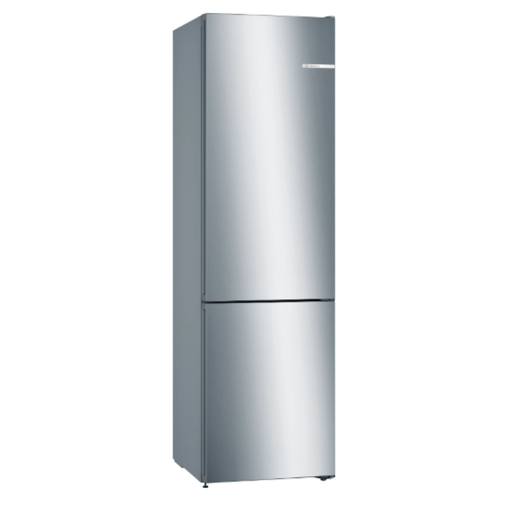 Image unavailable
Bosch KGN39VLEB, 368 L
This fridge-freezer is another option if you want both functions in one appliance. The stated 368 L is the total capacity and the title lists an energy rating of E; check how the capacity is divided between the fridge and freezer, as well as how much space you have at home.
View on Joybuy
 Image unavailable
CHiQ JR263LGE, 262 L, 54 cm wide
Its stated width of 54 cm is worth considering if space is tight, as long as the freezer can accommodate your portions. The title lists a total capacity of 262 L, a height of 176 cm and Low Frost technology; check the capacity of each section and the defrosting instructions.
View on Joybuy
 Image unavailable
TCL CF182EWE0FR, 140 L chest freezer
Consider this chest freezer if you want extra storage without replacing your fridge. The title lists a capacity of 140 L, a storage basket, a counterbalanced lid and an energy rating of E. Allow space to open the lid and reach the bottom; check the annual energy consumption and defrosting method before comparing it with other options.
View on Joybuy
Frequently asked questions
How much freezer capacity do you need for meal prep?
Start with the portions and containers you store at the same time, rather than relying on a universal capacity per person. UFC-Que Choisir recommends taking your frozen food consumption and shopping habits into account; then compare your stock with the usable freezer capacity in litres, without confusing it with the fridge-freezer’s total capacity.
Should No Frost determine which model you choose?
No. First check that the freezer has enough room and is laid out to suit your portions. Bosch lists No Frost for the KGN492IAF and Liebherr lists NoFrost for the FNe 5006; check this feature for each individual model, along with its maintenance instructions.
Can you put a chest freezer in a garage or cellar?
Yes, as long as the permitted ambient temperature range for the model suits the room. Beko France lists a minimum operating temperature of -15 °C for the HSM46740, but this limit doesn’t apply to other chest freezers. Also check that there’s enough space to open the lid and access the contents.
How do you compare a fridge-freezer with a fridge and separate freezer?
Compare the usable capacity and kWh/year for the specific appliances in each option. ADEME points out that fridges and freezers run continuously, so if you keep your fridge and add a freezer, consider the energy consumption of both appliances, not just the new one.
What should you measure before ordering?
Measure the space, access routes and clearance needed to fully open the door or lid, then follow the clearances in the manual. As general guidance, UFC-Que Choisir recommends leaving at least 10 cm above and behind appliances for ventilation; always check the instructions for the model you choose.


