Weekly meal preppers
You prepare several meals at once and want to find the right container quickly. Easy access, drawers and being able to rotate your portions matter just as much as capacity.


Start by checking how many portions you store at once and how much freezer space you already have. If a suitable compartment is enough, you don’t need another appliance. If you do need one, choose a format based on how you want to access your food, the space available and the usable capacity you need, then compare the kWh/an figures for the specific models you’re considering; ADEME points out that freezers run continuously. To freeze prepared meals, the French Ministry of Agriculture recommends checking that the appliance or compartment is suitable for this purpose, rather than simply for storing food that’s already frozen.
You prepare several meals at once and want to find the right container quickly. Easy access, drawers and being able to rotate your portions matter just as much as capacity.
You store several portions or large containers at once. Work out how much you need to store at peak capacity, then weigh up storage space against how easy it is to organise.
You want to avoid adding a large appliance. First, check the freezer compartment in your fridge-freezer, then consider an additional appliance only if you genuinely need more freezer space.
Consider one if: you regularly take out different portions and have room for a tall appliance.
Check: that the drawers fit your containers, the door has enough clearance to open and the model’s defrosting technology suits you.
Consider one if: you store a lot at once and have enough floor space and clearance above the lid.
Check: how the inside is organised and how easy it is to reach portions at the bottom, as well as the model’s defrosting requirements.
Consider one if: you’re already replacing your fridge, or its freezer compartment genuinely has room for all your portions.
Check: the capacity of the freezer section alone and whether it can freeze prepared meals; the total capacity also includes the fridge section.
Consider one if: you only need a little extra freezer space and your home can’t accommodate a large appliance.
Check: that it can hold your containers and that its dimensions, door clearance and kWh/an figures suit the space.
The percentages below show the share of consumers who name each as their main priority when looking for a way to freeze prepared meals.
| Concern | What to check | Who cares most about it? |
|---|---|---|
| Finding the portions | Drawer dimensions and number; which way the door opens. | When I take out different containers, I want to find them and rotate them without moving everything around. Consumers who prioritise easy access account for around 29 %. |
| Storing a large stock | Usable capacity in litres; dimensions and clearance for the lid. | If I store lots of portions or large containers, I want the appliance to hold everything I need at peak capacity. Consumers who prioritise a large storage capacity account for around 22 %. |
| Avoiding an extra appliance | Capacity in litres of the freezer section; suitability for freezing prepared food. | If my fridge-freezer compartment has enough room for my portions, I’d rather not add another appliance. Consumers who prioritise using their fridge-freezer account for around 21 %. |
| Keeping the footprint small | Width, depth and height; space needed to open the appliance. | When space is limited, I look for an appliance that fits without obstructing the door or lid. Consumers who prioritise a small footprint account for around 14 %. |
| Keeping energy use in check | kWh/an on the label; usable capacity that meets your needs. | I want to keep electricity use down without choosing a freezer that’s too small. ADEME points out that freezers run continuously. Consumers who prioritise energy use account for around 14 %. |
Total capacity includes the fridge section too. The Joybuy listing for the Beko B5RCNE416HXB states 415 L in total, including 118 L for the freezer.
Compare the capacity of the freezer section alone with how much you store at once, and check that the compartment is suitable for freezing prepared meals.
With a chest freezer, portions at the bottom can be harder to reach, especially if you often rotate different containers.
Check the interior layout, clearance above the lid and floor space. If you regularly take out portions, compare the storage options in an upright freezer too.
ADEME points out that freezers run continuously, so an additional appliance will add to your ongoing electricity use.
First, check how much usable space you have in your current appliance, then compare the kWh/an figures for models that can hold the amount you plan to store.
For the CHiQ CSD206NEID, the Joybuy listing gives different capacity and energy class details in the title and description.
Before settling on a capacity or energy class, check the full model reference and the details on the corresponding energy label.
Haier’s upright and chest freezer models are worth comparing if you’re weighing up different storage layouts.
The FNd 522i and CFd 2505 Plus models let you compare an upright and a chest freezer based on your available space and preferred storage layout.
The GS58NAWDV iQ500 is an upright freezer worth considering if you have a sufficiently wide space for it.
The B5RCNE416HXB shows why it’s important to distinguish between the fridge and freezer capacity of a fridge-freezer.
The GSN54EWCV is an upright freezer to consider based on the capacity you need and the space you have available.
These Joybuy models include fridge-freezers with a freezer compartment, an upright freezer and a small additional freezer. Check that your chosen model suits your space and is suitable for freezing prepared meals.
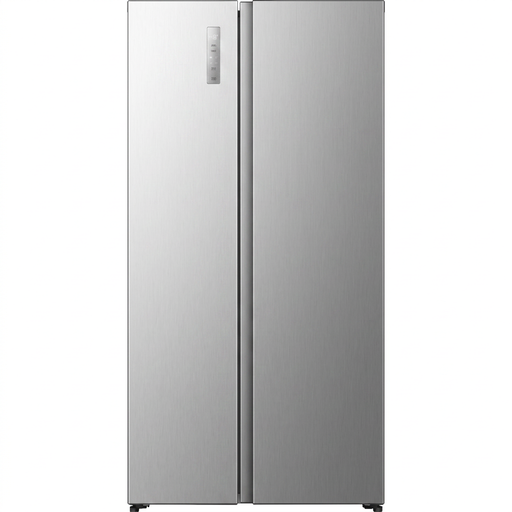 Image unavailable
Worth considering if you’re looking for a fridge-freezer and want to know how much capacity is dedicated to frozen portions.
The description lists 197 L for the freezer and a freezing capacity of 12 kg/24 h.
Listed dimensions: 911 × 1786 × 615 mm. Before using it to freeze prepared meals, check that the compartment is suitable for this purpose.
 Image unavailable
Worth considering if you want to store portions in an upright freezer with several storage spaces.
The title lists a capacity of 161 L and three freezer drawers; the description mentions two compartments and a Fast Freeze function down to −22 °C.
Check the model’s documentation to see whether it’s suitable for freezing fresh food, including whether it has a compartment designed for this purpose.
 Image unavailable
Worth considering if you want to store portions in a fridge-freezer and split them between several drawers.
The description lists a 125 L, 4-star freezer, three freezer drawers and a freezing capacity of 10 kg/24 h.
The fridge capacity is listed as 235 L; the energy class given in the title is E.
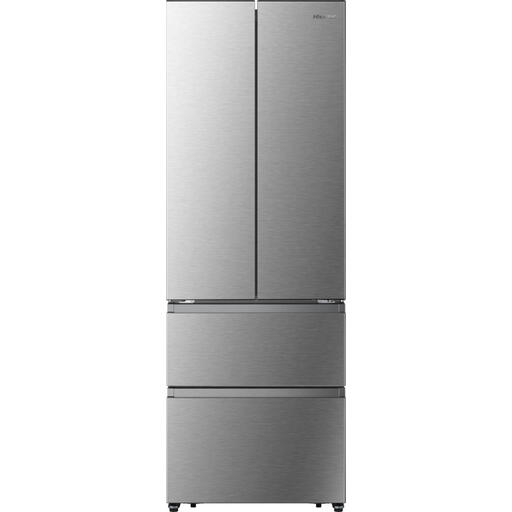 Image unavailable
Worth considering if you want a fridge-freezer and need to know how much capacity is actually dedicated to the freezer.
The description lists 149 L for the freezer and a freezing capacity of 11 kg/24 h.
Check the documentation to see whether the compartment is suitable for freezing prepared meals.
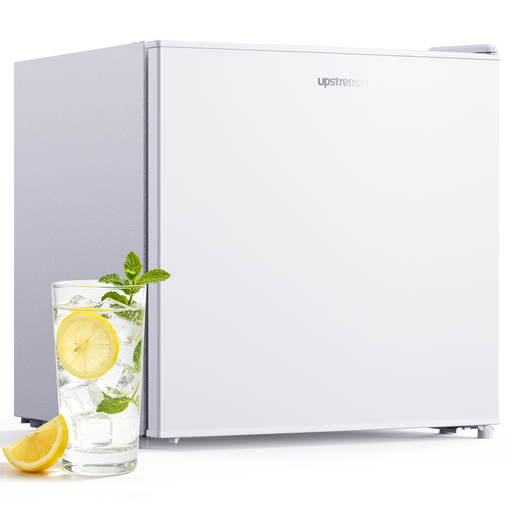 Image unavailable
Worth considering for freezing portions in a small space, keeping in mind its limited capacity.
The title lists a 35 L, 4-star freezer. Listed dimensions: 47,5 × 44,2 × 48,8 cm; the door is reversible.
Don’t assume it can just because it’s called a “freezer”. According to the French Ministry of Agriculture, a 4-star compartment can freeze food by quickly bringing its centre down to −18 °C; not all compartments designed to store food that’s already frozen can do this. Check the star rating and the model’s instructions.
Anses recommends putting meals in the fridge as soon as they’re no longer hot, and not leaving them for more than two hours before refrigeration. Dividing a large batch into smaller portions helps it cool more quickly. Then follow the guidance for the food and appliance.
Compare the kWh/an figures for the capacity you need, then check the delivery, installation and old-appliance collection options available. The French Ministry of the Economy points out that when a consumer buys goods from a professional seller, the statutory legal guarantee of conformity is compulsory and separate from any optional commercial warranty.
Yes. The European Commission states that energy-labelling requirements apply to fridges and freezers; France’s DGCCRF explains the rules for domestic refrigeration appliances. Check the label for the exact model rather than relying on the energy class of a different one.