What should you check before choosing?
Start by thinking about how many meals you want to store and how often you’ll take them out. Then check that the appliance and its location are right for the way you plan to use it.
| What to consider | What to check | Think about your needs |
|---|
| Access to portions |
Check the number and layout of the drawers, shelves or baskets. In a chest freezer, plan out areas or use labels for food stored at the bottom. |
I want to find a particular meal without moving my whole food stock. UFC-Que Choisir points out that the compartments in an upright freezer make food easier to organise and access. |
| Capacity and space |
Compare the usable frozen-food capacity with the number of portions you keep at any one time, rather than the total capacity of a fridge-freezer. Measure the space available, the clearance needed and, where relevant, the under-counter space. |
If my current compartment is big enough, I can stick with one appliance. If my prepared meals are taking up too much space over time, I’ll need to work out how much extra capacity I need. |
| Where you’ll install it |
Compare the room’s minimum and maximum temperatures with the climate class and limits specified for the exact model. Check its dimensions, too. |
If I’m putting it in a cellar, pantry or another room outside the kitchen, I want to know whether it can operate at the temperatures in that location. |
| Power cuts and use |
Check the stated power-cut storage time in hours for the specific model and whether it has an alarm. This does not replace the guidance on checking food after a power cut. |
If I’m storing a large amount of food, I want to know how the appliance is expected to perform if the power is interrupted. |
| Freezing prepared meals |
Check that the compartment is suitable for freezing prepared meals, including whether it has a 4-star rating. If you’re adding a lot of meals at once, check its freezing capacity in kg/24 h. |
I prepare home-cooked meals to freeze, rather than just storing products that are already frozen. The Ministry of Agriculture recommends setting the freezer to -18 °C. |
| Energy use and noise |
For appliances of a similar type and capacity, check the annual energy consumption in kWh, energy class and noise emissions on the energy label. |
I want to compare appliances that will be running continuously. The European Commission explains that their energy labels show, among other things, annual energy consumption, capacity and noise. |
Appliances to help organise your food stock
These Joybuy options include fridge-freezers if you want to keep everything in one appliance, as well as separate freezers in compact and chest formats for extra storage. First, choose the format that suits your portions and the space available, then compare models in that format.
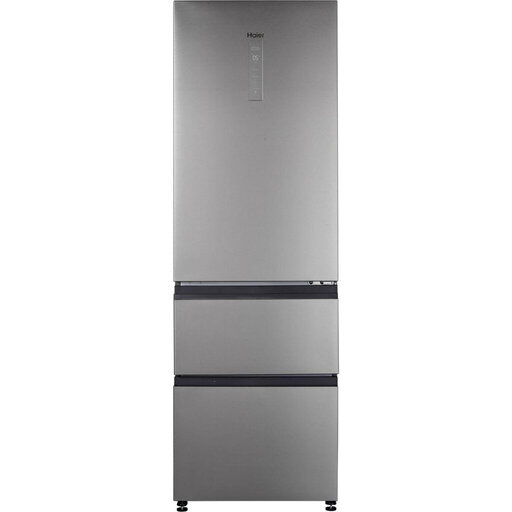 Image unavailable
Haier HTW5618ENMG, 3-door fridge-freezer, 360 L
If you want to store meals in a fridge-freezer, check that its freezer compartment can hold your food stock: the stated 360 L is the total capacity. The product title lists Total No Frost, energy class E, Wi-Fi and My Zone.
View on Joybuy
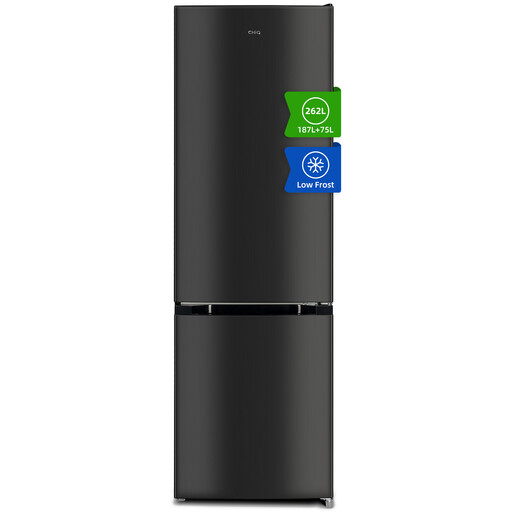 Image unavailable
CHiQ JR263LGE, 262 L fridge-freezer, 70/30
With this alternative fridge-freezer, compare the capacity of the freezer compartment with the number of portions you need to store, rather than focusing on the total capacity of 262 L. The title lists Low Frost, a width of 54 cm and a height of 176 cm; also check the temperatures it can operate in at your chosen location.
View on Joybuy
 Image unavailable
COMFEE' RCU60WH2(E), 60 L upright freezer
Its 60 L capacity makes it an option to consider as extra space for your portions. The title lists a reversible door and energy class E, but the details about the drawers don’t match the description of the interior. Check the exact layout before choosing.
View on Joybuy
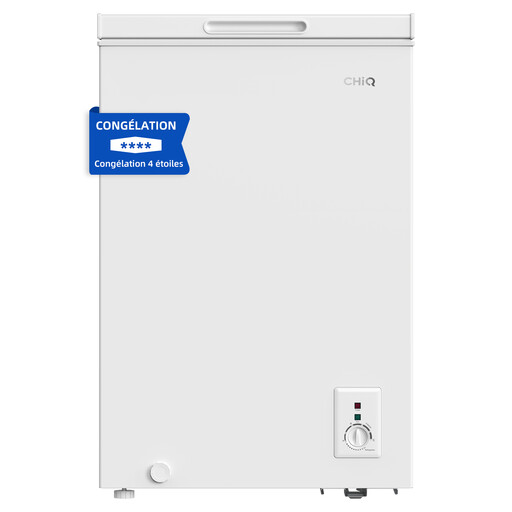 Image unavailable
CHiQ JR99DWE, 99 L chest freezer
This 99 L chest freezer can provide extra storage if you have room to open the lid and organise portions at the bottom. The title lists a 4-star rating, a removable basket and energy class E; check the permitted temperature range for the room you plan to use it in.
View on Joybuy
 Image unavailable
AUCMA, 291 L convertible fridge-freezer chest
If you need plenty of extra storage, compare its 291 L capacity with the space available and plan how you’ll organise portions under the lid. The title lists a removable basket and energy class E; check the selected operating mode and the temperatures the room can reach before using it as a freezer.
View on Joybuy
Frequently asked questions
How do I choose between a chest and an upright freezer for prepared meals?
An upright freezer is a good choice if you want to organise portions and take out specific meals regularly; a chest freezer is better suited to a large food stock that you can organise in containers or with labels. UFC-Que Choisir notes that the compartments in upright freezers make food easier to access. Measure the space available for each format, too.
Is a freezer compartment enough to freeze home-cooked meals?
No. The Ministry of Agriculture distinguishes between a compartment for temporarily storing frozen food and one capable of freezing food. For home-cooked meals, check that the compartment is suitable for freezing, including whether it has a 4-star rating; the ministry recommends setting the freezer to -18 °C.
What should I check before putting a freezer in a cellar or pantry?
Compare the room’s minimum and maximum temperatures with the operating limits of the exact model. For example, Beko lists -15 °C as the minimum ambient temperature for the HSM27050 chest freezer, but this figure doesn’t apply to other models.
How do I compare the energy use of two freezers?
Compare their annual energy consumption in kWh on the energy label, ideally between appliances of a similar type and capacity. The European Commission says the label also shows the energy class, storage capacities and noise emissions.
How should I defrost a prepared meal?
Anses recommends defrosting food in the fridge, in a microwave using the defrost setting, or quickly by cooking or reheating it. According to its guidance, eat defrosted food promptly, within three days at most, and don’t refreeze it.


