If most of your prepared food stays in the fridge and you only freeze a few portions, first check whether your current appliance is up to the job, then compare the usable capacities of fridge freezers. If your frozen portions regularly fill the freezer compartment, a separate freezer may be worth considering, provided you have room for it. In either case, measure your containers, the space available and the delivery access route before choosing.
Who is this choice for?
Households cooking for several days
You prepare ingredients or meals in one session and need to divide the containers between the fridge and freezer. The E.Leclerc Observatory of New Consumer Trends describes this approach to planning meals for the week and storing them in either compartment.
Kitchens where every centimetre counts
An alcove, narrow hallway or nearby cabinets can limit your choice. Appliance dimensions are only part of the picture: you also need to consider the delivery route and whether the doors can open once the appliance is in place.
Households that regularly freeze portions
If your stash of prepared meals has to share space with other frozen food, usable capacity, access to the drawers and room for a possible separate appliance all become important factors.
What are the key differences between the options?
Keep your current appliance
When: your containers already fit in the fridge and freezer, and you do not need to store a large amount of frozen food.
Limitation: rearranging the shelves will not create more capacity if the compartments are regularly full.
Choose a fridge freezer
When: you need fridge space as well as room for frozen portions that will fit in the freezer compartment.
Limitation: a large total capacity does not guarantee a spacious freezer; compare the capacities of both compartments separately.
Add a freezer
When: your current fridge meets your needs, but you regularly run out of room for frozen portions.
Limitation: an extra appliance needs a suitable space and its energy consumption is another factor to consider.
When preparing meals for several days, first work out what is limiting your routine: space for containers, installation, the need for regular frozen storage or everyday convenience.
| Criteria |
What to check |
Who is this for? |
| Fridge and freezer capacity |
Compare the usable litres in each compartment and the height available for your containers. |
If meals for the next few days and portions to freeze are competing for the same space, I need to know the capacity of each compartment. Around 36% of consumers would put this balance of space at the top of their list of needs. |
| Installation and delivery |
Measure the height, width and depth, then check the delivery route and how far the doors open. |
In a narrow kitchen, I want to be able to get the appliance in and open its doors without obstructing nearby cabinets. This would be the top priority for around 29% of consumers. |
| Frozen storage |
Check the usable freezer capacity and drawer layout; if you are considering a separate appliance, make sure you have room for it too. |
If I often freeze several batches of meals, I need enough storage to find portions without moving everything around. Around 21% of consumers would make this their priority. |
| Everyday comfort |
Check the noise level and annual energy consumption on the energy label, then look at the defrosting requirements. |
With an open-plan kitchen, I pay attention to the noise from an appliance that runs continuously, as well as its maintenance and energy consumption. These would be priorities for around 14% of consumers. |
Mistakes to avoid
-
Choosing based on total capacity alone
Two fridge freezers can divide their capacity differently between the fridge and freezer. Extra litres will not necessarily solve a lack of space for frozen portions.
Estimate how much room your containers take up in each compartment, then compare the usable capacities and layout of the model you are considering.
-
Measuring the kitchen but not the route to it
The depth, nearby doors or a narrow access route can make installation difficult, even if the appliance appears to be the right width.
Check the space, delivery access and door clearance. For a built-in model, also check the dimensions of the housing and the type of hinge required.
A narrow access route could mean changing your planned layout or prevent the appliance from being delivered to the chosen spot.
-
Assuming a freezer is suitable for a garage
Whether an appliance can operate in an unheated room depends on the model. Beko states that certain Freezer Guard models can operate at ambient temperatures as low as −15 °C, but this does not apply to all its freezers.
Before installing a freezer in a garage or cellar, check the ambient temperature range and the instructions for the exact model.
-
Taking a feature as a guarantee of food storage performance
No Frost labels and compartment names do not replace checking the capacity and conditions of use. UFC-Que Choisir assesses factors including freezing speed and the temperature reached as part of its test procedure.
Start by comparing capacity, dimensions and the energy label. To compare the performance of specific models, look for tests covering those models.
Brands and models to consider
Bosch
Two formats to compare, depending on the space available: a built-in fridge freezer or a separate upright freezer.
- Bosch lists 200 l of fridge capacity and 70 l of freezer capacity for the KIV875SE0; the GSN29UWEW freezer is listed at 200 l.
- These capacities apply to two specific models. For the built-in fridge freezer, also check that the housing and hinges are suitable.
Samsung
A fridge freezer to consider if you are looking for generous capacity without overlooking its installed dimensions.
- Samsung lists a capacity of 385 l and a width of 59,5 cm for the RB38T672ESA/EF.
- Check how the capacity is divided between the fridge and freezer, as well as the height and depth of this model, before deciding whether it will suit your kitchen.
Liebherr
The CBNsfc 5223 Plus is worth considering if storing fresh ingredients matters as much as storing frozen portions.
- Liebherr lists a total capacity of 320 l for this model and describes BioFresh compartments and separate DuoCooling circuits.
- These advertised features do not apply to every Liebherr appliance: compare the layout and capacities of the exact model.
Beko
Separate freezers to consider when extra storage for frozen portions is your main need.
- Beko lists a net freezer capacity of 404 l for the RFNE448E35W upright freezer.
- Suitability for an unheated room must be checked for each model: the temperature range stated for certain Freezer Guard models does not automatically apply to this one.
Fridge freezers for meal prep
These fridge freezers combine refrigeration and freezing in one appliance. Compare their compartments and overall dimensions with your containers before considering a separate freezer, if needed.
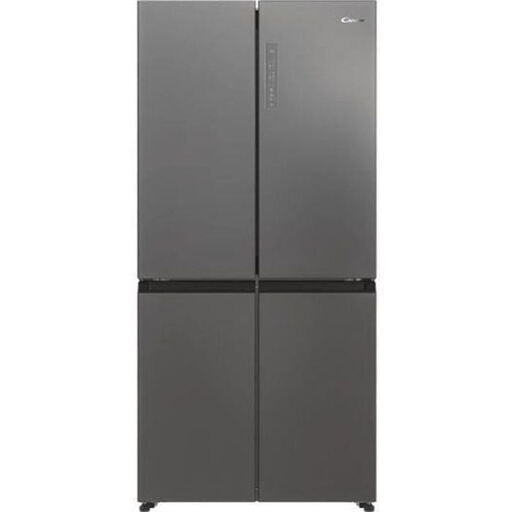 Image unavailable
Candy CFQQ5T817EPS, 467 L four-door fridge freezer
Worth considering if you divide your prepared meals between the fridge and freezer and have room for a wide appliance.
Advertised total capacity of 467 L, Total No Frost and energy rating E.
Check the advertised width of 83,3 cm, the delivery access route and door opening; the doors are listed as non-reversible.
View on Joybuy
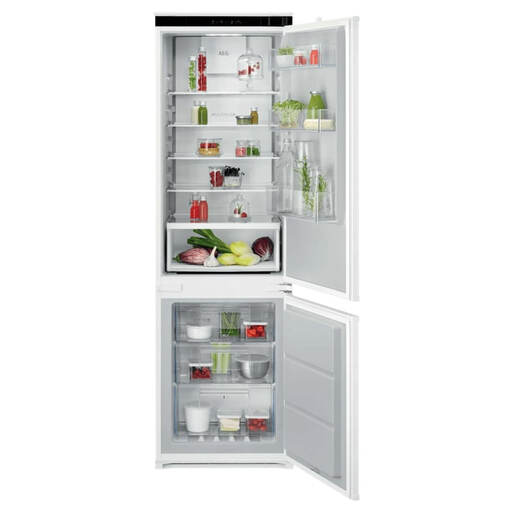 Image unavailable
AEG NSC6M18FES, 249 L built-in fridge freezer
Consider this if your fridge freezer needs to fit into a fitted kitchen rather than stand freely.
Advertised total capacity of 249 L, TwinTech No Frost and energy rating E.
Confirm the housing dimensions and the hinges required. Also check the exact capacity of each compartment: the listed figures of 186 L and 62 L do not add up to the advertised total.
View on Joybuy
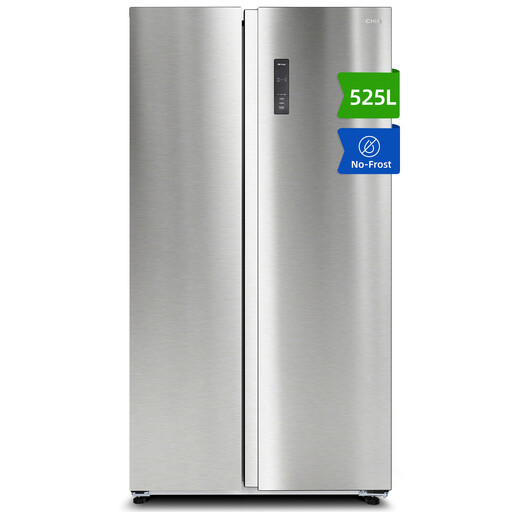 Image unavailable
CHiQ JR525WSE, 525 L side-by-side fridge freezer
Worth comparing if you want to assess generous fridge capacity and frozen storage separately.
Advertised capacities of 333 L for the fridge and 192 L for the freezer; No Frost, 37 dB and energy rating E.
Check the overall dimensions and interior layout to see whether the appliance will fit in your home and accommodate your containers.
View on Joybuy
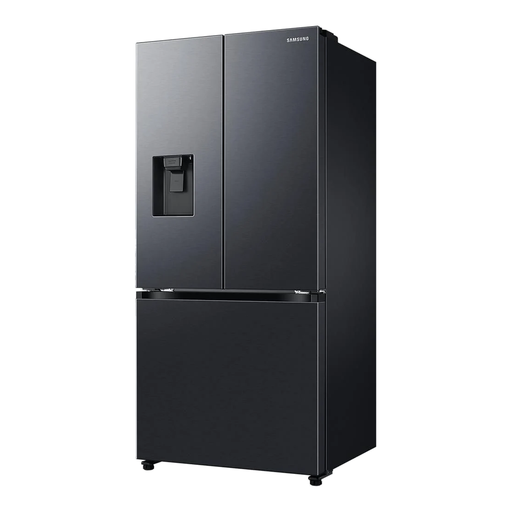 Image unavailable
Samsung RF50C530EB1, 495 L multi-door fridge freezer
Worth considering if you are looking for a large-capacity fridge freezer for storing prepared meals in both the fridge and freezer.
Advertised total capacity of 495 L and energy rating E.
Allow for the specified 50 mm clearance at the back and sides; confirm the installation requirements for the dispenser on your chosen variant.
View on Joybuy
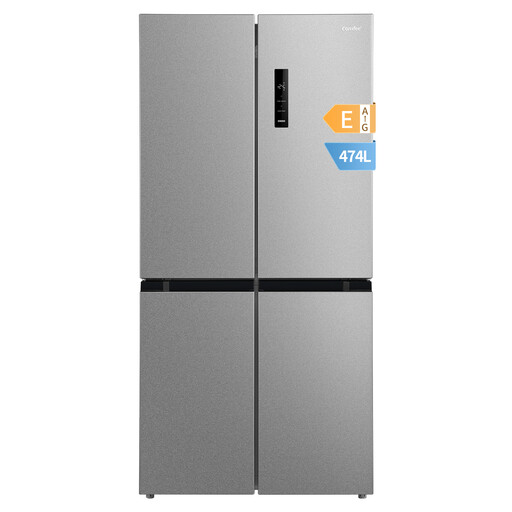 Image unavailable
COMFEE' RCF470LS2EU(E), 474 L four-door fridge freezer
Consider this if the four-door access and drawer layout are important for organising your prepared meals.
Advertised total capacity of 474 L, a crisper drawer with three temperature settings and energy rating E.
Check the usable fridge and freezer capacities separately before deciding how much room it offers for frozen portions.
View on Joybuy
Frequently asked questions
What should I compare on a fridge freezer’s energy label?
Compare the energy rating, annual energy consumption in kWh, storage capacities and noise level of the specific model. The European Commission says this information appears on the energy label for fridges and freezers. Pay particular attention to the capacity of each compartment if you prepare meals in advance.
Do I need a separate freezer to prepare meals for the week?
Not necessarily: a fridge freezer or your current appliance may be enough if there is room for your frozen portions. If they regularly fill the freezer compartment while the fridge has enough space, compare a separate freezer with the space you have available to install it.
Does noise matter in an open-plan kitchen?
Yes. It is worth comparing the stated noise level if the appliance is near your living area. Check the noise emissions on the energy label for the exact model, alongside its energy consumption and capacities, rather than judging how quiet it will be by its capacity alone.


