People who prepare meals for the week
Fresh ingredients, cooked meals and portions to freeze all need different amounts of space. Compare how much room each requires and check that your containers will fit without overcrowding the fridge.


A fridge-freezer is a good choice if both its fridge and freezer compartments have enough room for your groceries and prepared meals. If only the freezer is overflowing and your current fridge is big enough, consider a separate freezer instead. To stick with one appliance while gaining more freezer space, compare the usable capacity of each compartment and the space the appliance will take up. In all cases, Anses recommends not overloading your fridge and keeping its coldest area between 0 and +4 °C.
Fresh ingredients, cooked meals and portions to freeze all need different amounts of space. Compare how much room each requires and check that your containers will fit without overcrowding the fridge.
If your current fridge has enough room for fresh food, a separate freezer gives you more space for frozen portions without replacing it. You will, however, need to find somewhere to put it.
If your appliance does not clearly show the temperature in its coldest area, you can check it with a thermometer. Anses recommends monitoring the temperature to keep perishable foods safely stored.
Start by working out how much space you need for fresh and frozen food, then check the storage layout, temperature controls and installation requirements.
| Criteria | What to check | Your needs |
|---|---|---|
| Capacity split | Compare the usable capacity of the fridge and freezer separately. If you are keeping your current fridge, measure the space available for a second appliance. | Do I mainly store fresh ingredients, or do my frozen portions regularly take up the whole compartment? |
| Storing portions | Check the size of the drawers, the shelf layout and the space left for air to circulate around containers. Anses advises against overloading the fridge so that air can circulate. | My containers and dishes need to fit without being stacked so high that they block the cold zones. |
| Temperature control | Find out where the coldest area is and how to check its temperature: with a built-in display or a thermometer. Anses recommends keeping this area between 0 and +4 °C. | If I store cooked meals or other perishable foods, I want to be able to check the temperature where I keep them. |
| Installation and use | Measure the available space and check that the doors can open fully. To compare appliances of a similar type and capacity, check their annual energy consumption, storage volumes and noise levels on the energy label, as explained by the European Commission. | In an open-plan kitchen or a compact home, space and noise matter just as much as the extra capacity. |
A large fridge will not make up for a freezer that is too small if you mainly prepare portions to freeze.
Compare the usable capacity of each compartment with the space your groceries and containers actually take up.
Anses advises against overloading the fridge so that air can circulate inside.
Check the dimensions of your containers and plan a layout that does not restrict airflow.
A display or No Frost system does not replace checking the temperature in the coldest area of the fridge.
Check the model’s manual and use a thermometer if the built-in display does not give you a clear reading.
A second appliance needs a permanent spot and will add to your electricity use and household noise.
Measure the space, then compare the model’s freezer capacity, annual energy consumption and noise level.
These examples show different ways to organise your storage. Their features do not apply to every model from the same brand.
Bosch offers both fridge-freezers and separate freezers, giving you two configurations to compare based on how much space you need for fresh and frozen food.
The RBsfd 5221 Plus BioFresh is an example of a large, single-door fridge for households with a separate freezer.
The W9C841COX is an example of a fridge-freezer that stores fresh and frozen food in one appliance.
Samsung’s buying guide also covers single-door appliances for organising your weekly meal prep.
This selection includes fridge-freezers, large-capacity models with two compartments and a freezer to add to an existing fridge. Focus on the space available for frozen food and the dimensions that will suit your kitchen.
 Image unavailable
This three-door model is designed to store fresh food and frozen portions in one appliance. It has a stated total capacity of 360 L, Total No Frost, My Zone, Wi-Fi and an E energy rating. Compare the capacity of each compartment and check that it will fit in your kitchen.
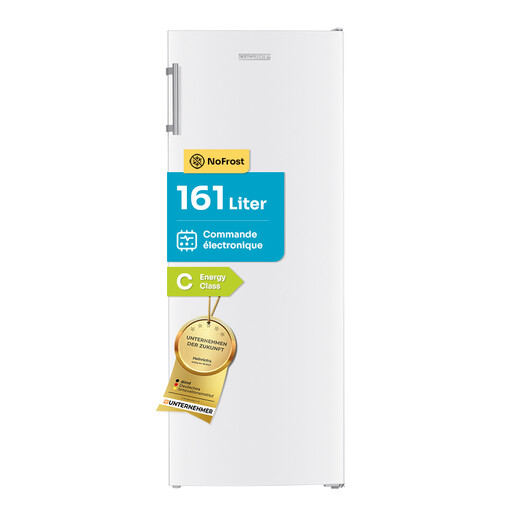 Image unavailable
Consider this option if your current fridge has enough room for fresh food but you need more space for frozen portions. The product title lists a capacity of 161 L, three freezer drawers, No Frost protection, an LED display and a temperature setting range of -14 to -22 °C. Make room for a separate appliance and check that the temperature settings suit your needs.
 Image unavailable
If you want one appliance with plenty of space for frozen food, the product title lists 333 L of fridge capacity and 192 L of freezer capacity. It also mentions No Frost, Multi-Airflow, touch controls, 37 dB and an E energy rating. Check its dimensions and internal layout against the size of your containers.
 Image unavailable
This bottom-freezer fridge-freezer combines fresh and frozen storage in one 282 L appliance with an E energy rating. Before choosing it for meal prep, compare the capacity of each compartment with your needs.
 Image unavailable
This 444 L model may be worth considering if you want to store fresh and frozen food in one appliance. The product title lists frost-free operation, 40 dB and an E energy rating. Check how the 444 L is split between fridge and freezer space before deciding whether it has enough room for your portions.
Anses recommends a temperature between 0 and +4 °C in the coldest part of the fridge. Store cooked meals and other perishable foods there, following the storage instructions in your appliance manual.
Choose based on which compartment needs more space. A fridge-freezer is a good choice if both its fresh and frozen storage capacities meet your needs. If your current fridge is big enough but the freezer is regularly overflowing, consider a separate freezer, taking into account where it will go, its noise level and its energy consumption.
It is useful if you cannot clearly check the temperature in the coldest area. Anses recommends monitoring this temperature and notes that some newer appliances already have a temperature display.
Anses recommends freezing food as soon as you buy or prepare it, rather than waiting until its use-by date is approaching. Also check that your freezer compartment can maintain a temperature of -18 °C.
For the relevant fridges and freezers, the European Commission says the label includes information such as the energy rating, energy consumption, storage volumes and noise level. Compare these details across appliances of a similar type and capacity, rather than relying on total capacity alone.