Households preparing several meals in advance
If you prepare ingredients and cook several portions in one session, compare the usable capacity with the volume of your dishes. Also check which steps the appliance can handle before and during cooking.


A cooking food processor is a good choice if you want to prepare ingredients and cook several dishes in one appliance, as long as its usable capacity and accessories suit your recipes. If chopping is your main concern, a food processor alongside your cooking appliances may be enough; if you mainly prepare dishes that need cooking, consider a multicooker instead. For soups and blended dishes, a heated blender is a more specialised option.
If you prepare ingredients and cook several portions in one session, compare the usable capacity with the volume of your dishes. Also check which steps the appliance can handle before and during cooking.
If you’re happy with your saucepan, oven or pressure cooker, a food processor can take care of chopping, mincing or kneading. Cooking then remains a separate step.
A heated blender may suit you if soups, smooth soups and compotes make up most of the dishes you prepare in advance. Compare its capacity per cycle with the number of portions you want to make.
Start with the tasks you do most often, then check the usable capacity and how much upkeep the model requires.
| Criterion | What to check | What you need |
|---|---|---|
| Usable capacity | Where stated, compare the usable capacity with the volume of each recipe. Don’t confuse the bowl’s total capacity with its usable capacity: Magimix lists 4,8 L total and 3,8 L usable for the Cook Expert XL Connect Premium. | I want to prepare several portions without having to cook multiple batches of the same dish. |
| Preparation and cooking | According to UFC-Que Choisir, functions vary between food processors. Check the chopping, mixing and kneading tools, as well as the cooking settings actually available. A food processor can prepare ingredients for cooking separately; a multicooker focuses on cooking, as BUT explains. | If I want to minimise transfers between appliances, I need preparation and cooking functions suited to the same recipes. |
| Type of dishes | Look for the settings your dishes need, such as steaming, slow cooking or pressure cooking, depending on the model. For soups and blended dishes, check the programmes and capacity per cycle of a heated blender instead. | Are the meals I prepare in advance mainly dishes to cook, ingredients to chop or blended dishes? |
| Accessories | Check what’s included with the exact model: a blade, slicing disc, whisk, stirrer or steamer basket, depending on your recipes. Don’t assume accessories are included based on the product range name alone. | I want to be able to make my usual dishes with the accessories supplied with the model I choose. |
| Space and cleaning | Measure the space available on your worktop and for storage. Check which parts are dishwasher-safe and follow the model’s cleaning instructions. | After preparing several dishes in one session, cleaning and storage still need to work for my kitchen. |
| Recipes and settings | Check which programmes are available, what manual settings you can use and how to access guided recipes. These features don’t replace checking that the appliance has the functions and accessories you need. | I prefer to follow guided steps, or set the appliance myself for recipes I make regularly. |
A large bowl doesn’t necessarily mean you can cook that much in one go. For example, Magimix lists 4,8 L total and 3,8 L usable for the Cook Expert XL Connect Premium.
Before working out how many batches you’ll need, compare the stated usable capacity with the volume of your usual dishes.
A multicooker focuses on cooking: according to a comparison published by BUT, chopping has to be done separately. This matters if your cooking sessions involve lots of vegetables to slice.
Choose based on the step you want the appliance to handle: preparation and cooking with the appropriate functions of a cooking food processor, or cooking with a multicooker.
Allow space and time for a chopping board, knife or separate food-preparation appliance.
Two models in the same range may come with different accessories. If a function needs an accessory that isn’t included with the model you choose, it won’t help with your recipes.
Check the accessories listed for the exact model, especially for steaming, chopping and kneading.
The bowl and accessories also need to be cleaned and put away between sessions. UFC-Que Choisir recommends taking the size and upkeep of a cooking food processor into account.
Check the dimensions, accessory storage and cleaning instructions before you choose.
These examples highlight different types of appliances and specific configurations; they don’t necessarily reflect the features of every model from each brand.
The brand’s ranges include Companion cooking food processors, Cookeo multicookers and Soup&Plus heated blenders.
The Cook Expert XL Connect Premium combines preparation and cooking, while the CS 5200XL food processor focuses on preparing ingredients.
The Thermomix TM7 is a connected cooking food processor worth considering if preparation settings and guided recipes are important to you.
These Joybuy models include two cooking food processors that combine preparation and cooking, followed by three multicookers for dishes cooked with ingredients prepared separately.
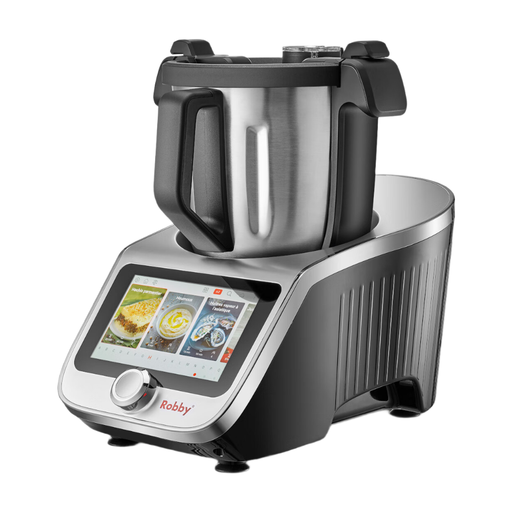 Image unavailable
Prepare and cook dishes in one appliance: listed functions include mincing, slicing, kneading, steaming and slow cooking. A usable capacity of 3 L, touchscreen and guided recipes are also listed. Compare the capacity with your recipes and check how much space the accessories need. If the number of guided recipes matters to you, check exactly what’s included.
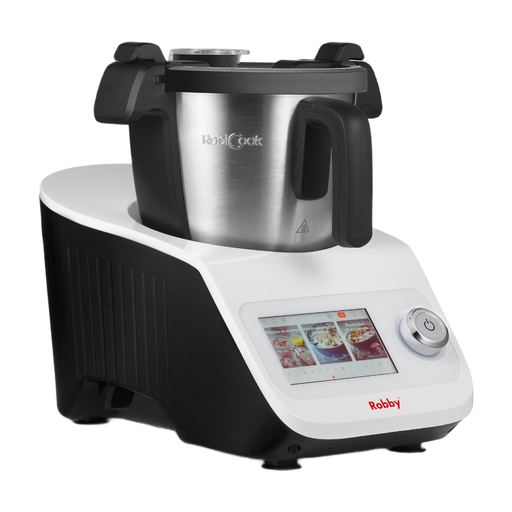 Image unavailable
This model combines functions including mincing, grating, mixing, kneading, steaming and slow cooking for sessions that involve both preparation and cooking. Its bowl is listed as 3,5 L, but this figure alone doesn’t tell you the usable capacity for each recipe. Programmes, a manual mode and guided recipes are also listed; check the cleaning instructions for the accessories too.
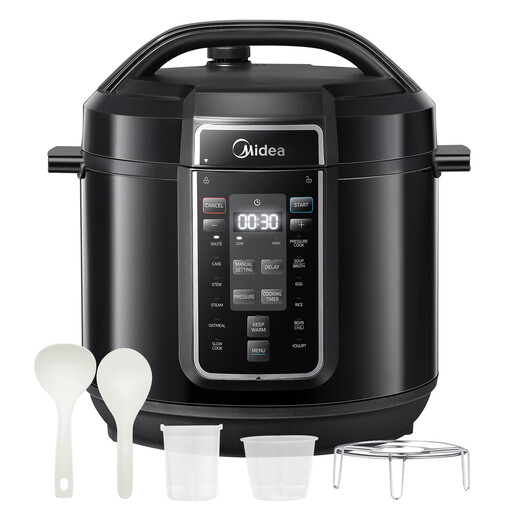 Image unavailable
Consider this if you prepare ingredients separately and mainly need cooking settings for several portions. The stated capacity is 8 L; listed functions include pressure cooking, steaming and slow cooking, as well as a 24-hour delay start. Check the usable capacity for your dishes and make sure the dimensions suit your space.
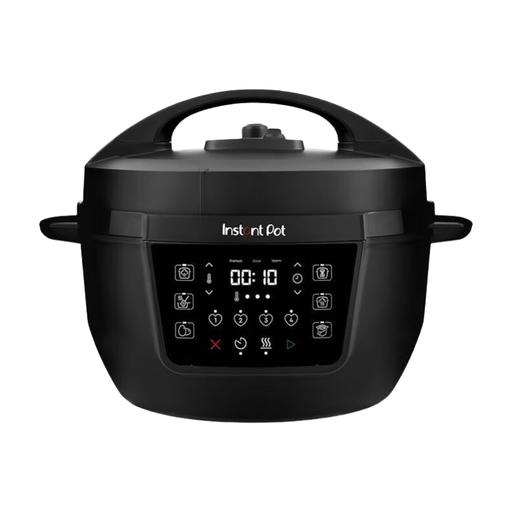 Image unavailable
This multicooker is designed for dishes where the ingredients can be prepared separately. It has a stated capacity of 7,1 L and offers pressure cooking, slow cooking, sautéing and steaming. The inner pot is listed as dishwasher-safe; compare the usable capacity and storage requirements with your cooking sessions.
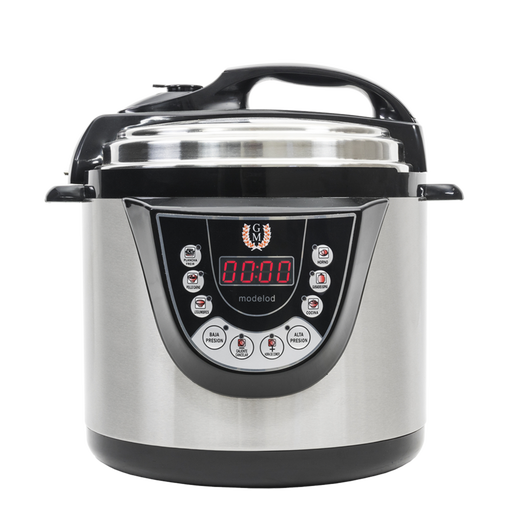 Image unavailable
This model prioritises programmed cooking over chopping ingredients. It’s listed as 6 L total and 5 L usable, with nine menus, two pressure settings and a 24-hour timer. Check the dimensions, as well as the language used for the voice functions and recipes if you plan to use them.
It can combine some preparation and cooking tasks if the model has the functions and accessories your recipes need. As explained in comparisons by UFC-Que Choisir and BUT, a food processor is still an option for preparing ingredients before cooking them separately, while a multicooker is mainly designed for cooking.
First compare the stated usable capacity with the volume of each recipe, then check whether you’ll need to cook multiple batches. For example, Magimix lists 4,8 L total but 3,8 L usable for the Cook Expert XL Connect Premium; Vorwerk lists a 2,2 L bowl for the Thermomix TM7. These figures relate to different models and measurements.
No. Guided recipes can help you follow a series of steps, but they aren’t essential for using a cooking food processor, according to UFC-Que Choisir. If you want to use them, check how to access the recipes and any associated app before choosing.
In France, consider repair or reuse if the appliance is suitable, then use an appropriate collection scheme rather than putting it in household waste. The Ministry for Ecological Transition points out that electrical and electronic equipment may contain components that are hazardous to the environment, as well as recyclable materials.