
Same-day & Next-day Delivery

Quality Guaranteed

Unlock Your Welcome Offers: FREE Delivery | Up to 80% OFF | Free 30-day JoyPlus trial
Download the APP
Prepping meals in advance, or meal prep, is the go-to strategy for eating healthier, saving time, and managing your budget. But initial enthusiasm can quickly fade with the wrong equipment. A sauce leaking into your bag, a plastic container permanently stained by bolognese, a lid melting in the microwave... It's an all-too-familiar disaster scenario that can discourage even the most motivated individuals.
Before you invest, it's essential to cut through the marketing noise and focus on what truly matters. Here are the key points to check to choose meal prep containers that will go the distance.
To avoid these setbacks, three fundamental criteria make all the difference in the quality and practicality of your meal prep containers.
Each material has its strengths and weaknesses. The best choice will ultimately depend on your habits.
A truly leak-proof seal depends on two elements:
For optimised storage, opt for stackable models. Also, consider specific formats: an insulated food jar or a food thermos will be essential for soups or hot dishes you want to enjoy without access to a microwave. Compartmentalised containers, on the other hand, are ideal for separating the different components of a meal.
To help you make a clear choice, here is our selection of products that tick all the boxes, combining durability, practicality, and different user profiles.
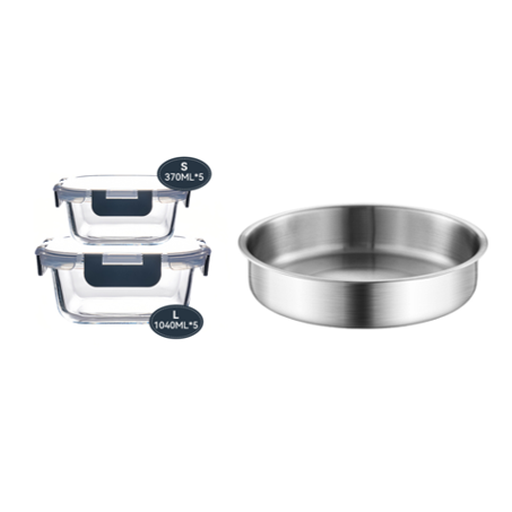
Why we chose it: This comprehensive set is perfect for prepping all your meals for the week. Its different sizes allow for variety, while the borosilicate glass ensures healthy storage and effortless cleaning.
The "snap-lock" lids and their silicone gaskets provide a foolproof seal. No more leaks in your bag! The glass itself is resistant to stains and odours, even from stubborn tomato sauce.
A 10-piece set of various sizes for a complete *meal prep* routine, from storage to transport.

Why we chose it: Its large 2.3L capacity is perfect for "batch cooking": prepare a family-sized casserole or soup for several days. When it comes to durable glass, Pyrex's reputation is well-established.
Pyrex borosilicate glass is designed to withstand thermal shock, allowing it to go safely from the freezer to the oven (without the lid). Its steam-vented lid prevents splatters in the microwave.
A single dish to cook, store, transport, and reheat. A real bonus for organising the whole family's meals.

Why we chose it: Essential for those without a microwave at the office or who want to enjoy a hot soup outdoors. This insulated food jar maintains the temperature (hot or cold) for several hours.
Unlike a standard container, its double-wall 316 stainless steel construction with vacuum insulation prevents heat loss. No more lukewarm, disappointing lunches!
Keeps food hot or cold for 4 to 6 hours. Its wide mouth is a real convenience for filling, eating directly from it, and cleaning.
We have compiled a complete, up-to-date list of products that meet these strict selection criteria and safety regulations.
No, and this is a common trap! Only borosilicate glass is specifically designed to withstand significant thermal shock, such as moving from the refrigerator to a preheated oven. Standard soda-lime glass, often used for everyday dishes, is likely to shatter. Always check the manufacturer's instructions before use.
The answer is no, with very few exceptions. Metal reflects microwaves, which can cause sparks and damage your appliance without even heating your food. As a precaution, never put stainless steel in the microwave.
If your lid's silicone gasket has absorbed the smell of a dish (like curry or garlic), carefully remove it. Let it soak for an hour or two in a mixture of hot water and white vinegar (or baking soda). Rinse it thoroughly and let it air-dry completely before putting it back in place.