
Livraison le jour même ou le lendemain

Qualité garantie

Débloquez vos offres de bienvenue: Livraison GRATUITE | Jusqu'à -80 % | 30 jours d'essai gratuits à JoyPlus
Téléchargez l'application
Getting started with meal prep is a fantastic way to eat better, save time, and manage your budget. But that initial enthusiasm can quickly fade due to unsuitable containers. A sauce leaking in your bag, a dish cracking in the microwave, or plastic that holds onto last week's curry smell?—these small daily frustrations are, however, easy to avoid.
As a product expert at Joybuy, my job is to analyze hundreds of products to guide you. Let's cut through the marketing jargon and get straight to the point. Here’s how to sidestep the common traps and choose the meal prep container that will truly simplify your life.
To ensure you don't fall into these common traps, here are the most frequent disappointments.
To make the right choice, there are three key factors to watch closely. This is what will make all the difference in your daily routine and in the long run.
The choice of material is the starting point. Each option has its strengths and weaknesses for meal prepping.
An effective leak-proof container relies on two elements: a thick, removable silicone gasket (for deep cleaning) and a robust locking system. Four-clip locking systems are often the gold standard, as they distribute pressure evenly across the lid to ensure an optimal seal.
For hassle-free batch cooking, always check the pictograms or manufacturer's instructions. A good meal prep container should do it all, or nearly all:
Rather than searching for the non-existent "perfect" product, it's better to find the one that fits your specific needs. Here are a few options designed for different profiles.

Why we chose it: Ideal for those who batch cook and want a single container to bake, store, freeze, and reheat. The 10-piece set with two different sizes makes it easy to manage portions and side dishes.
Borosilicate glass solves the hidden incompatibility problem: it’s oven, microwave, and freezer safe. Meanwhile, the clip-lock system thwarts the leaky container trap.
Maximum versatility (baking, storing, transport) and a healthy material that resists stains and odours.

Why we chose it: Perfect for those who transport their lunch daily and worry about bumps and drops. The stainless steel container is the most robust and lightweight solution for a durable office lunch box.
Stainless steel is virtually unbreakable, eliminating the risk of shattered glass. It's also an inert material that won't stain or retain any odours, thus avoiding the pitfall of plastic that ages poorly.
Exceptional durability and lightness. The 316 stainless steel offers superior corrosion resistance.
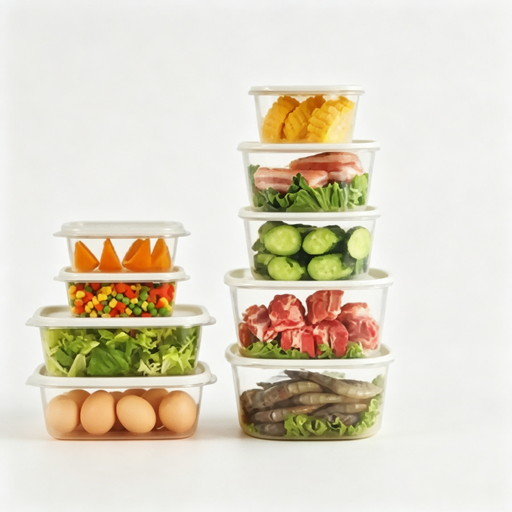
Why we chose it: A complete and cost-effective set to get started with meal prep without a large investment. The different sizes are perfect for organizing your fridge and preparing varied meals.
By choosing a set from an established brand, you avoid the "mystery plastic" trap. The leak-proof lids are designed for reliability, and compatibility (microwave, freezer) is clearly indicated.
Excellent value for a set that gets you fully equipped. Its light weight is a real bonus for daily transport.
We have curated a complete range of products that meet these quality criteria and current safety standards.
Can any glass container go in the oven? No, and this is a critical point. Only borosilicate glass is designed to withstand thermal shock (going from cold to hot). A standard glass container (like a drinking glass) would likely shatter if placed in a hot oven. Always check for an "oven-safe" label before use.
How do you remove stubborn odours from a plastic container? For persistent odours, fill the container with a mixture of warm water and baking soda (or white vinegar) and let it sit for several hours before rinsing. Another trick is to air-dry it in the sun. However, the best solution is prevention: opt for glass or stainless steel for saucy or strongly flavoured dishes (curry, fish, etc.).
Can a stainless steel container really go in the microwave? As a general rule, no. Metal reflects microwaves, which can cause sparks and damage your appliance. It is imperative to never put a standard stainless steel container in the microwave. Read the manufacturer's instructions carefully. Very rare exceptions exist for specifically designed products, but when in doubt, the precautionary principle applies: never put stainless steel in the microwave.