
Livraison le jour même ou le lendemain

Qualité garantie

Débloquez vos offres de bienvenue: Livraison GRATUITE | Jusqu'à -80 % | 30 jours d'essai gratuits à JoyPlus
Téléchargez l'application
Planning your meals in advance, or meal prep, is a game-changing strategy for eating healthier, saving time, and cutting costs. But let's be honest: choosing the right meal prep container can quickly become a headache. Caught between marketing promises and the harsh reality of daily use, you can easily end up with containers that leak, warp, or get thrown out after just a few months.
As the Head of Product Selection at Joybuy, my mission is to help you see things more clearly. Let's cut through the marketing jargon and focus on what truly matters to make an informed choice that's perfectly suited to your daily life.
The market is flooded with options, but they are far from being created equal. Here are the most common traps that can turn your good intentions into a major source of frustration.
To avoid these pitfalls, focus on three fundamental criteria. These will determine the durability and practicality of your future containers.
The choice of material has a direct impact on the use, durability, and maintenance of your lunch box.
A truly reliable airtight bento box depends on a winning combination: a thick, removable silicone seal (essential for deep cleaning) and a locking system with 4 sturdy clips. This design ensures uniform pressure on the lid and prevents any leaks, even with soups or saucy dishes.
To make your life easier, your containers should be true Swiss Army knives. Check their compatibility with the freezer, refrigerator, and dishwasher. For microwave use, a lid with a steam vent isn't a gimmick; it's a guarantee of safety and cleanliness. Finally, prioritise stackable or nesting models to optimise every square inch of your cupboards and fridge.
Instead of an endless list, here are targeted recommendations for different user profiles, based on the criteria we've just discussed.

Why we chose it: Ideal for getting started with *meal prep* using a complete and reliable kit. This set combines glass containers in two highly practical sizes (370 ml for snacks or side dishes, 1040 ml for main courses), offering perfect flexibility for organising your week.
This set avoids the 'useless bundle' pitfall by offering two genuinely practical sizes for daily use. Everything is sealed with sturdy clip-on lids that ensure an excellent airtight seal.
The borosilicate glass resists thermal shock, doesn't retain stains or odours, and guarantees hygiene and durability far superior to plastic.
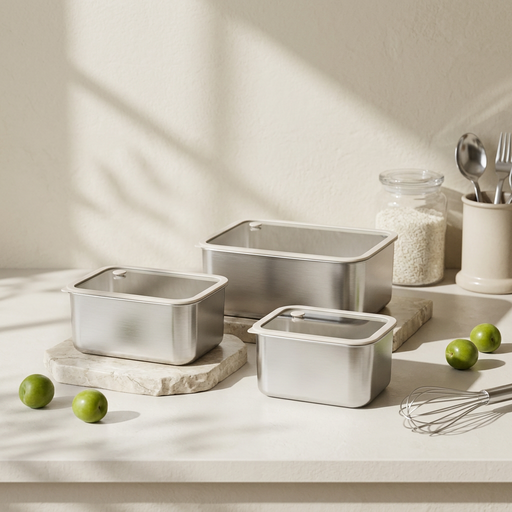
Why we chose it: For those who want a healthy, lightweight, and virtually indestructible solution. Stainless steel is an excellent alternative, more robust than plastic and lighter than glass. This three-size set is perfect for storing salads, meals, and leftovers without ever worrying about odours or breakage.
It bypasses the problem of material wear and tear. The 304 stainless steel resists corrosion and won't warp, ensuring unbeatable longevity.
The transparent lids allow you to identify the contents at a glance, while the silicone seal guarantees a perfectly airtight closure.
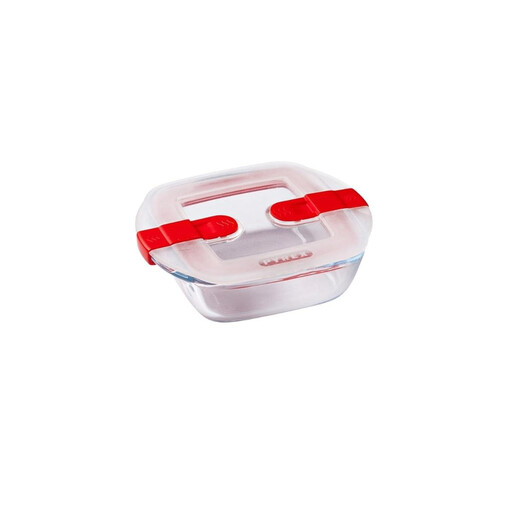
Why we chose it: The perfect solution for those who eat lunch at the office and need a compact, reliable container designed for reheating. This individual container goes from the fridge to the microwave safely, thanks to its clever lid.
It solves the 'fake microwave-safe' problem. Its lid is equipped with two steam vents: open them up, and your food reheats evenly, without splatters or a warped lid.
The combination of PYREX borosilicate glass, a benchmark for quality, and an airtight lid designed for the microwave makes this a reliable choice for daily use.
Discover our full selection of products that meet our quality criteria and current safety standards.
Yes, absolutely, with borosilicate glass. However, two precautions are necessary: leave some headspace at the top of the container (food expands as it freezes) and avoid thermal shock. Never put a container straight from the freezer into a preheated oven; let it thaw for a few hours in the refrigerator first.
For plastic, a paste of baking soda and water applied inside for a few hours often works wonders. For glass and stainless steel, a simple wash is enough: these non-porous materials do not retain odours.
It all depends on the material and how you care for it. A quality stainless steel or glass set can last for years, or even a lifetime. Plastic models, even high-quality ones, will eventually wear out, get scratched, or become stained, especially with heavy microwave use. Keep an eye on the lids and their seals, as they are often the first parts to fail.