
Livraison le jour même ou le lendemain

Qualité garantie

Débloquez vos offres de bienvenue: Livraison GRATUITE | Jusqu'à -80 % | 30 jours d'essai gratuits à JoyPlus
Téléchargez l'application
A mattress topper can soften the feel of a mattress that is too firm, improve the comfort of a sofa bed or extend the life of bedding that is still in good condition. However, not every model is suitable for the same uses. Choosing the wrong thickness, approximate dimensions or insufficient support can quickly turn a good idea into an accessory that slips, becomes too warm or wears out prematurely.
Here are the main criteria to consider before choosing between a memory foam mattress topper, a duck feather-filled model and a washable version with elastic straps.
A 5 cm or 8 cm mattress topper will generally make a more noticeable difference to the feel of a mattress than a 2.5 cm model. However, thickness alone does not determine the level of support. A very thick topper can raise the height of the bed considerably, make it harder to use certain fitted sheets or create an overly enveloping sensation.
A 2.5 cm model is mainly suitable for slightly softening a surface or improving a spare bed. To change the feel of a firm mattress more noticeably, 5 to 8 cm of memory foam can be a good option, provided you check the foam density and the stated dimensions.
A difference of just a few centimetres is enough to create creases or areas that are not properly covered. Measure the length and width of your mattress rather than relying solely on the bed’s name or size. The most common formats include:
Also check the total height of the mattress and the depth of the fitted sheet’s pockets once the topper has been installed.
Claims such as hypoallergenic, dust-mite resistant or antibacterial should be checked in the product description. They do not replace care instructions or regular airing. For people with sensitivities, a removable, washable cover may prove more practical for everyday use than a filling that is difficult to clean.
Certifications and treatments mentioned by the manufacturer should also be distinguished from any form of medical guarantee. They provide information about the declared materials or processes, but do not constitute medical advice.
Memory foam gradually moulds to the contours of your body. It is suitable for people looking for a cocooning feel and a stable surface. Depending on its structure and the quality of its cover, it can, however, retain more heat. A breathable model with a removable cover will be easier to maintain.
Duck feathers provide a softer, fuller feel. The filling must be distributed evenly to prevent flattened areas from forming. Models with stitched compartments and straps generally help limit movement of both the filling and the topper.
Elastic straps at all four corners and, where included, a central fastening help keep the topper in place. This is particularly useful for couples, non-motorised adjustable beds and people who move around a lot in their sleep.
Check whether only the cover is washable or whether the complete product can go in the washing machine. For a foam model, the core should generally not be machine-washed. With a feather filling, thorough drying is essential to limit residual moisture.
Also remember to check:
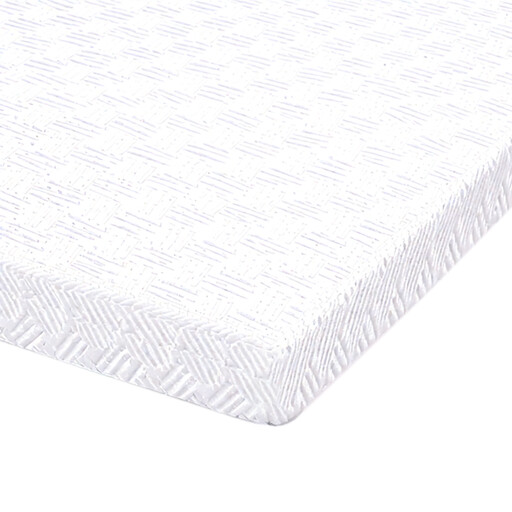
Why this choice suits this profile : Its single-bed size and slim profile make a subtle difference to the feel without adding significant bulk to the bed.
The clearly stated size reduces the risk of choosing the wrong dimensions for a 90 x 200 cm single bed.
Memory foam, a design advertised as hypoallergenic and dimensions suited to a single bed.
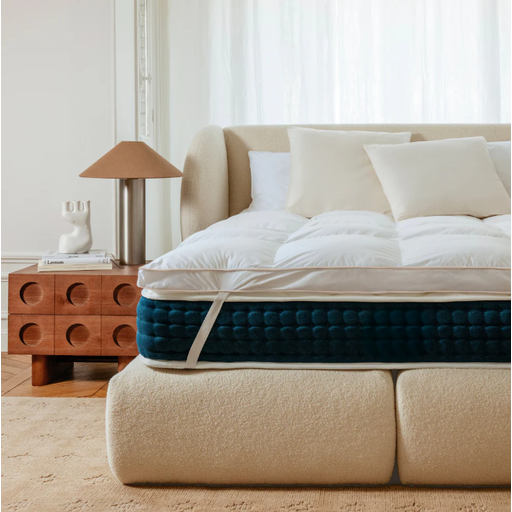
Why this choice suits this profile : Its advertised duck feather filling and cotton cover are aimed at people looking for a soft, plush feel.
The square quilting and four corner straps, complemented by a central tie, are designed to keep the filling distributed more evenly.
180 x 200 cm size, cotton cover, elastic straps and care instructions at 40 °C according to the product description.
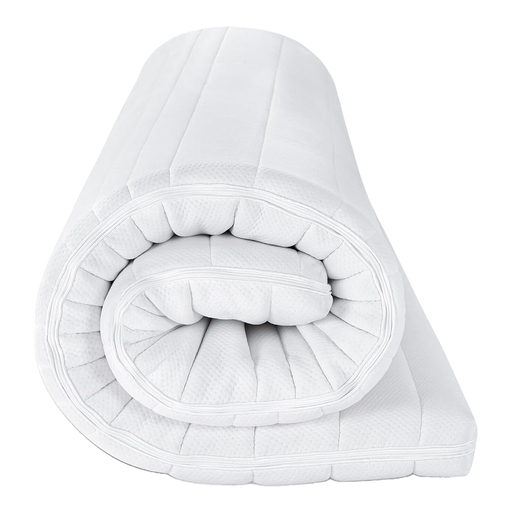
Why this choice suits this profile : Its 8 cm thickness is suitable for people who want to significantly change the surface of a double bed, divan bed or sofa bed.
The zipped, washable cover can be cared for separately from the foam core, which should be spot-cleaned rather than machine-washed.
8 cm memory foam, removable cover washable at up to 40 °C and advertised OEKO-TEX 100 certification.
Place the mattress topper on a clean, dry surface, then align its four corners with those of the mattress. If the model has straps, fasten them without overtightening. After unpacking, some foam mattress toppers need to be aired for 24 to 48 hours before first use.
Air the room regularly and follow the washing instructions. A feather mattress topper may need shaking and turning to keep the filling evenly distributed. If the cover is washable, follow the stated temperature and allow it to dry completely before putting it back in place.
Choose a model with elastic straps at all four corners, check that its dimensions exactly match those of the mattress and use a fitted sheet with pockets deep enough to cover the whole setup. A clean sleeping surface free from dust will also improve stability.
A 2.5 cm model is suitable for a slight adjustment. A 5 cm mattress topper makes a more noticeable difference to the feel, while an 8 cm model changes the comfort more substantially and increases the height of the bed. The right choice also depends on the firmness of your existing mattress and the space available beneath the fitted sheet.
Its lifespan depends on the material, the weight it supports, how often it is used and how well it is maintained. Check the topper regularly for any persistent dips, deformation or loose stitching. If it does not regain its comfort after airing or turning, it is probably time to consider replacing it.