
Livraison le jour même ou le lendemain

Qualité garantie

Débloquez vos offres de bienvenue: Livraison GRATUITE | Jusqu'à -80 % | 30 jours d'essai gratuits à JoyPlus
Téléchargez l'application
Is your mattress past its prime? Has it become too firm, or simply less comfortable than it used to be? A mattress topper often seems like the perfect solution: a promise of renewed comfort, quickly and affordably. Yet, behind the marketing promises often lie disappointing products. To ensure you don't get fooled, here are the pitfalls to avoid and the criteria that truly matter.
As a bedding expert at Joybuy, my mission is to decode the market for you and provide objective insights. Here are the three most common mistakes you should never make:
To sidestep these traps, ignore the marketing spiel and focus on the only data that counts.
For a memory foam mattress topper, density is the number one criterion. Expressed in kilograms per cubic metre (kg/m?), it measures the amount of material used. The higher the density, the more durable the topper will be and the better support it will offer.
Thickness directly contributes to the level of comfort. The key is to check the actual thickness of the filling (the foam, feathers, etc.), not the total thickness including a puffy cover. A 5 cm mattress topper should be a solid 5 cm block of foam, not 3 cm of foam and 2 cm of cover. A real thickness of 5 to 8 cm is an excellent starting point to truly transform the feel of your bed.
The choice of material depends on your needs:
Because every sleeper is unique, here are our recommendations based on the quality criteria we've just discussed.
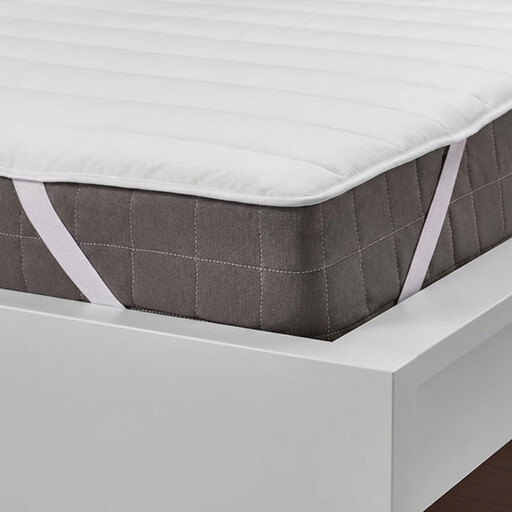
The Editor's Verdict: The perfect solution to rejuvenate a mattress that's a bit too firm or worn out, without breaking the bank. The improvement in comfort is immediate.
This model is straightforward: it advertises 2.5 cm and delivers it. It adds a layer of softness with no false promises. Its synthetic filling is designed for easy maintenance.
Its hypoallergenic filling is machine washable, a real plus for perfect everyday hygiene.
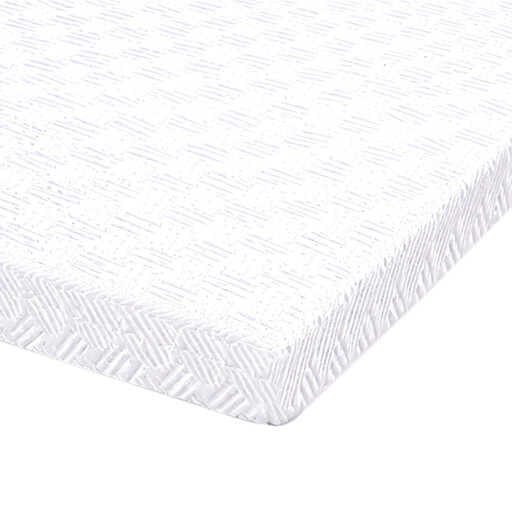
The Editor's Verdict: Perfect for those who want to put an end to waking up with shoulder or hip pain. Its memory foam envelops the body to distribute weight evenly.
Its 5 cm of foam is a true technical block that's a game-changer for cushioning. It's a far cry from a simple quilted cover. This is a powerful ally for sensitive backs.
Its memory foam absorbs pressure points and can thus help reduce tension built up during the night.
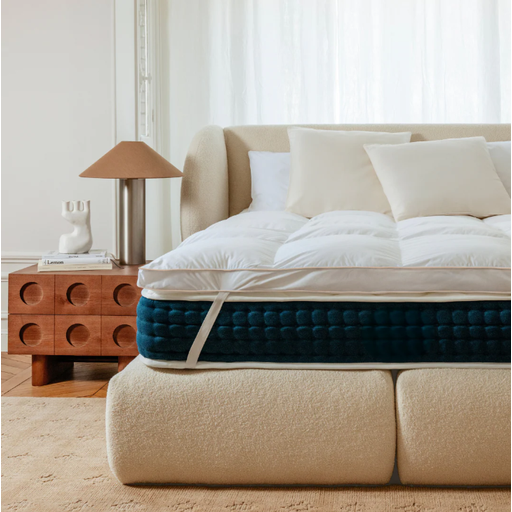
The Editor's Verdict: For those who dream of recreating the plush, breathable comfort of luxury hotel beds. A sure bet for a double bed, especially as a **160x200 mattress topper**.
Unlike low-quality foams, duck feathers provide perfect natural temperature regulation. No more "hot water bottle" effect, even in the middle of summer.
Its 100% duck feather filling guarantees incomparable softness and optimal air circulation. The baffle-box stitching keeps the feathers securely in place.
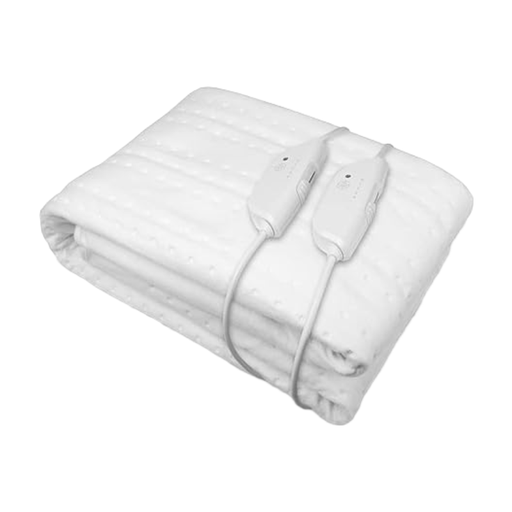
The Editor's Verdict: The ultimate solution for those who are always cold, or for couples who can never agree on the temperature. It preheats the bed and provides a gentle, adjustable warmth.
More than just a topper, this is a technical accessory. It avoids being a gimmick thanks to its two independent heating zones—a genuinely useful feature to end the thermostat wars in bed.
Two remote controls so each person can manage their own zone (4 temperature levels). The entire system is protected by an anti-overheating system and an automatic shut-off.
Comfort shouldn't be reserved for main beds. A good mattress topper can transform a sofa bed or guest bed. Discover our dedicated selection.
To add a simple touch of softness, 3 to 4 cm is sufficient. To transform a mattress that is too firm or to compensate for wear and tear, aim for a real thickness of 5 cm to 8 cm. Always check that this refers to the thickness of the filling, not the cover.
The foam itself is not machine washable. Maintenance relies on the cover, which should be removable and washable. Remember to air it out very regularly. In case of a spill, spot clean the stain with a damp cloth and a little mild soap, then let it air dry, away from any heat source.
Yes, a good mattress topper can help. By reducing pressure points, it can alleviate certain types of back pain. A memory foam model with sufficient density (over 50 kg/m?) promotes better spinal alignment. However, be aware: it will never replace an unsuitable or end-of-life mattress, and it is not a medical device. If your pain is chronic, consulting a healthcare professional is essential.