
Livraison le jour même ou le lendemain

Qualité garantie

Débloquez vos offres de bienvenue: Livraison GRATUITE | Jusqu'à -80 % | 30 jours d'essai gratuits à JoyPlus
Téléchargez l'application
Is your mattress too firm? Tossing and turning at night? Or is that initial feeling of comfort starting to fade? Investing in a mattress topper is often the easiest and most cost-effective way to reclaim a quality night's sleep without replacing your entire bed. But with a jungle of offers and marketing promises, it's easy to get lost.
As a product expert at Joybuy, my mission is to guide you through this maze. Together, let's break down the common pitfalls to avoid and the key criteria for finding the model that's truly right for you.
Before we dive into specific models, it's crucial to debunk a few common misconceptions that often lead to buyer's remorse.
To choose a comfortable and durable mattress topper, focus on these three objective parameters.
The choice of filling determines the feel, support, and breathability of your mattress topper.
Remember: thickness alone is not a reliable indicator. It must be considered alongside the material's density, especially for foams.
This is a practical but essential detail. Ensure the dimensions match your mattress exactly (e.g., a 160x200 cm mattress topper for a Queen Size bed). Also, check for elastic corner straps or a non-slip surface to ensure the topper stays securely in place, night after night.
Here are a few products that meet different needs, based on the objective criteria we've just discussed.
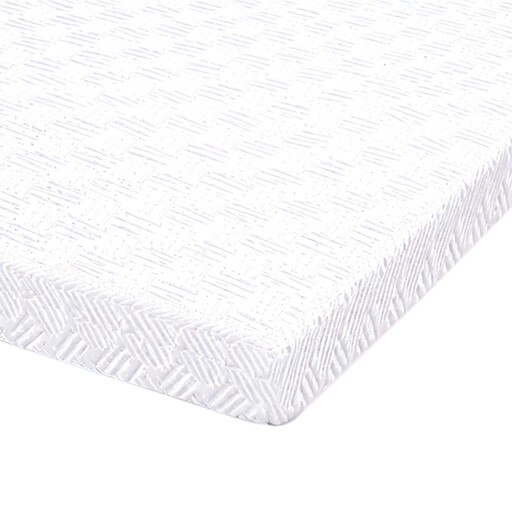
Why we chose it: Perfect for those looking to soften a slightly-too-firm mattress without breaking the bank. It delivers the benefits of memory foam (pressure relief) in a slim, affordable package.
It doesn't promise to transform a completely worn-out mattress. Its 2.5 cm thickness is clearly designed for a comfort adjustment, avoiding the 'thicker is better' trap.
It provides a soft, hypoallergenic comfort layer that relieves pressure points, all at a very accessible price point.
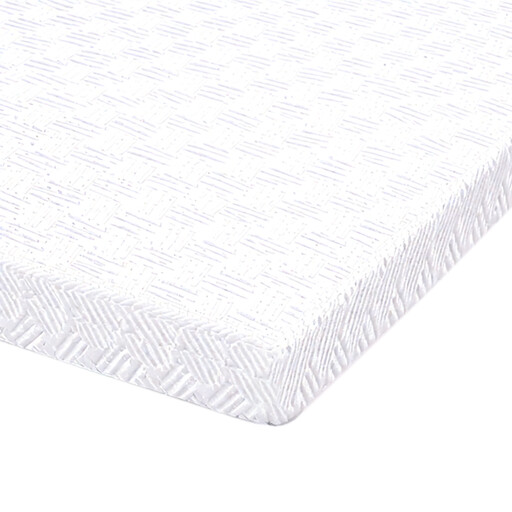
Why we chose it: With its 5 cm thickness, this model offers a significant improvement in support. It's particularly well-suited for compensating for an aging mattress or relieving back pain thanks to better alignment.
It isn't just 'plush'. The 5 cm of memory foam provides tangible support and better weight distribution, avoiding the trap of purely superficial comfort.
An excellent balance between cradling comfort and support. The thickness is substantial enough to profoundly change the feel of your bed.
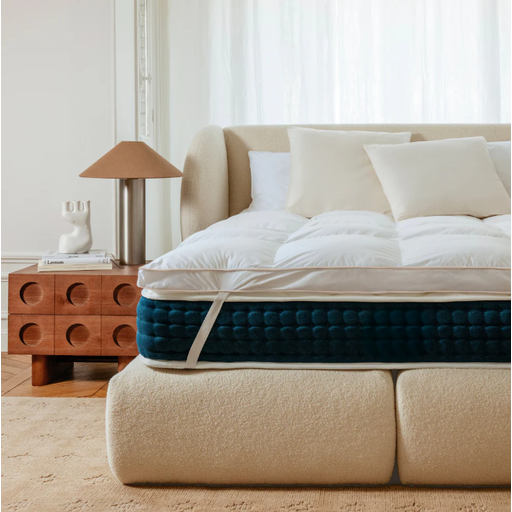
Why we chose it: For those seeking the cosy, breathable feel of high-end hotel bedding. The 100% duck feather filling offers a plush surface and excellent air circulation for natural thermal comfort.
It doesn't claim to offer the firm support of foam. Its purpose is clear: luxurious, natural comfort. The baffle-box stitching ensures the feathers are evenly distributed, preventing clumping.
Natural materials (feathers and cotton cover). Excellent breathability, ideal for those who tend to sleep hot.
We have selected a full range of products for you that meet our quality criteria and European safety standards.
The ideal thickness depends on your goal. For a slight comfort boost on a newer mattress, 3 to 4 cm is sufficient. To correct a mattress that's too firm or to significantly improve support, opt for 5 to 7 cm. Thicknesses over 8 cm are recommended to revive an older mattress, but make sure the material's density is high.
Yes, the right mattress topper can help relieve back pain. A model made of high-density memory foam can help maintain better spinal alignment and reduce pressure points at the hips and shoulders. However, it is not a substitute for medical advice and will not fix a completely sagging mattress.
Care depends on the material. For foam toppers, air them out regularly and rotate them head-to-foot every 3 to 6 months. Most have a removable, washable cover. For feather models, it's advisable to fluff them daily to redistribute the filling and to air them out frequently. Always follow the manufacturer's care instructions.