
Livraison le jour même ou le lendemain

Qualité garantie

Débloquez vos offres de bienvenue: Livraison GRATUITE | Jusqu'à -80 % | 30 jours d'essai gratuits à JoyPlus
Téléchargez l'application
A good mattress is an investment. It's the foundation of a quality night's sleep, so protecting it is essential for its longevity and for maintaining perfect hygiene. The problem: the mattress protector market is a minefield of marketing promises that often lead to disappointment. A poor choice isn't just ineffective—it can outright ruin your nights.
As a Product Specialist at Joybuy, my mission is to help you navigate this landscape. Let's break down the common mistakes and the criteria that truly matter, so you can make the right choice without being fooled by marketing hype.
Before we even get into the technical details, let's review the most common disappointments.
To ensure you don't make a mistake, here are the few technical points that separate a useless gadget from a truly high-performance accessory.
The choice of material involves two key components: the surface that touches your skin and the protective membrane.
The fastening style is crucial for the stability of your protector.
Be careful not to confuse these two products, or you risk being disappointed.
Hybrid products do exist, like quilted mattress protectors, which add a touch of comfort while still performing their protective role.
To help you choose, here are a few products that meet specific needs, all selected according to the criteria we've just discussed.
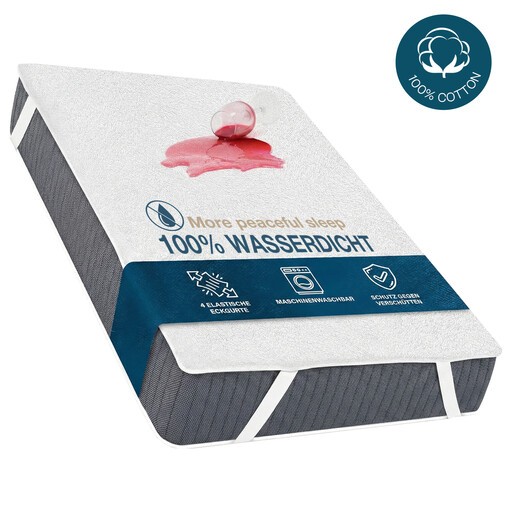
Why we love it: Perfect for kids' beds or to guard against everyday little accidents. It combines an absorbent natural cotton surface with a waterproof membrane that you'll forget is even there (effective and silent).
Its waterproof membrane is breathable, which prevents the "pressure cooker" effect (heat and humidity). Its thinness ensures nights free from plastic noises.
Its 100% cotton surface provides a soft and natural feel. It's machine washable up to 60°C for impeccable hygiene.
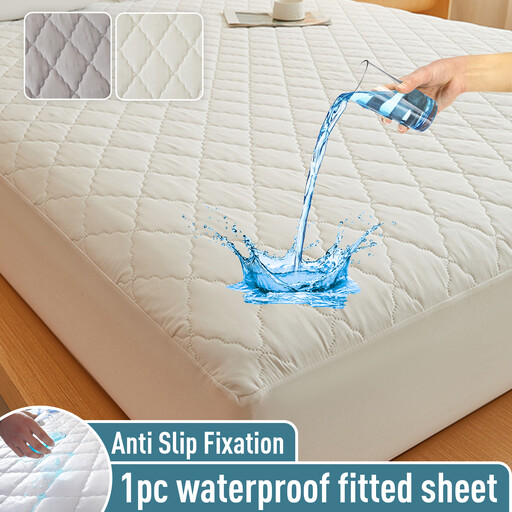
Why we love it: The solution for modern, often very tall, mattresses. Its fitted-sheet style with a deep pocket ensures a perfect hold, night after night, without ever shifting.
No more slipping mattress protectors! Its fitted-sheet style and deep 30 cm pocket firmly hug the mattress without a single wrinkle.
An impeccable hold thanks to its fitted-sheet design. Its light microfiber quilting adds an extra touch of softness.
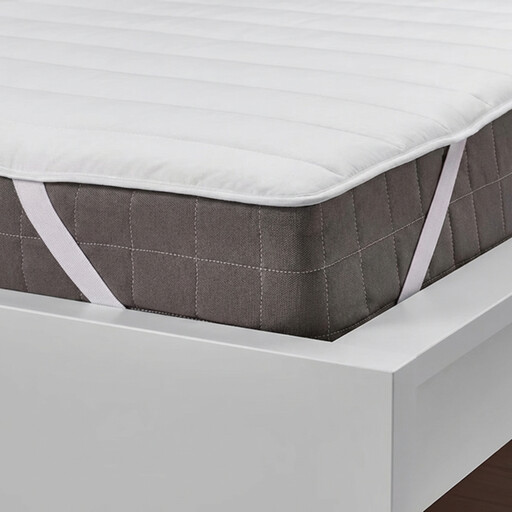
Why we love it: Is your mattress too firm or getting a bit old? A mattress topper is the solution. This 5 cm thick model adds a real layer of plushness for completely renewed comfort.
It doesn't create ambiguity: this is not a mattress protector. It serves a single mission: comfort. It provides thickness and softness, avoiding the disappointment of buying a simple pad and hoping to transform your bed.
Its 5 cm thickness is a real game-changer for comfort. Easy to install with its elastic straps.
We have curated a full range of products that meet our selection criteria and quality standards.
To put it simply: the mattress protector (or pad) is a thin and often waterproof barrier. Its purpose: to preserve the hygiene and longevity of the mattress. The mattress topper, on the other hand, is a thick comfort layer (from 2 to 10 cm) that modifies the feel of your bed (more softness, support, etc.).
First instinct: read the label! Generally, models with a TPU membrane can be machine washed at 40°C, or even 60°C for a deep clean. Use a gentle cycle and avoid bleach and fabric softeners, which can damage the membrane. Air-drying is ideal, but a tumble dry on a very low heat setting is also possible. Remember: excessive heat is the sworn enemy of waterproofness.
Absolutely. Modern polyurethane (TPU) membranes are perforated with microscopic pores. They are large enough to let water vapour (perspiration) escape, which ensures breathability, but far too small to let liquid water molecules pass through. So you get the best of both worlds: total protection against stains and liquids, without the suffocating effect of old-fashioned plastic sheets.