
Livraison le jour même ou le lendemain

Qualité garantie

Débloquez vos offres de bienvenue: Livraison GRATUITE | Jusqu'à -80 % | 30 jours d'essai gratuits à JoyPlus
Téléchargez l'application
Finding the right mattress can often be a daunting task. Between marketing promises and opaque technical jargon, it's easy to end up with buyer's remorse. Yet, for every need, there's a specific solution, whether you're looking to improve your sleep, gear up for a hiking trip, or relax by the pool. This guide is here to separate fact from fiction and give you the keys to a successful purchase.
Before you start comparing models, it's best to be aware of the classic mistakes that lead to disappointment.
To make the right choice, focus on a few objective characteristics that determine a mattress's quality and its suitability for your needs.
The density of a foam, expressed in kilograms per cubic meter (kg/m?), is an indicator of its durability and its ability to support the body without sagging prematurely. For a memory foam mattress intended for daily use, a density above 50 kg/m? is often recommended for good support.
Firmness, on the other hand, is generally rated on a scale from H1 to H4. The choice depends on your weight and sleeping position:
A 7-zone orthopaedic mattress is designed to offer tailored support to each part of the body. The head, shoulders, lower back, pelvis, and legs exert different pressures and require customised responses. Such a mattress promotes a more natural alignment of the spine by being softer at the shoulders and firmer at the hips, for example.
The term "mattress" covers very different realities. The material is the primary indicator of the intended use:
To move from theory to practice, here is our selection for three distinct profiles.
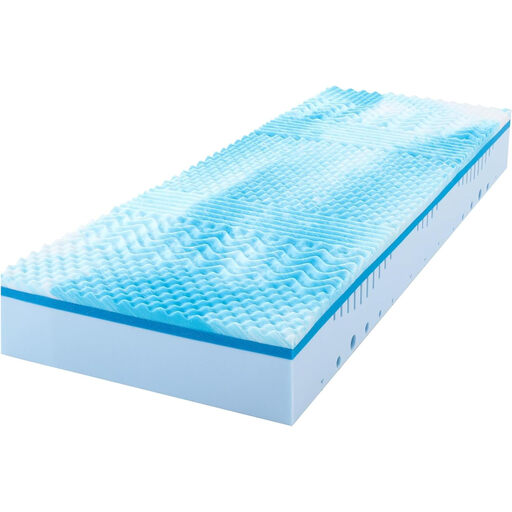
Why we chose it: Ideal for restorative sleep and precise daily support. This 100x200 mattress is designed for those who prioritise back comfort and quality sleep.
It doesn't claim to be universal. On the contrary, it offers dual firmness (H2 & H3) and a 7-zone orthopaedic mattress for personalised support, a far cry from generic solutions.
Its trio of foams (Aircell, CoolFlex, Responsive Support) combines breathability, support, and durability.
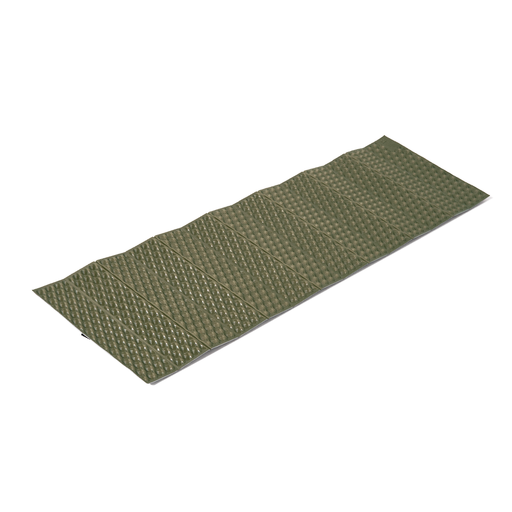
Why we chose it: Designed for campers and hikers who need a lightweight, insulating, and easy-to-carry outdoor sleeping solution. It strikes the right balance between comfort and portability.
This is a pure folding camping mat. Its R-value (R-value: R2.6) is an objective measure of thermal insulation, a much more relevant criterion for camping than foam density.
Its egg-crate structure traps air for better insulation, while remaining very lightweight (approx. 750 g) and compact when rolled up.

Why we chose it: Perfect for those looking for a fun and stable accessory for the pool or beach. This inflatable pool float is designed for lounging on the water.
It fully embraces its recreational function and doesn't pretend to be a sleeping solution. Its features (PVC, design, air chambers) are optimised for water, not for sleep.
Its independent dual air chamber structure enhances safety in case of a puncture, and its large surface area (188 x 130 cm) provides excellent stability.
Discover our full selection of products that meet our quality criteria and current safety standards.
The longevity of a memory foam mattress mainly depends on its foam density and how it's maintained. Generally, a good quality model (density over 50 kg/m?) can retain its properties for 8 to 10 years. To extend its life, it's advisable to rotate or flip it every six months (if the model allows) and to use a mattress protector.
Absolutely, the choice of bed base is crucial. Memory foam mattresses require a stable and ventilated support. A fixed slatted base or an upholstered base is therefore ideal. The slats should be close enough together (less than 7 cm apart) to prevent the mattress from deforming. Conversely, old box springs should be avoided as they do not provide the necessary uniform support.
Choosing the right firmness is a matter of balancing comfort and support. Here are some simple guidelines: