
Livraison le jour même ou le lendemain

Qualité garantie

Débloquez vos offres de bienvenue: Livraison GRATUITE | Jusqu'à -80 % | 30 jours d'essai gratuits à JoyPlus
Téléchargez l'application
Buying a new mattress can quickly become a daunting task. Between the technical jargon, marketing promises, and a jungle of options, it's easy to feel lost. A poor choice can not only ruin your sleep but also represent a wasted investment. As the Head of Product Recommendations at Joybuy, my role is to help you make sense of it all. Here's a breakdown of the pitfalls to avoid and the criteria that truly matter.
The bedding market is filled with marketing claims often designed to create confusion. To make the right choice, you need to know how to read between the lines of product descriptions.
To make an informed choice, you need to understand a few key concepts that determine a mattress's quality and its suitability for your needs.
The core of the mattress is its technology. It dictates the level of comfort and support. Each option has its own advantages:
Don't confuse the initial feel (the first sensation when you lie down) with support (the mattress's ability to keep your spine aligned). A mattress can have a plush initial feel while still offering firm support. Many models feature comfort zones (usually 3, 5, or 7) that adapt the firmness to different parts of the body: softer at the shoulders to limit pressure points, and firmer at the lumbar region for better support.
The standard size for a two-person mattress in France remains the 140x190 cm mattress. However, the 160x200 cm (Queen Size) and 180x200 cm (King Size) dimensions are becoming increasingly popular for the extra comfort and freedom of movement they provide. Make sure the mattress size matches your bed frame.
Because every sleeper is unique, here are a few models that meet specific needs, based on the criteria we've just broken down.
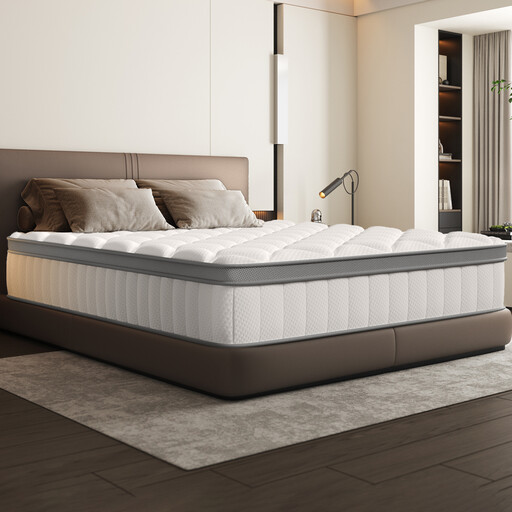
Why we chose it: Ideal for those seeking precise daily support. Its design is engineered to ensure optimal spinal alignment, whether sleeping alone or with a partner.
It debunks the myth of the universal "orthopaedic mattress" by offering 7 distinct support zones that adapt to your body shape rather than imposing a uniform firmness.
The individual pocketed coil technology ensures excellent motion isolation and good ventilation, so you're no longer disturbed by your partner's movements.
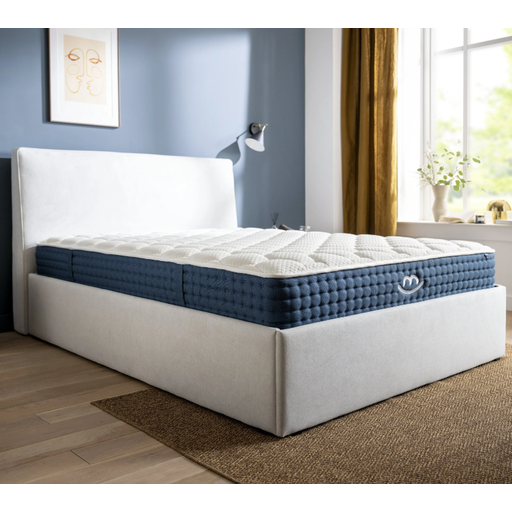
Why we chose it: For those who refuse to choose between the cradling comfort of foam and the dynamic support of coils. It's the ultimate versatile solution, suitable for a vast majority of sleepers.
It solves the "sleeping hot" issue often associated with memory foam. Its hybrid structure with a pocketed coil base ensures constant airflow, keeping the mattress cool.
The combination of Air Memory foam and pocketed coils provides both pressure point relief and perfect motion isolation, for peaceful nights for two.
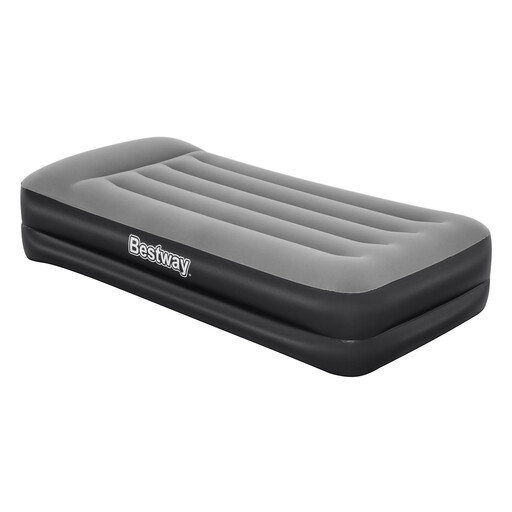
Why we chose it: The perfect spare bed solution, practical and quick to set up for unexpected guests or weekend trips. It's just as easy to store after use.
It avoids the bulk and cost of a permanent guest bed. Its internal Tritech structure is designed to minimize air loss and maintain its shape, offering far better support than a budget air mattress.
The integrated electric pump allows for full inflation in 3 minutes flat, with zero effort. The included carry bag makes storage and transport a breeze.
We have analyzed and compiled a complete selection of mattresses that meet our strict quality standards.
A mattress's lifespan depends on its technology, the quality of its materials, and how it's maintained. Generally, it's recommended to replace it every 8 to 10 years. Visible sagging, dips, or a loss of support are clear signs that it's time for a change.
The ideal firmness mainly depends on your body type (weight and height) and your sleeping position.
No, that's a common misconception. The compression and vacuum-sealing technique is now perfectly mastered and does not compromise the quality of the foams or pocketed coils. It simply simplifies transport and delivery. You just need to give it time to regain its full shape, usually between 24 and 72 hours after unboxing.