What should you check before buying?
To choose between powder and tea bags, start with how you want to prepare your matcha. Then check the ingredients and quantity against how much you usually drink.
Matcha powder
Worth considering: if you want to make your own matcha drink or use it in a recipe.
Bear in mind: you’ll need to measure and mix the powder. A weight in grams doesn’t tell you how many cups or tea bags it makes.
Matcha green tea in tea bags
Worth considering: if you’d rather pop a tea bag in your cup to brew.
Bear in mind: the amount of matcha depends on the recipe. Auchan’s PUKKA listing states that its box of 20 tea bags contains 2% matcha.
| Factor |
What to check |
Who it matters to |
| Format and ingredients |
Count the tea bags or check the net weight, then use the product name and ingredients to distinguish matcha powder from matcha green tea or another product. |
I want to stock up on something that really matches what I usually drink, without confusing a tea-bag count with an amount of powder. Around 33% of consumers are said to prioritise choosing the right product and format. |
| Preparation |
Choose between a tea bag to brew and powder to measure and mix. Check the product’s instructions. |
For a cup that doesn’t involve measuring powder, I’d prefer something simple to prepare every day. Ease of preparation is said to come first for around 25% of consumers. |
| Caffeine |
Consider the tea, coffee and other sources of caffeine you consume during the day, especially if your sleep is easily affected. |
If I already drink coffee or tea, I want this purchase to fit in with my usual routine and sleep. Managing caffeine is said to be the main concern for around 25% of consumers. |
| Storage |
Before choosing a larger quantity, check the date, storage conditions and instructions for after opening. |
Stocking up only makes sense if I can store it as directed on the packaging and use it at my own pace. Around 17% of consumers are said to prioritise this. |
Matcha powder on Joybuy
This selection is for matcha powder that you prepare yourself. If you’re buying regularly, check exactly what the chosen variant contains before comparing its pack size with a box of tea bags.
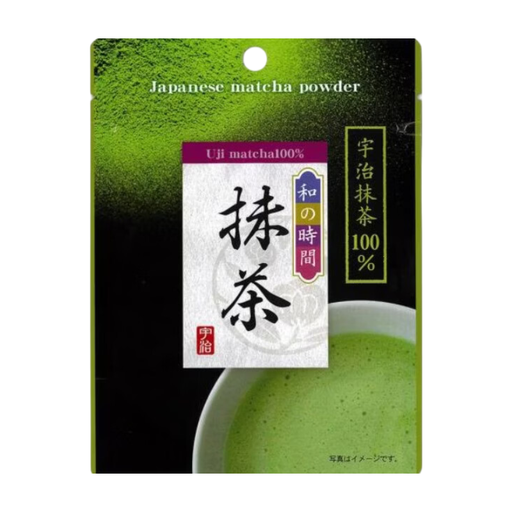 Image unavailable
Ocha no Maruko Wa no Jikan, matcha 40 g
An option for matcha powder that you measure out, rather than tea in a bag for brewing. The title states 40 g; check the total net weight and number of tea bags for the chosen variant on the packaging before buying.
View on Joybuy
Frequently asked questions
How can I check whether a box contains 80 matcha tea bags?
Check the exact number of tea bags, net weight and ingredients on the product listing or packaging. The formats listed by Carrefour, Auchan, Lidl and ALDI include, among others, a 20-bag tea and powders weighing 40 g or 50 g. These details aren’t interchangeable.
Can matcha green tea in tea bags replace matcha powder?
Not if you’re specifically looking for matcha powder to measure out for a drink or recipe. Auchan’s PUKKA tea listing states that its blend contains 2% matcha, while Carrefour describes SIPSTA powder as 100% organic matcha green tea. Compare the ingredients and product format for your intended use.
What should I check on the label before buying in bulk?
Check the product name, ingredients, declared allergens, net quantity and relevant date. DGCCRF states that food labelling for pre-packed products sold in France must be legible and written at least in French.
How should I store matcha or tea when stocking up?
Follow the storage conditions and after-opening instructions for the product you’ve bought. Also check its best-before or use-by date, as stated on the packaging. The PUKKA product listed by Carrefour should be stored in a dry place at room temperature.
Should I take the coffee I already drink into account?
Yes. If you’re planning to drink tea or matcha regularly, consider your other sources of caffeine too. Anses says caffeine can affect sleep, and that sensitivity depends in particular on age, health and certain medicines or supplements. Ask for personalised advice if your circumstances call for it.


