What should you check?
For a breakfast offering that’s also available in the evening, first check the decaffeination claims, then consider how the drink is prepared and which format you’ll need to stock.
| Criteria | What to check | Consumers concerned |
|---|
| Decaffeination |
Look for an explicit claim on the product, and check its ingredients list and any available information about its caffeine content. |
If I’m advertising a decaffeinated drink in the evening, I want to be able to rely on the product’s claims, not just its name. Around 42% of consumers would reportedly make this their priority. |
| Preparation |
Compare portion sizes and hot-water instructions. The Lipton Matcha Barista preparation featured by Auchan calls for 150 to 170 ml of water at 90 °C. |
If the drink is to be prepared in a guest room or at the buffet, I prefer instructions that anyone can follow using the equipment available. Ease of service would reportedly be the top criterion for around 33% of consumers. |
| Format and supply |
Tell the difference between matcha powder, green tea with matcha and instant preparations; check the packaging and range at your chosen retailer. |
When replenishing the breakfast offering, I need a clearly labelled format that’s easy to get from my retailer. Around 25% of consumers would reportedly put availability first. |
A drink other than matcha on Joybuy
This chrysanthemum drink is an option to consider if you’re looking to serve something other than matcha. Before offering it as a caffeine-free drink in the evening, check the claims on the product you buy.
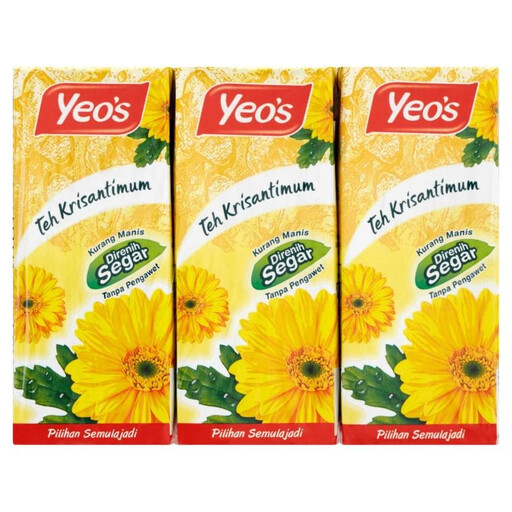 Image unavailable
YEO'S Chrysanthemum Tea, 6 × 250 ml
If you’re serving a drink other than matcha in the evening, check its ingredients and claims before advertising it as caffeine-free.
Pack size: 6 × 250 ml. This product is not decaffeinated matcha.
View on Joybuy
Frequently asked questions
Can you advertise regular matcha as decaffeinated for evening service?
No, not based on its name alone. The Anses reminds us that tea naturally contains caffeine, so check that the product specifically claims to be decaffeinated before describing it that way to guests.
Does a matcha latte necessarily contain less caffeine?
You can’t work out its caffeine content from the word “latte” or its matcha percentage. Auchan’s Lipton Matcha Barista listing states that it contains 6,2 % matcha, but this alone doesn’t tell you how much caffeine is in each drink.
How do you prepare a matcha stick in a hotel room?
For Lipton Matcha Barista, Auchan’s product listing says to mix one stick with 150 ml of water for a stronger flavour or 170 ml for a milder one, at 90 °C. Check that the room’s equipment is suitable and follow the instructions on the product you buy.
Will a product listed online be available for service?
A product appearing on a retailer’s website doesn’t guarantee it’ll be available at the store you plan to buy from. Check the range and pack size when planning your service. A limited-time offer, such as the LOYD product featured by Lidl, isn’t enough to guarantee a reliable supply over time.


