Versatile procurement manager
You want to use the same product in lattes, cold drinks and cooking, while choosing a format that works for regular orders.


For making everything from lattes and cold drinks to recipes, a powder with 100% matcha on the ingredients list gives the canteen control over quantities and additions, but calls for a shared preparation method. An instant blend makes service simpler, but comes with a recipe that’s already been formulated. Green tea bags containing matcha are better suited to brewing and won’t replace powder in these preparations.
You want to use the same product in lattes, cold drinks and cooking, while choosing a format that works for regular orders.
You’re looking for a preparation that’s easy to repeat at the counter, and are happy for an instant blend to determine part of the recipe for you.
You need to distinguish matcha powder from oat or coconut blends, and have ingredient information for the drinks you serve.
The choice depends first on what the canteen wants to serve: a recipe it makes itself, an instant drink or a brewed tea.
Choose this if: you want the same base for drinks and cooking, with the canteen deciding what to add.
The trade-off: the team needs to set a quantity and mixing method for each recipe.
Choose this if: a pre-formulated drink suits your service and cuts down on preparation steps.
The trade-off: its composition can’t be adjusted in the same way as a pure matcha base.
Choose this if: the canteen wants to serve brewed tea without having to prepare powder.
The trade-off: this option won’t replace matcha powder in a latte or a recipe.
| Criterion | What to check | Who is it for? |
|---|---|---|
| Versatility and recipe control | Check the ingredients list and set a quantity per serving; choose a format that can be stored properly after opening. | If I’m using the same powder in several recipes, I prefer to choose the liquid and other additions separately. Recipe control would be the priority for around 40% of consumers. |
| Speed at the counter | Check the blend’s base, matcha content and preparation instructions, then try the recipe using the service equipment. | When drinks need to be made quickly, I’m looking for a process that’s easy to repeat, even if the recipe is already formulated. Around 40% of consumers would prioritise this simplicity of service. |
| Ingredients and customer information | Keep ingredient and allergen information up to date for each product and the recipes actually served. | If several blends are on offer, I want to be able to explain their ingredients to customers without confusing them with pure matcha. This clarity would be the main priority for around 20% of consumers. |
Compositions vary widely: product listings from E.Leclerc and Auchan show 10% matcha in Aromandise’s coconut blend, 6.2% in the Lipton preparation and 2% in Pukka green tea bags.
Read the full ingredients list before using a product in a recipe designed for matcha powder.
A promotion on a small pack isn’t enough to show that a product can be ordered regularly for a canteen.
Check the format that can actually be ordered, how often it’s available and the composition of any product you might use as a replacement.
Switching products can also take time, as you may need to adjust the recipe and the information shared with the service team.
Matcha is tea. Anses reminds consumers that caffeine is naturally present in tea.
Describe the drink as containing tea; don’t present it as decaffeinated.
For its matcha powder, Transgourmet recommends resealing the bag and storing it in a cool, dry place away from light.
Choose resealable packaging and a quantity that suits how quickly the canteen will use it.
Carrefour lists a 300 g organic matcha powder, worth considering for recipes the canteen makes itself.
A 300 g instant matcha and coconut blend for making a drink with a pre-set composition.
Auchan lists an instant oat and matcha preparation in sticks, for making individual drinks.
The brand offers organic Japanese green tea powder in 30 g and 100 g formats, for drinks and baking among other uses.
Transgourmet lists organic matcha powder in 100 g bags, for drinks and baking.
These products cover two canteen uses: making drinks or recipes with matcha powder, and preparing individual servings of instant latte. For each one, make sure the packaging and preparation instructions suit the service you have planned.
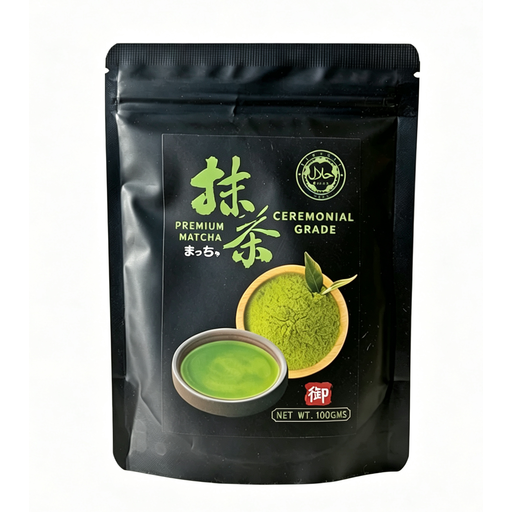 Image unavailable
A format to consider if the canteen wants to create its own matcha recipes.
Stated quantity: 100 g. Set and test the amount per serving before service begins.
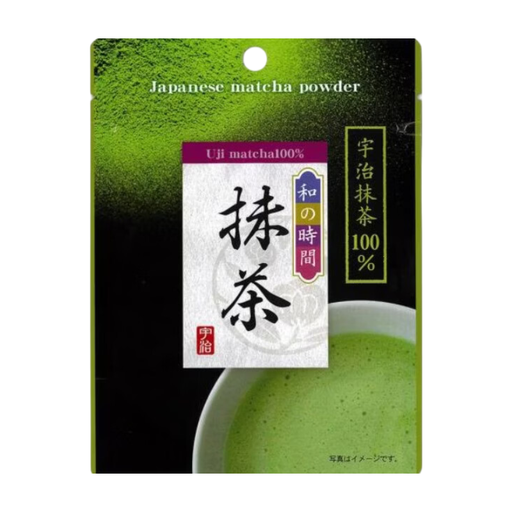 Image unavailable
A powder to consider for a drink or recipe that the canteen prepares to its own specifications.
The title states 40 g; check the quantity actually delivered before planning servings.
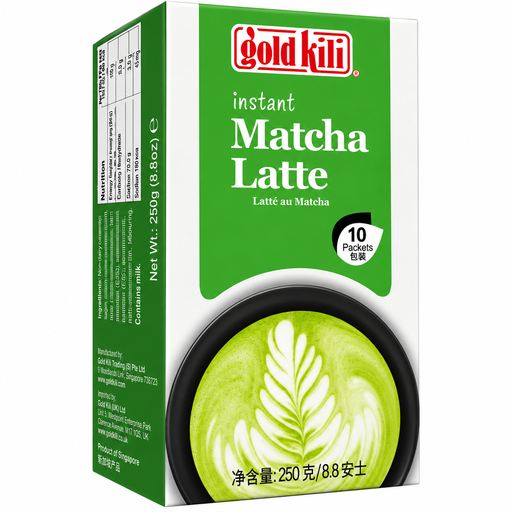 Image unavailable
An instant, portioned preparation for latte service, rather than a matcha base you can measure out freely.
Stated format: 10 portions of 25 g. Check the ingredients and amount of liquid to use before finalising the recipe.
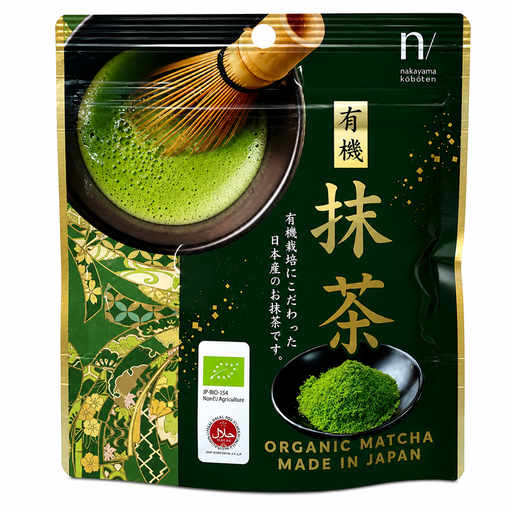 Image unavailable
A powder to consider for making a drink or adding matcha to a recipe.
Stated quantity: 30 g. Check that it suits your planned usage and set the amount per serving.
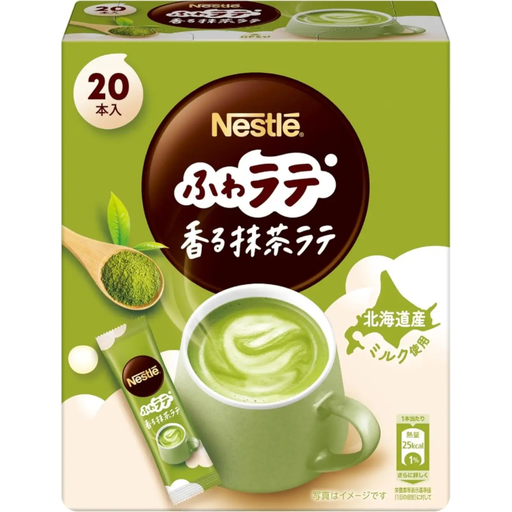 Image unavailable
Individual servings of matcha latte to consider when speed of service is the priority.
The title states 20 units. Check the ingredients list, matcha content and preparation instructions before comparing this recipe with a pure powder.
Not in a recipe where the canteen wants to measure the matcha and additions separately. For example, E.Leclerc and Auchan list an Aromandise coconut blend containing 10% matcha and a Lipton oat preparation containing 6.2%. Check the composition of each product before adding it to a recipe.
Write a recipe card for the powder and liquids actually used in service. Transgourmet’s UMAMI listing gives a guide quantity of 2 g for 7 cl of water for this product and describes whisking it. Then test the final volume and preparation method with the team.
Keep the product listing or packaging up to date, and include the relevant ingredients for the recipe actually served. In France, the DGCCRF reminds businesses that allergenic ingredients must be highlighted on pre-packed foods, and that allergen information is also required for non-pre-packed foods. Check how you’ll provide this information to customers.
No. Matcha is tea, and Anses reminds consumers that tea naturally contains caffeine. So don’t present a matcha drink as a caffeine-free option.