For a cup of tea without a whisk
A tea bag is a good choice if you prefer to steep green tea containing matcha. The Pukka and Jardin Bio Étic products listed by Auchan are blends, not pure matcha.


For a simple cup of tea, choose a matcha green tea bag. If you want to mix matcha powder into a drink or recipe, choose the powder and be prepared to measure and whisk it. The Pukka and Jardin Bio Étic tea bags listed by Auchan contain 2% and 3% matcha respectively, so check the ingredients rather than relying on the word ‘matcha’, a pyramid-shaped bag or the word ‘premium’.
A tea bag is a good choice if you prefer to steep green tea containing matcha. The Pukka and Jardin Bio Étic products listed by Auchan are blends, not pure matcha.
Powder is better suited to drinks you mix or recipes, provided you’re happy to measure and whisk it. Carrefour and Lidl France’s product pages describe these uses for their matcha powders.
If you’re drawn to the tea bag, still compare the ingredients list, the stated matcha content, the net quantity and the preparation instructions. A pyramid shape alone tells you nothing about what’s inside.
For your first shop, start by deciding between a tea bag to steep and powder to mix. The ingredients, the taste you’re looking for and whether you can add the product to your basket will help you narrow down your choice.
| What to consider | What to check | Who is it for? |
|---|---|---|
| Preparation | Tell apart tea bags for steeping and powder for mixing. If you want a pyramid-shaped tea bag, check its shape on the packaging. | If I want to make a cup without measuring or whisking, a tea bag meets my main need; around 27% of consumers would prioritise this convenience. |
| How prominent the matcha is | Read the product name and ingredients, and check the matcha content if it’s stated. | If I want matcha to be the main ingredient in my drink, I need to distinguish powder from a green tea blend; around 33% of consumers would prioritise this distinction. |
| Ingredients and taste | Compare the full ingredients list, including any added herbs or flavourings, and check the allergen information if needed. | If I don’t want a mint or lemon blend, the ingredients matter more than the tea bag’s appearance; around 20% of consumers would make this their priority. |
| Shopping plans | Check that the product is available at your chosen store or can be added to your basket, then compare the number of tea bags or the net quantity. | If I want to do all my shopping in one basket, I first look for a product I can actually add to it; around 20% of consumers would put this need first. |
According to their Auchan product pages, Pukka and Jardin Bio Étic tea bags contain 2% and 3% matcha respectively, as part of blends for steeping.
If you’re looking for matcha as the main ingredient, check the ingredients of a powder rather than relying on the product name alone.
The shape of the tea bag doesn’t tell you how much matcha it contains or what other ingredients are included. The word ‘premium’ doesn’t replace this information.
Check the exact shape of the tea bag if that matters to you, then compare the ingredients, quantity and preparation method.
A tea bag is steeped, while powder is mixed. Jardin Bio Étic’s Auchan product page recommends using 200 ml of water at 85 °C and steeping for 2 to 3 minutes. A Carrefour matcha powder page describes whisking the powder with water at 70–80 °C.
Follow the instructions for the product you’ve chosen, not those for a different format.
Its product pages let you compare matcha green tea bags by their ingredients and preparation instructions.
A matcha powder product page shows how preparation differs from that of tea in a bag.
Lidl France has listed LOYD Matcha Bio as Japanese green tea powder, rather than tea for steeping in a bag.
These two products suit different needs for your first shop: matcha green tea to steep in tea bags, and matcha powder to mix. If a pyramid-shaped tea bag is essential, check the product page before choosing.
 Image unavailable
Worth considering if you’d rather steep a tea bag than measure out powder. The Joybuy product page recommends steeping for 3 to 5 minutes. If you’re looking for a pyramid-shaped tea bag, check its shape before buying.
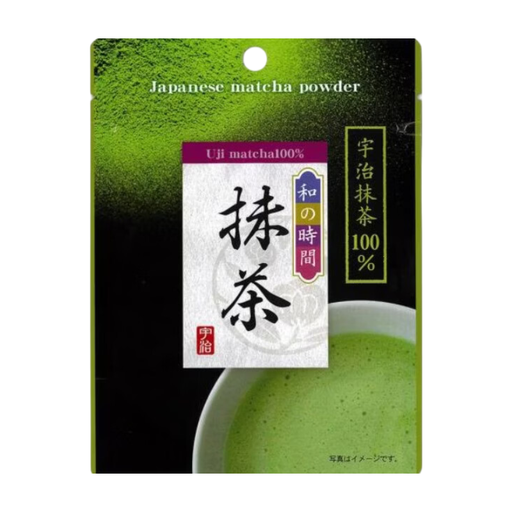 Image unavailable
Worth considering if you want to measure and mix powder rather than steep a tea bag. Check the total quantity and the number of packs shown on the product page before choosing.
No. Matcha tea can be a blend for steeping. Auchan’s Pukka and Jardin Bio Étic product pages state that they contain 2% and 3% matcha respectively. Read the full ingredients list to find out what’s in the tea bag you’ve chosen.
No, follow the instructions for each product. Jardin Bio Étic’s Auchan page recommends using 200 ml of water at 85 °C and steeping its tea bags for 2 to 3 minutes. A Carrefour matcha powder page describes whisking the powder with water at 70–80 °C.
Follow the instructions on the packaging. Auchan’s Pukka and Jardin Bio Étic product pages recommend keeping their tea bags dry. Jardin Bio Étic’s page also advises protecting them from moisture and heat.
Check the product name, ingredients, allergen information, net quantity and any instructions for preparation and storage. For food sold in France, the Directorate General for Competition Policy, Consumer Affairs and Fraud Control states that labelling must be clear and precise.