Venues serving matcha made to order
If your menu includes whisked matcha, lattes or iced drinks, your team needs to be able to measure and mix the powder for each order.


For a whisked matcha or a latte made to order, choose a powder whose ingredients match the drink you plan to serve. Tea bags are better suited to self-service infusions. If you’re considering a box of 80 tea bags for regular service, check how many are actually supplied and how much matcha they contain: seeing the word “matcha” on a green tea box doesn’t mean it contains pure matcha.
If your menu includes whisked matcha, lattes or iced drinks, your team needs to be able to measure and mix the powder for each order.
At breakfast or in a meeting room, tea bags make it easier to serve guests. However, it’s important to distinguish between a green tea infusion containing matcha and a drink made with matcha powder.
When planning repeat orders, compare the actual number of units or net weight supplied, the ingredients and stock turnover. Tea bags and grams of powder are not equivalent formats.
Choose this if: you want to prepare whisked matcha or a latte on site using a powder with clearly stated ingredients.
Bear in mind: measuring and mixing are part of every order, and a weight of powder doesn’t equate to a fixed number of individual tea bags.
Choose these if: you’re offering a simple infusion, particularly for self-service.
Bear in mind: the blend may be mostly green tea. For example, Carrefour France lists 2% matcha in Pukka’s box of 20 tea bags.
| Criterion | What to check before buying | Who this matters to |
|---|---|---|
| Type of drink | Read the ingredients list and distinguish matcha powder from a blend of green tea and matcha. | If I’m promising a whisked matcha or matcha latte, I want the ingredients to match the drink. Around 42% of consumers would put this first. |
| Service set-up | Decide whether the drink will be infused or made with powder, then check the steps and equipment required. | When orders are coming in thick and fast or guests are serving themselves, I look for a preparation method that suits the way the counter operates. This would be a priority for around 33% of consumers. |
| Format and stock turnover | Confirm the number of tea bags or the net weight supplied, as well as storage requirements and how often you’ll need to reorder. | To avoid leaving a pack open for too long or disrupting the reordering schedule, I choose a format that suits demand. Around 25% of consumers would make this their main concern. |
Carrefour France lists 2% matcha in the Pukka tea bag blend, while the Clipper and Sipsta product descriptions refer to matcha powder. These products have different ingredients.
If your menu describes a drink made with matcha powder, check the ingredients list for the product you’ve chosen before deciding what to call it.
A box of tea bags, a pouch of powder and a tub of powder are counted differently. The number of units alone won’t tell you how much matcha is intended for each serving.
Confirm the exact packaging, net weight and ingredients of the product you plan to order, particularly if you need 80 tea bags.
Powder needs to be measured and mixed, while tea bags are used to make an infusion. The choice affects the steps involved during service.
Decide on your recipe and test how it works at the point of service before choosing a format for breakfast or self-service.
A product name or marketing description doesn’t prove that a drink has health benefits. Anses also advises that some people should take particular care with their caffeine consumption.
Describe the drink’s ingredients and how it is prepared without attributing health benefits to it.
A matcha powder option available in a 300 g pouch, worth considering for drinks prepared by your team rather than individual tea bag service.
A range of matcha powders that includes a 30 g tin and a 100 g loose format, to consider according to your expected stock turnover.
An option for green tea bags containing matcha, intended for infusions rather than whisked matcha.
These powdered products are for drinks prepared by your hotel café team. Compare the packaging with your service needs: they shouldn’t be confused with a box of 80 tea bags for individual servings.
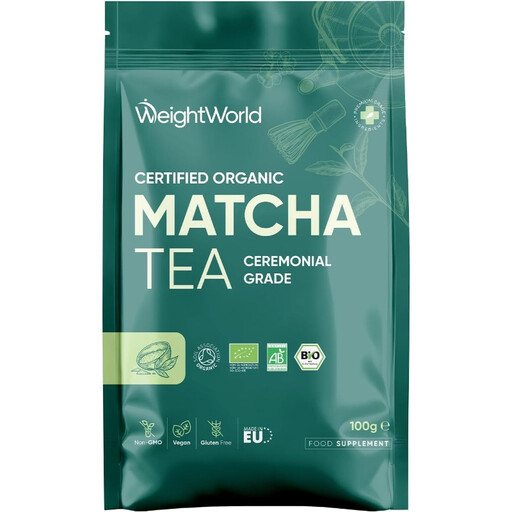 Image unavailable
Worth considering if your team makes matcha drinks to order and can measure and mix the powder.
The title states 100 g of powder, not 80 individual tea bags. Decide how much to use per recipe before estimating how many servings you’ll get.
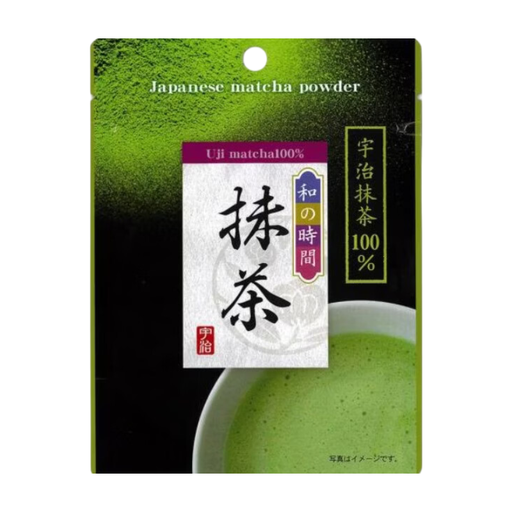 Image unavailable
Worth considering for a matcha drink prepared by your team, rather than a self-service infusion.
The title states 40 g. Confirm the total quantity and number of tea bags in the delivered pack before planning your stock.
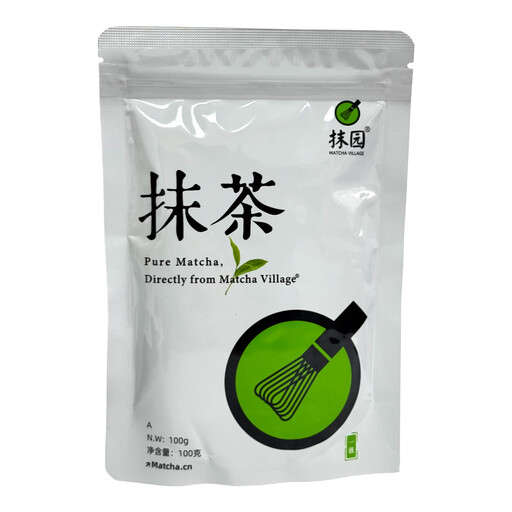 Image unavailable
Worth considering for a recipe prepared on site, provided its ingredients match the drink described on your menu.
The title states 100 g of powder. Check the ingredients label and packaging if you’re looking for pure matcha or individual portions.
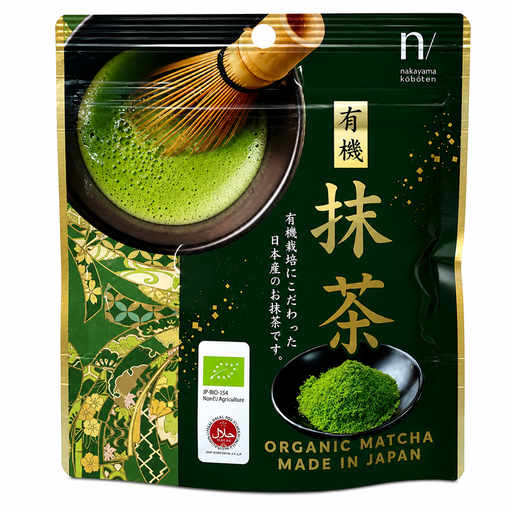 Image unavailable
The 30 g format could be useful for developing a recipe before choosing packaging for regular service.
The title gives the weight of the powder, not a box of 80 tea bags. Decide on the quantity and preparation method before using it at the counter.
No. The ingredients vary by product. For example, Carrefour France lists Pukka tea bags as a green tea blend containing 2% matcha, while its Clipper and Sipsta listings describe matcha powders. Read the ingredients list before naming the drink on your menu.
You’ll need to measure and mix the powder for your chosen recipe. For its product, Kusmi Tea describes a method using water at 80 °C and a whisk. Adapt the method to the product you choose and test it during a representative service.
Compare the net weight and the number of drinks you can make using your own recipe. Don’t automatically treat 80 tea bags as equivalent to a quantity of pure matcha. Also check the ingredients in each tea bag, then confirm the pack size and how often your venue will need to reorder.
For non-prepacked foods, the European Commission states that information must be provided about any substances or products present that cause allergies or intolerances. Keep details of the ingredients used in each recipe, particularly when you add milk or a plant-based drink.
No. Matcha is a tea that contains caffeine. Anses advises taking care with caffeine consumption, particularly for pregnant or breastfeeding women, children, teenagers and people who are sensitive to caffeine. Avoid presenting the drink as suitable for every customer without qualification.