Anyone who wants a cup without measuring
You want to make a hot drink during a break and are happy for the tea bag to contain a blend of tea, mint or other herbs rather than pure matcha.


For a quick cup during a study break, choose a tea blend in bags if you want something easy to brew. To measure matcha into a snack or latte, look for a powder whose ingredients list says 100% matcha. Carrefour France’s listings for Pukka and Yogi Tea each state that their blends contain 2% matcha. If pyramid-shaped bags matter to you, check the packaging of the product you choose: the word “bag” alone doesn’t confirm their shape.
You want to make a hot drink during a break and are happy for the tea bag to contain a blend of tea, mint or other herbs rather than pure matcha.
You’re looking for a combination such as mint and green tea to enjoy with a snack. The ingredients list and the proportion of matcha tell you more than the product name alone.
You want to add and measure matcha for a latte or recipe. A powder labelled 100% matcha is suited to this, unlike a blend in a tea bag that’s designed for brewing.
First, decide whether you want to brew a drink or add matcha to a recipe. Then check the ingredients: the Pukka and Yogi Tea blends listed by Carrefour France each contain 2% matcha, while the SIPSTA powder listed by the same retailer has an ingredients list stating 100% organic matcha green tea.
| What matters | What to check | Who it suits |
|---|---|---|
| Making a cup | Tea bag format and brewing instructions; check the shape of the bag separately if you want a pyramid. | Between study sessions, I want to make a drink without measuring powder. Around 38% of consumers would prioritise this convenience. |
| Flavour and ingredients | The proportion of matcha and the list of other ingredients, particularly any mint or herbs in the blend. | I’d rather choose based on the flavour of the ingredients than the word “matcha” on the box. This would be the main consideration for around 25% of consumers. |
| Adding it to a snack | A powder format and an ingredients list stating 100% matcha green tea if you want to measure out the ingredient. | For a recipe or latte, I want to be able to add the amount of matcha myself. Around 37% of consumers would prioritise this culinary use. |
Carrefour France’s listings for Pukka and Yogi Tea each state that their blends contain 2% matcha. The other ingredients therefore also play a part in the flavour and how you prepare these products.
Compare the proportion of matcha and the ingredients list. If you want to measure matcha into a recipe, look for a powder whose ingredients explicitly state 100% matcha.
A box of tea bags doesn’t, by itself, tell you what shape the bags are or what the term “premium” means.
If the shape is important to you, check a photo of the tea bag and the packaging description before buying.
ANSES says caffeine can delay falling asleep and reduce the length and quality of sleep. A green tea blend may also contain other ingredients to consider, such as the yerba mate and guarana in the Yogi Tea blend listed by Carrefour France.
If you’re studying late, bear in mind your sensitivity to caffeine and any other caffeinated drinks you’ve had that day.
Carrefour France lists a green tea and mint matcha blend in a box of 20 tea bags.
Carrefour France describes an infusion in a box of 15 tea bags, containing green tea, mint, liquorice, yerba mate, guarana and matcha, among other ingredients.
Carrefour France lists a powder whose ingredients list states 100% organic matcha green tea, with latte-making and baking among its suggested uses.
These two products suit different study-break routines: brewing a tea bag that contains matcha, or measuring matcha powder for a drink or snack. If you’re specifically looking for a pyramid tea bag, check its shape before choosing a tea in bags.
 Image unavailable
Worth considering if you’d rather brew tea in a bag during a break than measure powder for a recipe.
The product name states that it comes in a box of 20 tea bags. If pyramid-shaped bags matter to you, check the packaging before buying.
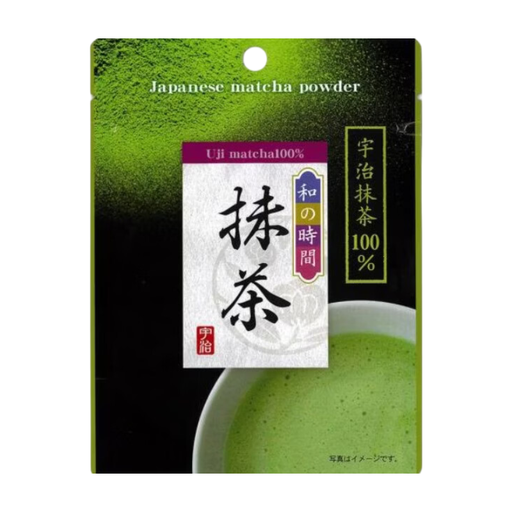 Image unavailable
Worth considering if you want to measure matcha for a drink or add it to a snack, rather than brew a tea bag.
The product name states that it contains 40 g. Measure and mix the powder according to your chosen recipe.
No: the Pukka and Yogi Tea products described by Carrefour France each contain 2% matcha. The first combines green tea and mint; the second contains green tea, mint, yerba mate, guarana and liquorice, among other ingredients. Check the proportion of matcha and the full ingredients list to find out what you’ll be brewing.
A powder you can measure is suitable for adding matcha to a recipe, whereas a tea bag blend is intended for brewing. Carrefour France lists SIPSTA powder, for example, with an ingredients list stating 100% organic matcha green tea and suggested uses including lattes and baking.
Check for ingredients that may contribute to your caffeine intake and consider your personal sensitivity. According to ANSES, caffeine can delay falling asleep and reduce the length and quality of sleep; Carrefour France’s listing for Yogi Tea mentions green tea, yerba mate and guarana, among other ingredients.
No. A claim on the packaging doesn’t, by itself, tell you what the product contains or how to use it. EFSA says that authorised health claims in the European Union must be backed by strong scientific evidence. When comparing these formats, start by checking the ingredients, the proportion of matcha and how to prepare the product.