Those who enjoy matcha on its own
You want a cup made with water to enjoy alongside a savoury breakfast, with a rich vegetal flavour rather than dominant bitterness. Ippodo describes some of its matchas as richer in umami and less astringent.


For a savoury breakfast, don’t choose a matcha just because it’s described as ‘bold’. First decide whether you want a cup that’s rich in umami and low in astringency, or a noticeable vegetal flavour in a blended recipe. Then check the ingredients, recommended uses and pack size. If you’re keeping an eye on your caffeine intake, remember to factor in the other drinks you have during the day.
You want a cup made with water to enjoy alongside a savoury breakfast, with a rich vegetal flavour rather than dominant bitterness. Ippodo describes some of its matchas as richer in umami and less astringent.
You’re looking for a powder that you can measure into a recipe. The product listing for 110 GRAINES at Auchan France explicitly mentions using it in savoury dishes.
You also drink coffee or other caffeinated drinks, or need to keep an eye on your intake. Anses notes that tea naturally contains caffeine.
For a cup made with water, start by checking the flavour descriptions. For a savoury recipe, look at the ingredients list and recommended uses first.
| What to consider | What to check | Who is it for? |
|---|---|---|
| Flavour profile | For matcha made with water, look for descriptions of umami, richness and astringency rather than relying on the word ‘strong’ alone. | If I drink my matcha with water, I want a noticeable flavour without seeking out bitterness at all costs; around 40% of consumers would put this profile at the top of their list. |
| Cooking uses | Check the ingredients list and look for any mention of using it in a savoury recipe or blended drink. | To add it to my breakfast, I want to be able to measure out the powder without adding an already flavoured blend; this would be the priority for around 30% of consumers. |
| Pack size and storage | Choose a net weight to suit how often you’ll use it, and check the storage instructions once opened. | If I’m new to matcha, I’d rather not keep a large opened pack for too long; around 20% of consumers would prioritise this ease of trying it. |
| Caffeine | Take account of the other sources of caffeine you consume during the day; ‘bold’ doesn’t tell you how much caffeine is in a cup. | If I also drink coffee or am sensitive to caffeine, I want to be able to manage my intake; this would be the main concern for around 10% of consumers. |
These terms don’t tell you how bitter a matcha is or how much caffeine it contains. Ippodo says it doesn’t use the term ‘ceremonial grade’ to classify its matchas.
For matcha made with water, compare descriptions of umami and astringency, then choose according to the flavour you’re after.
A matcha product may contain other ingredients. If you want to control what goes into a savoury recipe, the product name alone isn’t enough.
Read the full ingredients list and look for ‘100% green tea matcha’ if you want a pure powder.
According to producer Marukyu Koyamaen, heat, moisture, light and air can affect matcha’s colour and flavour.
Choose a pack size that suits how often you use it, and keep the powder tightly sealed in a cool, dry place.
Matcha contributes to your caffeine intake, as do coffee and other drinks consumed during the day. Anses points out that caffeine sensitivity varies from person to person.
Consider your overall intake. If you need to limit caffeine because of pregnancy, medication or a health condition, seek advice suited to your circumstances.
Carrefour France lists a 55 g jar of organic green tea matcha.
Carrefour France lists 50 g of organic matcha powder for making a cup, a latte or baked goods.
Carrefour France lists a 300 g pack of organic matcha powder, including for use in drinks.
Auchan France lists 100 g of organic matcha powder, with the product listing mentioning savoury and sweet recipes.
This 100 g matcha powder may be worth considering if you want to measure out your own breakfast drink. To add it to a savoury recipe, check that its intended use and flavour profile suit your dish.
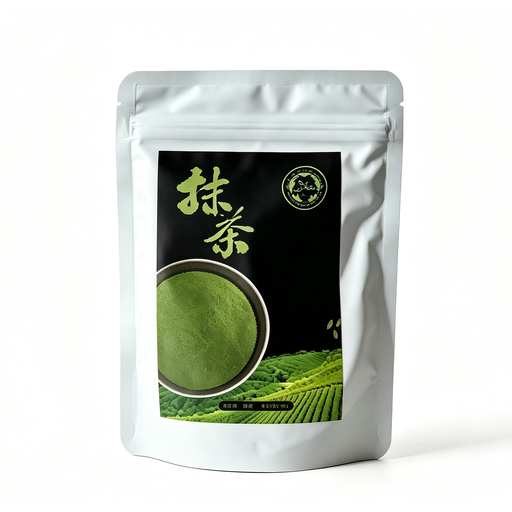 Image unavailable
Worth considering if you want to make a matcha drink to suit your taste. The stated pack size is 100 g. If you plan to use it in savoury cooking, check the product information before choosing.
No. On its own, the word doesn’t tell you how the matcha tastes or how much caffeine it contains. To choose a matcha to drink on its own, look instead for descriptions of umami, bitterness and astringency.
Start with the quantities recommended for your chosen product, then adjust the amount of powder to suit your taste. As examples specific to their own preparations, Auchan France recommends 2 to 4 g in 50 ml of water at 70 °C for 110 GRAINES, while Ippodo suggests 2 g in 60 ml of water at 80 °C for its usucha.
Yes, if the product is intended for this use: the 110 GRAINES listing at Auchan France mentions savoury recipes. Check the ingredients list if you want to measure out the powder and control the other ingredients in your recipe.
Yes. Matcha is a type of tea and contributes to your caffeine intake. Anses notes that tea naturally contains caffeine, so also take account of coffee and other caffeinated drinks you have during the day. Don’t assume you know how much caffeine is in a cup just from the word ‘bold’.
Keep it tightly sealed in a cool, dry place, away from light and strong smells. Producer Marukyu Koyamaen notes that heat, moisture, light and air can affect its colour and flavour.