For matcha lattes or recipes in a hotel café, choose matcha powder so you can control the amount you use. If you want to offer an easy-to-serve infusion, matcha green tea bags are better suited to the job. If you describe a product as fair trade, check which standard applies and which ingredients it covers for the product you receive: neither an organic label nor Japanese origin alone proves Fairtrade/Max Havelaar certification.
Who is this choice for?
Hotels looking to substantiate a fair-trade claim
If fair trade features on your menu or in your purchasing policy, start with the exact product you ordered. Check the standard stated, which ingredients it covers and the claims on the pack you receive. Fairtrade International also recommends confirming a supplier’s certification or licence status directly with them before entering into a contract.
Teams making matcha lattes
If you need to measure matcha into a drink or recipe, it’s important to distinguish matcha powder from green tea intended for infusing. For example, the product information for Pukka’s 30 g blend states that it contains 2% matcha, so it isn’t pure matcha powder.
Hotels that prefer tea bags
Matcha green tea bags can make service at a buffet or in a guest room simpler when you want to offer an infusion without measuring powder for every cup. However, the name on your menu should describe it as matcha green tea, not pure matcha.
Which criteria should you prioritise?
Matcha powder
Choose this if: your team makes lattes or recipes and needs to measure matcha powder directly.
Bear in mind: you’ll need a consistent preparation method and, if making a fair-trade claim, evidence relating specifically to the product ordered.
Matcha green tea bags
Choose this if: you want to serve an infusion without measuring powder for each cup.
Limitation: the matcha content depends on the blend. Pukka’s matcha green tea product information states that it contains 2% matcha, so it isn’t a latte powder.
| Criteria |
What to check |
What matters to customers |
| Fair-trade evidence |
Before making a fair-trade claim, check the exact standard on the product you receive, which ingredients it covers and the supplier’s current status. |
If I describe a drink as fair trade, I want to be able to link that claim to the product being served. Around 42% of consumers would make this traceability their priority. |
| Consistent service |
Compare the preparation method, the portion to measure or number of tea bags, and the storage instructions after opening. |
When several people are serving, I want a preparation method the team can repeat consistently. This would be the top priority for around 33% of consumers. |
| How the drink is described on the menu |
Check the ingredients list and matcha content: matcha powder and a matcha green tea blend are not the same drink. |
If I order a matcha latte, I don’t expect to receive infused green tea. Around 25% of consumers would prioritise a match between the menu description and the way the drink is made. |
Mistakes to avoid
-
Assuming organic, Japanese origin and fair trade mean the same thing
These claims relate to different characteristics. Kusmi Tea’s product information describes an organic matcha from Japan; Japanese origin and organic certification alone do not establish Fairtrade/Max Havelaar certification.
When writing your menu, use only claims verified for the specific product and pack you receive. In particular, distinguish Fairtrade/Max Havelaar from Fair for Life.
-
Ordering matcha tea to make a latte with powder
A blend for infusing is not a direct substitute for powder that you measure out. Carrefour and Joybuy product information for Pukka matcha green tea states that the blend contains 2% matcha.
Check the product format and ingredients list before settling on a recipe and drink name.
-
Overlooking preparation and product information
Powder needs a defined measuring and mixing method, and storage conditions also matter when planning service. Customers should be able to access accurate food information, particularly about the relevant ingredients and allergens.
Test the recipe in the café’s actual working conditions, then keep the pack and product information available to your team.
-
Promising guaranteed effects from matcha
Matcha and green tea contain caffeine. Anses notes that caffeine can disrupt sleep and that its effects vary from person to person.
Describe the drink and its ingredients without claiming health benefits or giving a caffeine content that hasn’t been established for the serving you offer.
Brands to know for this choice
These products illustrate different formats and claims. A brand’s inclusion here is not evidence that all its products are fair trade.
Touch Organic
Organic matcha powder from China, listed in a 100 g format on Naturalia’s product page, for drinks or recipes where you control the amount.
- Naturalia states that the ingredients in this product meet Fairtrade/Max Havelaar standards and suggests a serving of 1 g per 20 cl.
- For a professional order, confirm with the supplier which status applies to the product delivered and check the claims on its packaging.
Pukka
Matcha green tea for infusing, which is different from pure matcha powder.
- Joybuy’s product information for the 30 g blend states that it contains 98% green tea and 2% matcha, with a Fair for Life claim covering 98% of the ingredients.
- Check the packaging of the product you order before planning service, and don’t describe Fair for Life as Fairtrade/Max Havelaar certification.
Kusmi Tea
Organic matcha powder from Japan, available from the brand in 30 g and 100 g formats for lattes and baking.
- Kusmi Tea’s product information specifies Japanese origin, powder format and preparation at 80 °C.
- If fair trade is a criterion for your menu, ask for separate evidence: organic certification and origin don’t establish it.
Matcha green teas available on Joybuy
These two Pukka products are for serving matcha green tea as an infusion. If you’re making a latte with matcha powder, look for a product whose format and ingredients are suited to that recipe.
 Image unavailable
Pukka Mint Matcha Green Tea, 20 tea bags
A tea-bag format to consider for serving an infusion at a buffet or in a guest room, rather than making a latte with matcha powder.
The product name specifies 20 tea bags. Before describing it as fair trade, check the wording on the pack you receive and confirm the applicable status with the supplier.
View on Joybuy
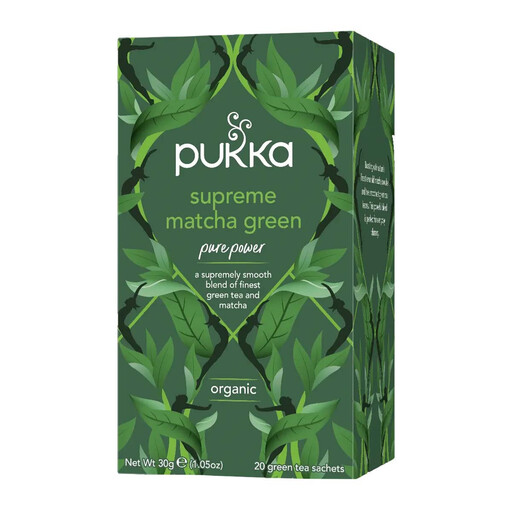 Image unavailable
Pukka Matcha Green Tea Organic, 30 g
This matcha green tea blend is suitable for serving as an infusion, not for making a latte with pure matcha.
Joybuy’s product information states that it contains 98% green tea and 2% matcha, and that the Fair for Life claim covers 98% of the ingredients. Confirm the packaging of the product you receive before planning your service equipment. If making a fair-trade claim, use the exact standard stated for this product.
View on Joybuy
Frequently asked questions
Is organic matcha automatically Fairtrade/Max Havelaar?
No. Organic and fair-trade claims are separate. Carrefour Bio’s product information describes an organic matcha, while Naturalia’s product information for Touch Organic matcha also states that its ingredients meet Fairtrade/Max Havelaar standards. Check the claim for the specific product you buy.
Can you use matcha green tea bags to make a matcha latte?
A tea bag intended for infusing is not a direct substitute for matcha powder in a latte. Pukka’s matcha green tea product information states that it contains 2% matcha. If you’re making a recipe with powder, check the product format and decide how much to use.
What information should you keep when serving matcha in a hotel in France?
Keep the packaging and information for the product you actually serve to hand, including its ingredients list and allergen information. The French Ministry of the Economy notes that food labelling must be accurate and fair, and must not mislead consumers. Also check the storage instructions and the relevant date on the product you receive.
How should you talk about caffeine in a matcha drink?
Simply say that the drink contains tea and therefore caffeine, without giving a per-serving amount unless it has been established. Anses notes that caffeine can disrupt sleep and that its effects vary from person to person.


