People making matcha biscuits
If you want to add the ingredient to dough and control how much you use, look for a powder rather than tea bags intended for brewing. E.Leclerc and Joybuy product listings describe matcha powders suitable for cooking.


To add matcha to biscuit dough, choose a powder whose product name and ingredients are suited to this use. If you mainly want to make a cup of tea without measuring out powder, a tea-bag blend may suit you. However, the Pukka and Yogi products described by Auchan and Carrefour contain 2% matcha, so they are not a substitute for powder in a recipe. If you’re looking for a large pack, check that the listing for the exact product states that it contains matcha and 80 tea bags: a general tea listing that mentions this quantity isn’t enough.
If you want to add the ingredient to dough and control how much you use, look for a powder rather than tea bags intended for brewing. E.Leclerc and Joybuy product listings describe matcha powders suitable for cooking.
If you’re looking for a pack of 80 tea bags to cut down on repeat purchases, check the number of bags and the product name on the listing for the exact product. A general listing for “80 tea bags” doesn’t, on its own, tell you whether it’s matcha.
If you want to make a cup using a tea bag, check the ingredients: the Pukka and Yogi products listed by Auchan and Carrefour combine matcha with other ingredients.
First decide whether you want to add matcha to biscuit dough or use it to make a brew. Then check the pack size and ingredients of a product suited to that use.
| What to consider | What to check | Who it matters to |
|---|---|---|
| Baking | The powder format and ingredients, so you can add the matcha to your dough. | I want to add matcha directly to my biscuit recipe and control how much I use. Around 36% of the consumers concerned make this their priority. |
| Pack of 80 tea bags | The type of tea and the exact number of tea bags listed for the product. | I drink tea regularly and want a pack that means I don’t have to buy another box so often. This format is a priority for around 29% of the consumers concerned. |
| Easy to brew | The type of blend and its ingredients, including the proportion of matcha if stated. | I prefer making a cup without measuring powder, even if that means choosing a blend rather than pure matcha. Around 21% of the consumers concerned prioritise this convenience. |
| Ingredients | Other plants, label warnings and allergen information. | I want to know what’s in my tea before choosing a blend, particularly if it contains several plants. For around 14% of the consumers concerned, the ingredients matter more than the format. |
According to the Auchan and Joybuy listings for the Pukka products in question, matcha makes up 2% of a blend intended for brewing. A tea bag like this won’t let you measure matcha into dough in the same way as a powder.
For biscuits, check the product format and ingredients before you choose.
The number of tea bags doesn’t tell you the type of tea or its ingredients. A general listing for 80 tea bags doesn’t confirm that they contain matcha.
Check the product name and number of tea bags on the listing for the exact product.
E.Leclerc lists the XLS Medical product containing 90 tea bags and labelled with the word “matcha” as a medical device. It shouldn’t be mistaken for a powder or tea for use in biscuits.
For cooking, choose a product clearly identified as food and follow the intended use shown on the packaging.
Carrefour’s listing for Yogi Matcha Énergie mentions green tea, mate and guarana, among other ingredients. Anses notes that caffeine occurs naturally in tea and other plants.
Read the ingredients and product warnings, particularly if you want to keep track of your caffeine intake.
Carrefour lists tea-bag blends containing matcha, including Yogi Matcha Énergie and Pukka Menthe & Matcha.
E.Leclerc lists matcha powders, including 100 g and 300 g formats, worth considering for recipes.
Auchan lists Pukka Thé vert suprême et matcha bio in a box of 20 tea bags.
These powders are worth considering if you want to make drinks and add matcha to biscuits. Don’t confuse them with a box of 80 tea bags.
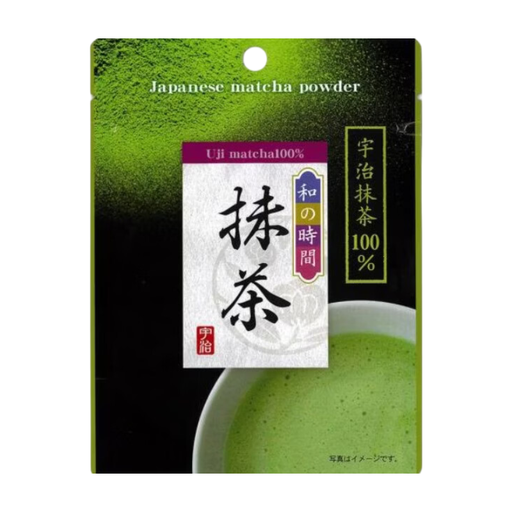 Image unavailable
A powder worth considering if you want to measure matcha into a drink or biscuit recipe.
The product name states that it contains 40 g. Check the exact pack format if you want several individually sealed portions.
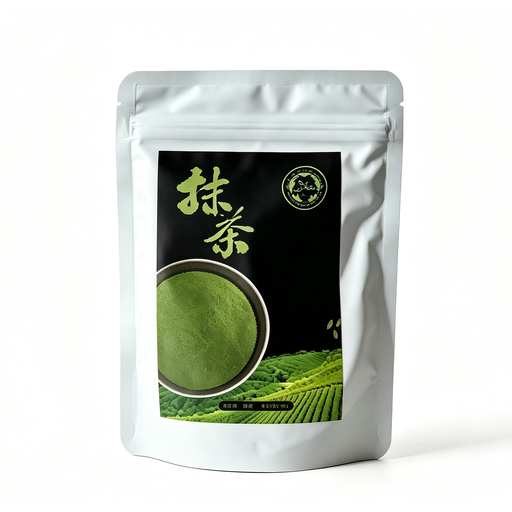 Image unavailable
This powder is a good fit if you’re looking for an ingredient to measure out for biscuits and drinks.
The listed format is 100 g of powder, not a box of 80 tea bags.
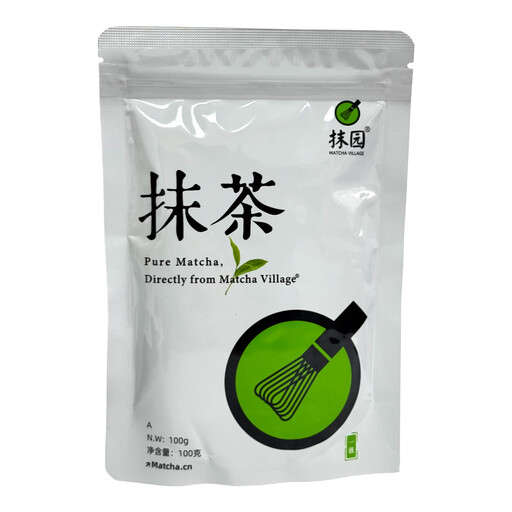 Image unavailable
This powder format is worth considering if you want to measure matcha into biscuits as well as drinks.
The product name states that it contains 100 g. Before ordering, check the exact packaging if you need individual portions.
Not without checking the ingredients and intended use: the Pukka products listed by Auchan and Joybuy are blends for brewing that contain 2% matcha. To add matcha to dough and control how much you use, look for a powder whose product name and label are suited to your recipe.
Check that the listing for the exact product states both that it contains 80 tea bags and that it’s the type of tea you’re looking for. The wording “80 tea bags” alone doesn’t tell you whether the bags contain matcha or a blend that includes it.
Follow the instructions on the packaging of the powder you’ve bought, and reseal it as directed. Storage instructions for one specific product shouldn’t automatically be applied to every powder.
Read the full ingredients list and label warnings, not just the word “matcha”. Carrefour’s listing for Yogi Matcha Énergie mentions green tea, mate and guarana, among other ingredients; Anses states that caffeine occurs naturally in tea and other plants.
No: E.Leclerc lists this XLS Medical product as a medical device. Don’t use it as a substitute for a food product intended for making tea or biscuits.