What to look for when choosing matcha
First, distinguish tea powder from a latte mix. Then narrow down your choice by checking the suggested amount, label and format.
| Priority |
What to check |
Who it’s for |
| A pronounced matcha flavour |
The ingredients list and recommended amount for the powder you choose. |
I want to taste the tea in my cup and adjust the amount of powder without being tied to a latte base. Around 46% of consumers make this their top priority. |
| Traceability and organic certification |
Organic certification and, if stated, the product’s origin. |
I want to distinguish how a product is made from where it comes from, without assuming either tells me how it will taste. This is the top priority for around 27% of consumers. |
| Convenient preparation |
The type of preparation and the proportion of matcha in any blend. |
A quick-to-make, creamy drink matters more to me than a concentrated cup of tea. Around 27% of consumers prioritise this convenience. |
Brands to consider
These examples show different formats and information you can compare; they aren’t ranked by flavour intensity.
Carrefour Bio
Carrefour sells a 55 g tin of organic matcha green tea under its own brand.
- The packaging lets you measure out the powder for each serving.
- The format and organic label alone don’t tell you how its flavour compares with other matchas.
SIPSTA
Carrefour’s product listings show that SIPSTA offers a powder described as 100% organic matcha green tea, as well as a separate oat latte mix.
- The pure powder’s ingredients list makes it easy to distinguish from the latte mix.
- Carrefour’s latte mix contains 77% oat powder, cane sugar and 8% matcha, so it isn’t designed for the same purpose as a tea powder on its own.
110 Graines
Auchan sells a 100 g organic matcha powder, labelled as made in Japan.
- The product listing gives you a clear starting point: 2 to 4 g of powder in 50 ml of water at 70 °C.
- These preparation instructions don’t tell you how its flavour compares in intensity with other products.
LOYD
Lidl France sells 40 g of Japanese organic LOYD matcha for making hot or cold drinks.
- The smaller pack may be a good way to try the preparations suggested on the packaging.
- Flavour descriptions don’t establish that it’s more robust than another matcha.
Asia Green Garden
ALDI France sells a 40 g pack of Asia Green Garden matcha powder.
- The product category and weight make it easy to identify the format on offer.
- If ingredients or origin are important to your choice, check these details on the product packaging.
A Joybuy option in stick packs
This is an option for making matcha green tea using individual stick packs. If you’re looking for a cup made from matcha alone, check the ingredients before choosing this format.
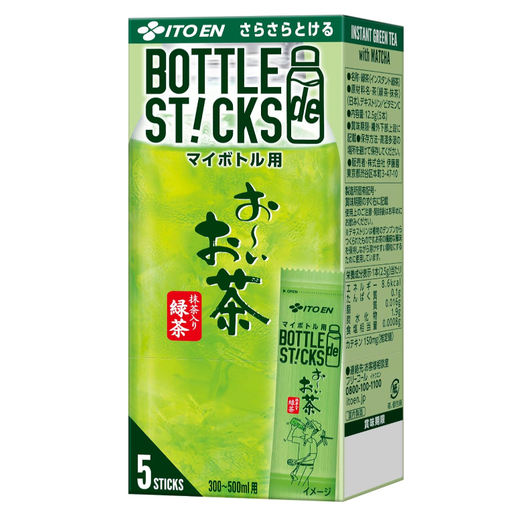 Image unavailable
Itoen Matcha Green Tea Powder, 5 sticks of 2.5 g
Stick packs are a convenient choice if you want to make a drink using an individual serving. The box contains 12.5 g in total. If your priority is a pure, robust matcha, check the ingredients and dilution instructions on the packaging.
View on Joybuy
Frequently asked questions
How do I choose matcha for a more robust cup?
First, distinguish a powder that contains matcha as its only ingredient from a latte mix, then follow the recommended amount for the powder you choose. For example, Carrefour’s listing for SIPSTA latte mix states that it contains 77% oat powder and 8% matcha, making it a different product from the SIPSTA powder described as 100% matcha.
How should I prepare it to start appreciating the flavour?
Start by following the instructions for your specific product. For 110 Graines matcha, Auchan’s listing recommends around 2 to 4 g of powder in 50 ml of water at 70 °C. Starting at the lower end of this range lets you get to know the flavour before adjusting a future serving.
Is organic matcha necessarily Japanese or more robust?
No. Organic certification relates to how a product is made, not its geographical origin or flavour intensity. The Ministry of Agriculture describes the European framework for this certification. Check the origin separately if it matters to your choice.
Does the word ‘strong’ tell you how much caffeine is in each cup?
No. It doesn’t give a specific caffeine content for the prepared drink. Tea naturally contains caffeine, and Anses highlights its possible effects on sleep. So, when comparing two products, don’t confuse a description of the flavour with a measurement per serving.


