Hoteliers looking for a pronounced grassy flavour
If you want the matcha itself to come through rather than a latte-style recipe, check the powder’s ingredients and try different quantities in the actual serving size.


To serve a robust, grassy-tasting cup at a hotel breakfast, start with a powder whose ingredients list contains only matcha green tea, then adjust the recipe to suit the product you choose. A matcha latte mix may work for a different kind of service, but its ingredients and taste are not the same as those of a pure powder. Check the ingredients before deciding between the two.
If you want the matcha itself to come through rather than a latte-style recipe, check the powder’s ingredients and try different quantities in the actual serving size.
When drinks are being made one after another at breakfast, an easy-to-repeat mixing method and measure matter just as much as the flavour you’re aiming for. Choosing between pure powder and an instant mix also affects the work involved at the counter.
Check the ingredients, allergens in the products you use and the caffeine content, especially if your recipe includes milk, syrup or a latte mix.
First, decide what kind of drink you want to serve. With a pure powder, you can control how much matcha goes into the recipe. A latte mix is designed for a different purpose, so assess it by its ingredients as well as its preparation method.
Choose this if: you want to serve matcha with water or make your own latte, adjusting the amount of powder to taste.
Bear in mind: you’ll need to disperse the powder and consistently recreate a recipe tested with your service equipment.
Consider this if: you want to offer a latte-style drink made to a set recipe, rather than a cup of pure matcha.
Bear in mind: the drink may contain other ingredients. The word ‘matcha’ on the packaging doesn’t tell you enough about its flavour or ingredients.
| Criteria | What to check | Who is it for? |
|---|---|---|
| Robust grassy flavour | Ingredients list and a trial using the dose in the cup you’ll serve; the word ‘strong’ doesn’t measure intensity. | If I want the matcha to remain noticeable, I’d rather adjust a pure powder than start with a latte mix. Around 31% of consumers would put this need first. |
| Consistent service | Recommended dose, temperature and mixing method for the product you choose, as well as the equipment available at the counter. | When several cups need to be prepared one after another, I want to reproduce the same recipe without slowing down service. Around 31% of consumers would make consistency their priority. |
| Pack size and storage | Amount in the pack, stock turnover and storage instructions after opening. | Before switching to a large pack, I want to know whether breakfast service will use it up while it’s still in good condition. Around 23% of consumers would prioritise pack size and potential waste. |
| Information about the drink | Ingredients and allergens in each product used, as well as the caffeine content of the drink you offer. | To answer customers’ questions, I need to distinguish pure powder from a recipe containing other ingredients. Around 15% of consumers would put clear information first. |
Two products labelled ‘matcha’ can have different ingredients. Carrefour France, for example, distinguishes a SIPSTA powder labelled as 100% matcha green tea from a product presented as a matcha latte mix.
Read the ingredients for the exact product. Choose a pure powder if you want to control the amount of matcha and the other ingredients in the cup yourself.
These claims are no substitute for trying the product with the water, serving size and recipe planned for your hotel. Brand descriptions of flavour are not a way to compare the intensity of different products.
Start with a pack size that’s suitable for a trial, then note the dose and preparation method that give you the result you want.
Auchan’s listing for 110 Graines matcha says to protect the powder from heat, light and moisture. If a pack is intended for regular service, you need to be able to store it according to the instructions.
Choose a pack size that suits how quickly you’ll use it, and follow the storage instructions and dates shown on the packaging.
Matcha contains caffeine. Anses notes that caffeine can delay sleep, among other effects, and that sensitivity varies from person to person.
Make sure your team can access information about the drink and have a caffeine-free option available for customers who would prefer one.
In France, Kusmi Tea offers organic Japanese matcha powder in 30 g and 100 g packs.
A SIPSTA powder listed by Carrefour France gives its ingredient as ‘100% organic matcha green tea’.
Auchan France lists a 100 g pack of 110 Graines organic matcha powder, with preparation and storage instructions.
On 2 October 2026, Lidl France listed a 40 g pack of LOYD organic matcha powder.
These two powders are worth considering for a matcha recipe prepared on site for breakfast. Check the pack size and try the preparation using the cup size you plan to serve.
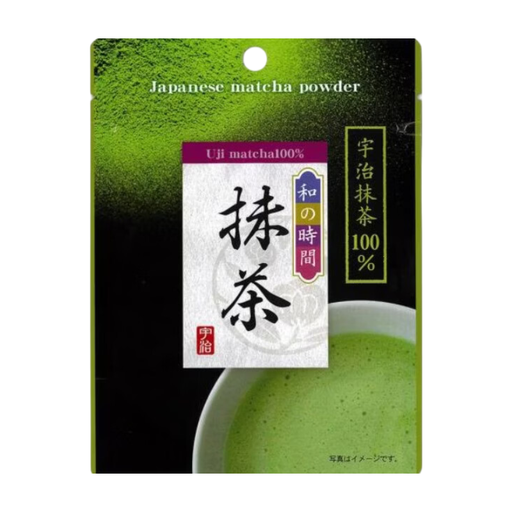 Image unavailable
A powder to consider if you want to adjust the recipe for a breakfast cup of matcha.
Before planning service around this pack, check whether it contains 40 g in total or five 40 g sachets: the information associated with this product varies. Also try preparing it with your equipment and the serving size you’ll use.
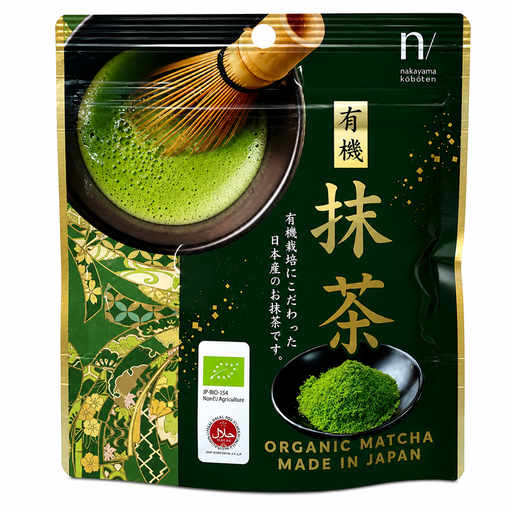 Image unavailable
The 30 g pack could be a good choice for a first recipe trial before you settle on a preparation method for service.
Check the instructions for dosing and mixing for this particular product, then try it in the cup you’ll actually serve. Its name alone doesn’t tell you how intense the finished drink will be.
No. It doesn’t tell you about the ingredients or how intense the prepared drink will be. For a hotel breakfast, check the ingredients, then try the dose for your chosen product with your water and final serving size.
Start with the instructions for the powder you’ve chosen, then try it with your service equipment. Auchan’s 110 Graines listing recommends 2 to 4 g in 50 ml of water at 70 °C, while Kusmi Tea recommends water at 80 °C for its product. These instructions are not a one-size-fits-all recipe.
Not without changing the recipe. A powder containing only matcha green tea lets you add water or milk separately, while a latte mix may contain other ingredients. Check the ingredients and allergens for the exact product before adding it to your breakfast menu.
Check the labels of every product used in the drink, including milk or a latte mix. The French Ministry of the Economy states that allergens must be listed and highlighted on prepacked food labels. For drinks prepared on site, check the information requirements that apply to your service.
Matcha contains caffeine, which may matter to customers who want to avoid it. Anses says caffeine can disrupt sleep and that its effects vary from person to person. Offering another drink lets you cater to different preferences without suggesting that matcha is right for everyone.