Managers introducing a matcha drink
A small pack lets you offer a few matcha drinks at breakfast before adjusting the quantities you buy. Carrefour France, for example, lists a 55 g tin of Carrefour Bio matcha.


For a hotel café, choose a matcha powder whose organic credentials and ingredients you can verify, then select a size that suits the quantity you expect to serve. A small tin means you don’t have to commit to too much stock when you launch; a larger size could mean fewer reorders if demand becomes steady. If you want to advertise Japanese origin or serve matcha on its own, check the stated origin and preparation advice separately: the organic label doesn’t answer those questions.
A small pack lets you offer a few matcha drinks at breakfast before adjusting the quantities you buy. Carrefour France, for example, lists a 55 g tin of Carrefour Bio matcha.
A larger size is worth considering if matcha is part of your regular service. Auchan France’s product listing for 110 GRAINES matcha states that it contains 100 g and can be used with water or milk, or in recipes.
To describe the drink accurately on your menu, check the origin of the product you buy as well as its organic credentials. Kusmi Tea states that its organic matcha is of Japanese origin.
Start by checking what you’ll be able to describe and serve, then choose a quantity that suits your service levels and planned recipes.
| Criteria | What to check | Consumers concerned |
|---|---|---|
| Quantity for launch | Compare the net weight with the quantity you expect to serve and how often you may need to reorder. | If demand for matcha is still uncertain, I’d rather start with a small amount of stock; around 33% of consumers would make this a priority. |
| Organic certification and ingredients | Check the organic certification details and the ingredient list for the product you receive. Carrefour France states that its Carrefour Bio tin contains 100% green matcha tea from organic farming; Auchan France’s listing displays the Euro-leaf and AB logos for 110 GRAINES. | To describe the drink to customers, I need to confirm that the product is organic and know what it contains; this would be the main criterion for around 42% of consumers. |
| Recipe and presentation | Check the product-specific uses and instructions. If you state the origin on your menu, verify it separately from the organic certification. | When I serve matcha on its own or in different recipes, I want to prepare it properly and be able to state its origin accurately; around 25% of consumers would prioritise this. |
Organic certification and the tea’s origin are two different pieces of information. The Ministry of Agriculture explains that organic farming is governed by European regulations; this certification does not, on its own, identify a country of origin.
Only mention Japan on the menu if this information is stated for the specific product you have bought.
A quantity that’s difficult to use can make it harder to manage an opened powder. Auchan France’s listing for 110 GRAINES matcha says to store it away from heat, light and moisture.
Tailor your first purchase to the service you expect to provide, then adjust the size according to orders and the storage instructions for the product you receive.
A brand’s marketing communications are not enough to make a claim about a drink served at your hotel permissible. The French Directorate General for Competition Policy, Consumer Affairs and Fraud Control explains that only authorised nutrition and health claims may be used, and only under the conditions set out for them.
Instead, describe the ingredients, preparation method and origin, where this is stated for the product.
A prepared latte may contain ingredients other than matcha, including milk or a plant-based drink. The information you give customers should match the recipe you actually serve.
Keep the labels for the ingredients you use, and update the recipe and allergen information whenever you change products.
A 55 g tin to consider if you’re starting with a small quantity.
A 100 g product listed by Auchan France for drinks and recipes.
Organic matcha that the brand states is of Japanese origin, available in 30 g and 100 g sizes.
These two products suit different needs: an organic matcha powder for making drinks, and an oat and matcha drink that’s ready to serve. If you want to describe a finished product as organic, check its own certification on the packaging you receive; having matcha described as organic in a recipe doesn’t certify the entire drink.
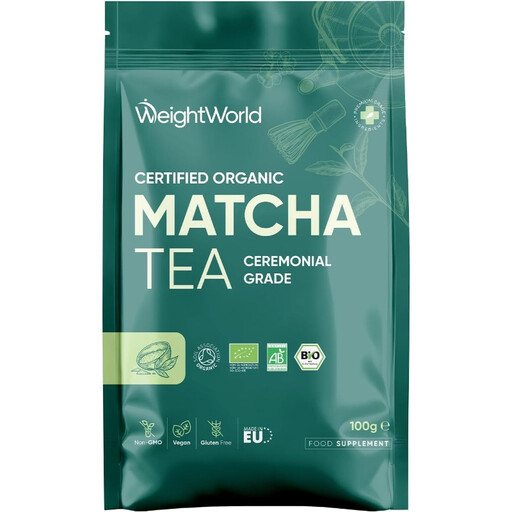 Image unavailable
This 100 g powder is suitable for a service where matcha is made to order. Before describing it as organic or stating an origin on your menu, check the information on the packaging you receive. You should also decide how much powder to use in your recipe.
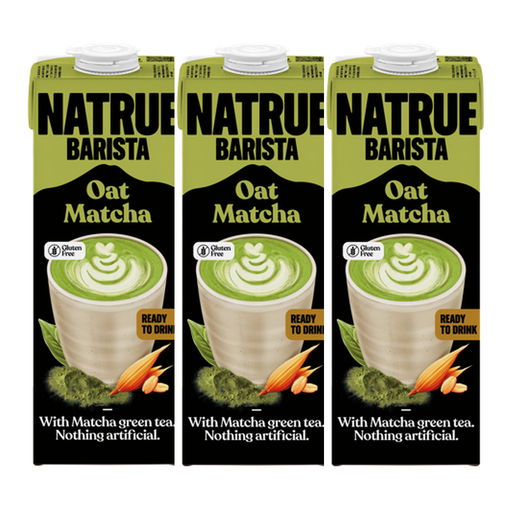 Image unavailable
This oat and matcha drink is ready to serve, rather than a powder that needs preparing. Check the ingredients, allergens, storage instructions after opening and any certification on the cartons you receive before describing the drink to customers.
Check the certification stated for the product you buy rather than relying on the word “natural”. The Ministry of Agriculture explains that organic farming is governed by European regulations; check the organic information and logos on the product or its official listing.
No: organic status does not specify geographical origin. Check the origin separately for the product you serve. Kusmi Tea states that its organic matcha is of Japanese origin, while Auchan France’s listing says that 110 GRAINES is made in Japan.
No. Follow the instructions for the product you choose and adapt them to the recipe you serve. Kusmi Tea recommends water at 80 °C for its matcha; don’t automatically apply this guidance to another powder or a ready-to-serve drink.
Keep the labels and an up-to-date recipe so you can give accurate information about the ingredients and allergens in the drink you actually prepare, including those in any milk or plant-based drink you add. The French Directorate General for Competition Policy, Consumer Affairs and Fraud Control explains that food information must be clear and accurate.
Don’t repeat these claims without checking that the specific claim is authorised and that all its conditions of use are met. The French Directorate General for Competition Policy, Consumer Affairs and Fraud Control explains that the nutrition and health claims permitted for food are regulated. A factual description of the recipe avoids suggesting an unsubstantiated effect.