For a full-flavoured matcha latte
If you add milk but still want a distinct matcha flavour, pure powder lets you control how much you use. Compare the ingredients list with the recommended serving size on the packaging.


To make a hot milky drink where the matcha flavour still comes through, start by comparing pure matcha powders and adjust the amount to suit your cup. An instant mix is better for a quick latte, while tea bags containing matcha are designed for brewing. The word “strong” alone is not enough to judge how intense a matcha will taste in your cup: check the ingredients and preparation instructions.
If you add milk but still want a distinct matcha flavour, pure powder lets you control how much you use. Compare the ingredients list with the recommended serving size on the packaging.
If convenience matters more to you than a pronounced matcha flavour, look for instant latte mixes. Just remember to check their ingredients separately from those of pure matcha powder.
If you drink matcha later in the day or also have other caffeinated drinks, consider your overall intake. ANSES notes that caffeine can disrupt sleep.
First decide whether you want to measure out the powder yourself, make a latte quickly or brew a tea containing matcha. Each format serves a different purpose.
Choose this if: you want to adjust the matcha flavour in your milk by changing the amount of powder you use.
Bear in mind: you’ll need to mix the powder with liquid before adding the milk.
Choose this if: you want a milky drink that’s quick to prepare.
Check: the ingredients list, as a latte mix isn’t necessarily pure matcha powder.
Choose this if: you’re mainly after a brewed cup of tea, which may also be flavoured.
Check: how much matcha it contains before using it in a latte instead of pure powder.
| Priority | What to check | Who it matters to |
|---|---|---|
| Matcha flavour in milk | Check whether the ingredients list specifies pure matcha powder, then look at the recommended serving size. | When I add milk to my cup, I want to adjust the amount of matcha without changing the type of product I use; around 42% of consumers prioritise this flavour preference. |
| Easy preparation | Look for the words “instant mix” and read the instructions for dissolving it and adding milk. | When I want a hot drink without mixing pure powder, ease of preparation matters more than the strength of the matcha flavour; this is the priority for around 33% of consumers. |
| Caffeine intake | Consider how much you use per cup, when you drink it and what other caffeinated drinks you have. | If I’m having my cup later in the day, I want to take my caffeine sensitivity into account first; around 25% of consumers prioritise this. |
A tea bag may contain mostly other teas or plants. For example, Auchan product listings show that Pukka Supreme Matcha Green Tea contains 2% matcha, while Jardin Bio Étic Lemon Matcha Green Tea contains 3%.
If you want to control the amount of matcha in your latte, compare the ingredients before relying on the product name.
Without information about the ingredients or preparation, this word doesn’t tell you how the flavour compares with another product.
Choose the type of product first, then use its preparation instructions as a starting point and adjust your cup to taste.
Powder that hasn’t been mixed properly can form lumps. Auchan’s listing for 110 Graines powder, for example, recommends first mixing it with 50 ml of water at 70 °C.
Mix the powder with a little water first, then add the milk.
A more concentrated cup adds more to your overall caffeine intake. ANSES highlights its potential effects on falling asleep and sleep quality.
If you’re sensitive to caffeine, also consider what time you drink your matcha and your other sources of caffeine.
Carrefour offers a 55 g tin of organic green matcha tea.
This 100 g organic matcha powder is listed by Auchan with preparation instructions.
Lidl offers 40 g of organic Japanese matcha powder for hot or cold drinks.
Aldi offers 40 g of matcha powder under this brand.
Aromandise separates traditional preparation powders, culinary matcha for lattes and instant drinks in its range.
This powder is a good choice if you want to measure out your own matcha for a hot milky drink.
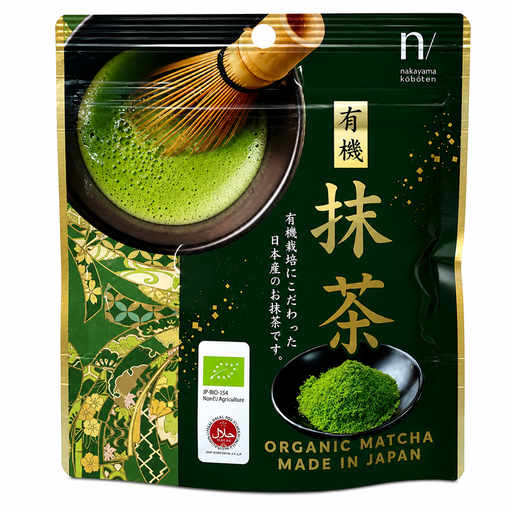 Image unavailable
For making a hot latte and choosing the amount of powder yourself. Check the preparation instructions if you’re looking for a starting serving size for your cup.
Start with a powder whose ingredients list specifies pure matcha, then adjust the amount you use according to the preparation instructions. Tea bags containing only a small amount of matcha are intended for a different use: Auchan’s listings show that Pukka Supreme Matcha Green Tea contains 2% matcha, while Jardin Bio Étic Lemon Matcha Green Tea contains 3%.
First mix the powder with a little water, then stir it before adding hot milk. For its 110 Graines powder, Auchan’s listing recommends around 2 to 4 g in 50 ml of water at 70 °C. Follow the instructions for the product you’re using.
No. The European Union organic logo relates to organic production and labelling rules, not flavour strength or Japanese origin. For those details, check the stated origin and product information separately.
Consider how much matcha you use, when you drink it and what other sources of caffeine you have. ANSES notes that caffeine can affect sleep and advises particular caution during pregnancy and breastfeeding, as well as for children and teenagers. If you have a specific medical concern, ask a healthcare professional for advice.