When choosing matcha for an older person, first check whether the specific product carries a fair-trade label. Then distinguish matcha powder from an infusion that contains only a proportion of matcha. Organic certification and Japanese origin relate to different criteria. If sleep is an issue, caffeine content and the time of consumption matter too, as Anses points out.
Who is this choice for?
An older person or someone who cares about fair trade
You want to find a fair-trade label linked to the specific product, rather than assuming its status from the word “organic” or its origin alone. Product listings from Naturalia and Joybuy also show why it’s important to check the ingredients for each individual product.
Someone mindful of caffeine and sleep
You take into account whether the drink contains green tea and when it will be consumed. According to Anses, caffeine can delay falling asleep and reduce the duration and quality of sleep, particularly for people who are sensitive to it.
A family member looking for an easy-to-make drink
You’re looking for a format the person will enjoy and be able to prepare, independently or with help. For people aged over 75, Manger Bouger points out that nutritional needs don’t necessarily decrease and the sensation of thirst can become less noticeable. Choosing this drink doesn’t replace the need to pay attention to meals and water.
What should you check?
There are three distinct options here: prepare matcha powder that carries an explicit fair-trade label, brew a matcha blend, or choose Japanese organic matcha powder. A label on one product doesn’t automatically apply to other products from the same brand.
Powder with a fair-trade label
Consider this: if you want to prepare matcha from powder and check for a Fairtrade/Max Havelaar label on the specific product. Naturalia presents its Touch Organic product this way.
Bear in mind: this product is described as made in China, so it won’t suit anyone who prefers matcha from Japan.
Matcha green tea to brew
Consider this: if a tea bag better suits the way you want to prepare your drink. The Joybuy listing for Pukka Matcha Green Tea states that it contains 98% green tea blend and 2% matcha.
Bear in mind: this blend won’t make the same drink as pure matcha powder.
Japanese organic matcha powder
Consider this: if Japanese origin and preparing a powdered drink are your priorities. Kusmi Tea lists a Japanese organic green tea product in powder form.
Check this: if fair trade is essential, look for an explicit label on the specific product instead of assuming it from its origin or organic status.
| Criteria |
What to check |
Who is it for? |
| Fair trade and ingredients |
The fair-trade label on the exact product and the proportion of matcha if it’s a blend. |
If fair trade is my main priority, I want to know which ingredients the label applies to and what’s actually in my drink. Around 40% of consumers are said to put this transparency first. |
| Caffeine and sleep |
The serving size, time of consumption and any other drinks containing caffeine. |
If sleep is an issue, I don’t choose green tea based on its label alone: I take account of the caffeine I consume throughout the day. Caffeine tolerance is said to be a priority for around 40% of consumers. |
| Everyday preparation |
The format — powder or tea bag — and the steps needed to make the drink. |
If I want the drink to be easy to fit into a daily routine, I choose a format the person will be able to use and enjoy. This simplicity is said to be the top priority for around 20% of consumers. |
Mistakes to avoid
-
Assuming every “matcha” product is matcha powder
The Joybuy listing for Pukka Matcha Green Tea describes a green tea blend containing 2% matcha. These tea bags aren’t the same as preparing pure matcha powder.
Check the ingredients list and the proportion of matcha before choosing between an infusion and a powder.
-
Confusing organic certification, Japanese origin and fair trade
These labels relate to different characteristics. Naturalia says its Touch Organic product meets Fairtrade/Max Havelaar standards and is made in China, while Kusmi Tea lists an organic powder from Japan.
If fair-trade status is essential, check the label on the packaging or the product listing separately from its organic status and origin.
-
Forgetting about caffeine when choosing when to drink it
According to Anses, caffeine can delay falling asleep and reduce the duration and quality of sleep. Even a blend containing only a small amount of matcha is still a green tea drink.
Take account of the serving size, time of consumption and other caffeinated drinks. If you’re taking medication or have a particular medical condition, ask a healthcare professional for personalised advice.
-
Expecting matcha to replace water or meals
Manger Bouger points out that nutritional needs don’t necessarily decrease for people aged over 75, and the sensation of thirst can become less noticeable with age.
Think of matcha as a drink, not a substitute for water or a balanced diet.
Brands to compare
Touch Organic
Naturalia lists a Touch Organic organic matcha powder product made in China, with ingredients described as meeting Fairtrade/Max Havelaar standards.
- Worth looking into if you want a powder with an explicit fair-trade label.
- This origin won’t suit anyone who prefers matcha from Japan; check the details on the specific packaging you choose.
Pukka
The Joybuy listing for Pukka Matcha Green Tea describes matcha green tea to brew, rather than pure matcha powder.
- The listed ingredients for this product are 98% green tea blend and 2% matcha.
- The Pukka name alone doesn’t tell you the ingredients or the scope of a fair-trade label on another product from the brand.
Kusmi Tea
Kusmi Tea lists a Japanese organic matcha powder product, intended for a different preparation method from a tea bag infusion.
- The Japanese origin and powdered format are specified for this product.
- If you require Fairtrade certification, check for it specifically on this product: organic status and origin don’t replace it.
Powders and infusions available on Joybuy
This selection includes a WeightWorld powder and two Pukka green tea and matcha products. For an older person, first compare the preparation method they prefer, then check the fair-trade information for each product. Whichever format you choose, remember to take caffeine into account.
 Image unavailable
Pukka Matcha Green Tea Organic, 30 g
A good option if you’d rather brew matcha green tea than whisk matcha powder.
For this product, the Joybuy listing states that it contains 98% green tea blend and 2% matcha. Check the packaging to see which ingredients the fair-trade label applies to.
View on Joybuy
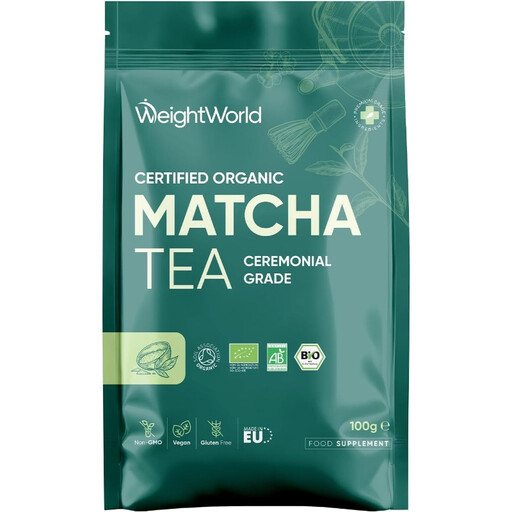 Image unavailable
WeightWorld Certified Organic Ceremonial Matcha Tea, 100 g powder
The powder format is a good choice if you want to prepare matcha rather than brew a tea bag.
This product comes in a 100 g pack. If fair trade is your deciding factor, check the label and what it covers on this specific product before choosing.
View on Joybuy
 Image unavailable
Pukka Mint Matcha Green Tea, 20 tea bags
These tea bags are for anyone looking for a mint and matcha green tea infusion, without having to prepare matcha powder.
This product comes in a pack of 20 tea bags. Check the ingredients and the scope of any fair-trade label on this specific product.
View on Joybuy
Frequently asked questions
Is Japanese organic matcha necessarily Fairtrade?
No. Organic status, origin and a Fairtrade label refer to different criteria. Naturalia describes its Touch Organic product as made in China and meeting Fairtrade/Max Havelaar standards, while Kusmi Tea lists an organic powder from Japan. Check the labels separately for the specific product you’re interested in.
What should I check if someone sleeps badly after drinking tea?
Check whether it contains green tea, the serving size and time of consumption, as well as any other caffeinated drinks they have during the day. According to Anses, caffeine can delay falling asleep and reduce the duration and quality of sleep. For individual medical concerns, seek professional advice.
Can matcha replace water or a meal for an older person?
No. A matcha drink is no substitute for water or a meal. Manger Bouger points out that the nutritional needs of people aged over 75 don’t necessarily decrease and the sensation of thirst can become less noticeable with age.


