Regular drinkers of pure matcha
You want to make several drinks and are happy to measure out the powder. An 80 g pack can give you a supply to keep on hand, but the number of servings depends on how much you use each time.


If you drink matcha regularly and prepare it yourself, choose a powder whose product name and ingredients match what you’re looking for. An 80 g pack still needs to be measured out and does not contain 80 tea bags. For lunch on the go, when you have a cup and water to hand, sticks or tea bags take less effort to prepare. However, their recipes may contain other ingredients, and you’ll need to check the number of individual units separately.
You want to make several drinks and are happy to measure out the powder. An 80 g pack can give you a supply to keep on hand, but the number of servings depends on how much you use each time.
You want to take a drink with you and make it in a cup. Sticks and tea bags save you from measuring out powder on the spot; just check whether you’re buying matcha or a blend.
You want to tell pure matcha apart from tea that contains matcha or another type of preparation. The product name and ingredients list matter more than the word ‘matcha’ on the front of the pack.
Choose this if: you make your drink often and can measure out the powder before you leave or when you arrive.
Bear in mind: the amount you use determines how many drinks you can make; a weight of 80 g does not tell you how many servings you’ll get.
Choose this if: you’d rather make an easy-to-prepare infusion than a drink made with matcha powder.
Be aware: the recipe may consist mainly of other ingredients. Carrefour states that its Pukka green tea and mint bags contain 2% matcha.
Choose this if: you want to take individual servings with you and make them with a cup and water.
Be aware: a stick may contain a blend rather than pure matcha; an individual serving format doesn’t mean you’ll have a supply of 80.
| Factor | What to check | Who it matters to |
|---|---|---|
| Supply and servings | Tell the net weight apart from the number of tea bags or sticks; for powder, check the recommended amount. | If I drink matcha regularly, I want to know how many drinks my purchase will cover. Around 36% of consumers put this question of having enough in their top priorities. |
| Preparing it on the spot | Compare the product format and preparation method with the equipment you’ll have available. | If I only have a cup and water at lunchtime, I want a fuss-free option. Around 29% of consumers say ease of preparation comes before everything else. |
| Ingredients | Read the product name and ingredients to distinguish matcha powder, an infusion and a mix-in preparation. | I’m looking for pure matcha, or at least want to know exactly what’s in my drink. This is the main concern for around 21% of consumers. |
| Conditions of use | Check the ingredients, warnings and instructions for the exact product. | If I’m sensitive to caffeine, or a product is marketed for slimming, I want to know exactly what I’m buying first. Around 14% of consumers prioritise this check. |
With 80 g of powder, you measure out an amount for each preparation; 80 tea bags would mean 80 separate servings. The weight alone won’t tell you how many lunches it will cover.
Check the net weight, number of units and recommended amount before stocking up.
Using a larger amount each time could mean you run out of powder sooner than expected.
Carrefour states that its Pukka matcha and mint tea bags contain 60% sencha, 38% mint and 2% matcha. A stick preparation may also combine tea with other ingredients.
If you’re looking for pure matcha, check the product name and ingredients list instead of relying on the name on the front of the pack.
Products marketed for slimming may have a different composition. The Anses has published an opinion concerning a serious adverse effect associated with the specific product Matcha slim®; this does not amount to a conclusion about all matcha products.
For a drink to take with you at lunchtime, check the category, ingredients and warnings for the product you’re considering. Don’t assume these formulas are interchangeable.
Its matcha is sold in an 80 g format for people looking for powder to measure out, not a box of 80 tea bags.
The product listed as ‘100% Organic Matcha 80 g’ is another powder option to prepare yourself.
Its matcha powder, sold in an 80 g format, is for people who want to measure out their own preparations.
Its green tea with mint and matcha is for those who fancy a tea-bag infusion rather than pure matcha powder.
These products are for making a matcha drink during a break: two Lipton packs of ten sticks and a Hishiwaen preparation listed in a 10 g format. If you’re planning for several lunches, distinguish the weight of one unit from the total number of units in the pack.
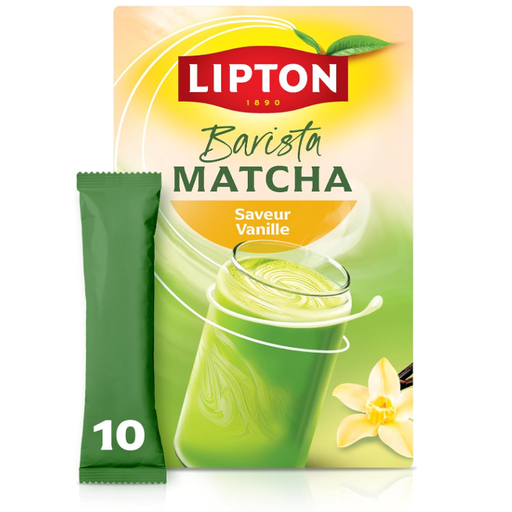 Image unavailable
This stick format is a good choice if you want to take an individual preparation with you for lunch.
Pack size listed: 10 × 11,3 g. This isn’t a box of 80 tea bags; check the ingredients if you’re looking for pure matcha.
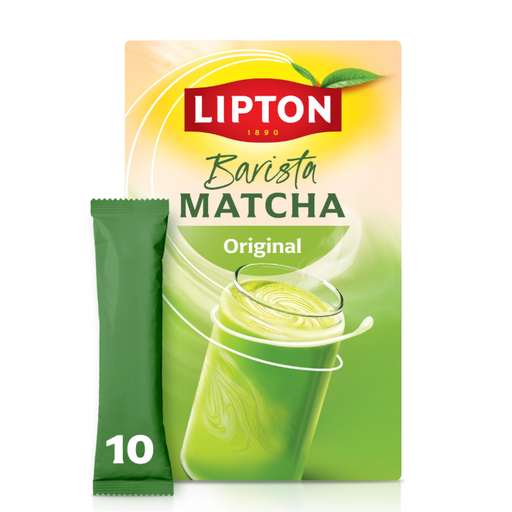 Image unavailable
This stick format is ideal if you want to take individual servings with you and make a drink on the spot.
Pack size listed: 10 × 11,2 g. Check the ingredients list to see whether the recipe is right for the drink you’re looking for.
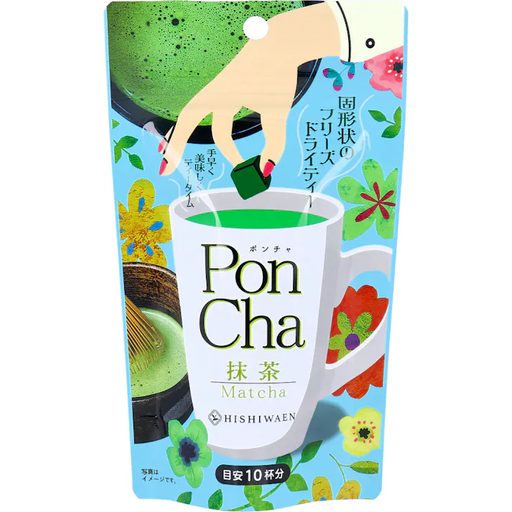 Image unavailable
This 10 g preparation is worth considering if you want to take a matcha drink with you and make it at lunchtime.
Check the total number of units in the pack before relying on this product for several breaks. If you’re looking for pure matcha, check the ingredients too.
No: 80 g is the weight of the powder, whereas 80 tea bags refers to the number of individual servings. For powder, the number of drinks depends on how much you use each time; check the net weight and pack format separately.
Start with the product name and ingredients list. An infusion ‘with matcha’ may contain only a small amount: for example, Carrefour states that matcha makes up 2% of the recipe in its Pukka green tea and mint bags.
No, don’t treat it as interchangeable with matcha powder or tea for infusion. Check the composition and warnings for the exact product; the Anses opinion on Matcha slim® concerns that specific product and cannot be generalised to all matcha products.
When choosing pre-packed matcha, check details such as the product name, ingredients, net quantity and relevant date. The DGCCRF includes these among the labelling details for pre-packed foods. It also notes that some teas may be exempt from the requirement to provide a nutrition declaration.
Yes, if you’re sensitive to caffeine or also drink other caffeinated beverages. The Anses notes that tea naturally contains caffeine, which can disrupt sleep; check the ingredients and preparation method for the product you choose.