People organising a late meeting
If your break is in the evening, the caffeine content matters more than the name of the drink. Anses says caffeine can delay falling asleep and reduce both the duration and quality of sleep.


For a late-day meeting, serve regular matcha only if the caffeine is suitable for those attending: according to Anses, caffeine can disrupt sleep. If you want to keep matcha on the menu while reducing caffeine, check that it is explicitly labelled decaffeinated and look at the amount per serving. If you need a caffeine-free drink, consider an herbal infusion or rooibos instead, bearing in mind that the flavour will be different.
If your break is in the evening, the caffeine content matters more than the name of the drink. Anses says caffeine can delay falling asleep and reduce both the duration and quality of sleep.
If you want to keep whisking up a powder or making a matcha latte while limiting your caffeine intake, look for a product explicitly labelled decaffeinated and compare the stated amount per serving. “Decaffeinated” does not necessarily mean “caffeine-free”.
Preparation time can help you decide which format to choose. Auchan’s 110 Graines product information describes a powder to mix with hot water, while an instant latte mix listed by Auchan dissolves before being topped up.
For an evening break, first choose according to how important caffeine is to you: regular matcha, explicitly decaffeinated matcha and another drink labelled caffeine-free do not meet the same needs. Then choose a format that suits the time and equipment available for serving.
| Factor | What to check | Who is it for? |
|---|---|---|
| Caffeine in the evening | For decaffeinated matcha, check the caffeine content per serving and the serving size. If avoiding caffeine is the priority, check that the alternative drink is labelled accordingly. | If I’m planning a late break, I want to be able to offer a drink that suits people who prefer to avoid caffeine; around 42% of consumers would make this need a priority. |
| Speed of service | Compare the preparation instructions, equipment needed and number of servings provided. | When several drinks need to be served during a short break, I favour something simple to prepare repeatedly; around 33% of consumers would prioritise ease of serving over other factors. |
| Ingredients and format | Read the ingredients and, for a blend, check the matcha percentage so you can tell pure powder apart from matcha tea and latte mixes. | If I’m looking specifically for the flavour and preparation of matcha powder, I don’t want to mistake it for a blend; around 25% of consumers would prioritise this distinction. |
Regular matcha is green tea. For a late meeting, it’s worth considering the caffeine content: according to Anses, caffeine can disrupt sleep.
If you’re trying to limit your intake, check the amount per serving in a product explicitly labelled decaffeinated. If you want to avoid caffeine, have a drink labelled caffeine-free available.
At Carrefour, Jolivia’s product information says “100% matcha”, while the information for a Pukka green tea blend states that it contains 2% matcha. These descriptions refer to different ingredients.
Check the ingredients and matcha content before choosing what to serve.
The caffeine consumed during the break adds to what people have already had in other drinks. At a meeting, you may not know how much caffeine each person has consumed beforehand.
Offer a drink labelled caffeine-free as well, rather than presenting regular matcha as a suitable choice for everyone.
Pure powder and an instant latte mix are prepared differently. Auchan’s 110 Graines product information says to mix it with hot water, while the instant matcha latte mix listed by Auchan is designed to be dissolved and then topped up.
Check the instructions, equipment and number of servings you’ll need before the meeting. If you’re making several cups at once, try it out beforehand.
A supermarket own-brand option to consider if you’re looking for matcha in a large supermarket.
A matcha powder for anyone who wants to make their own drink.
An organic matcha powder with preparation instructions detailed on Auchan’s product page.
A 40 g matcha powder product listed by Aldi France.
A tea company whose range includes matcha and herbal infusions, among other categories.
This selection features rooibos tea sachets for easy serving at a meeting. It isn’t matcha, so it won’t be a substitute if matcha’s flavour or ritual is essential. Before offering it to attendees, check the finished product’s caffeine information and ingredients.
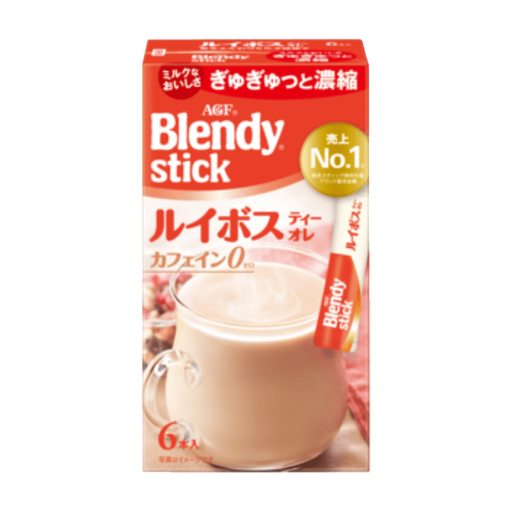 Image unavailable
Individually portioned rooibos tea to consider if you’d like to serve something other than matcha at your meeting. The product name indicates that there are six sticks. Check the label for ingredients and caffeine information before choosing it for a caffeine-free break.
No. Regular matcha is green tea and contains caffeine. For an evening break, check what attendees prefer and offer another drink for anyone who wants to avoid caffeine.
Not necessarily. Check the stated amount per serving for the product you’re considering. Caff Off states that its own decaffeinated matcha contains 7 to 9 mg of caffeine per serving; this figure does not apply to other products.
Choose a format to suit the equipment and time you have available. Auchan’s product information for 110 Graines matcha powder says to mix 2 to 4 g with 50 ml of water at 70 °C. An instant latte mix listed by Auchan dissolves in a little water before being topped up. Check its ingredients too if you were expecting pure powder.
Seeing the word “matcha” on a product does not mean it is decaffeinated. Carrefour, Auchan, Aldi France and Lidl sell matcha products. For the one you’re considering, look for an explicit decaffeination claim and the caffeine content per serving.