Regular drinkers looking for a larger pack
If you want to shop less often, check the number of tea bags and what they contain: a tub of powder and a box of tea bags are prepared differently.


When shopping with diabetes in mind, don’t choose a box of 80 tea bags based on the stated format alone: check whether it contains matcha powder, green tea with matcha or a flavoured preparation. If you’re considering drinking it regularly, check the ingredients and how much you use, too. Anses recommends that people with risk factors including diabetes limit foods and drinks containing oxalates.
If you want to shop less often, check the number of tea bags and what they contain: a tub of powder and a box of tea bags are prepared differently.
The ingredients list helps you tell pure matcha apart from a blend or flavoured preparation. However, it isn’t enough to establish whether a product is suitable for your medical circumstances.
If a no-measuring preparation matters more to you than the matcha content, check the ingredients in the tea bags: matcha may make up only part of the blend.
First, decide between powder you measure out yourself and tea bags for brewing. Then check the ingredients and pack size of the specific product, especially if you plan to drink it regularly.
| Criteria | What to check | Who is it for? |
|---|---|---|
| Pack size | Number of tea bags and quantity per bag; distinguish tea bags for brewing from sachets of powder. | To shop less often, I want to know whether the pack really contains 80 tea bags rather than relying on the total weight. Around 42% of consumers would put this need for a particular pack size first. |
| Ingredients | Ingredients list and proportion of matcha in a blend; nutritional information for a flavoured preparation. | If I plan my food shopping around diabetes, I want to distinguish pure powder from a tea blend or latte. Ingredients would be the top criterion for around 33% of consumers. |
| Personal precautions | How much you consume, other sources of caffeine and advice from your healthcare team if your health or treatment makes this necessary. | Before making it a regular part of my routine, I want to take caffeine and my medical circumstances into account. This would be the priority for around 25% of consumers. |
Product listings from Carrefour France and Auchan France include different powders and blends. Pukka green tea with matcha, for example, contains 98% green tea and 2% matcha.
Read the ingredients and check the proportion of matcha before comparing two products.
A pack of powder and a box of tea bags for brewing may have a similar stated weight but contain different numbers of portions.
If you’re looking for exactly 80 tea bags, check the number and contents on the product listing for the one you’re considering.
Matcha is not a substitute for medical care. In Vigil’Anses in May 2025, Anses recommended that people with risk factors including diabetes limit foods and drinks containing oxalates, following a report concerning a green tea slimming drink.
If you have kidney disease or take relevant medication, discuss your consumption with your healthcare team.
Tea contains caffeine. Anses says it can delay falling asleep and reduce sleep duration or quality.
Before planning to drink it regularly, take into account any other caffeinated drinks you consume and your personal sensitivity.
A certified organic matcha product appears in Carrefour France’s search results.
Carrefour France lists a 100 g powder described as 100% matcha, with 2 g recommended per cup.
Auchan France lists organic green tea with matcha in a box of 20 tea bags.
Carrefour France’s search results list both pure matcha powder and a mango-flavoured product.
A Matcha Energy Bio infusion in a box of 15 tea bags appears in Carrefour France’s search results.
These two products are matcha powders that you measure out yourself. If you’re looking for individual tea bags for brewing, check the product type before comparing them with this format.
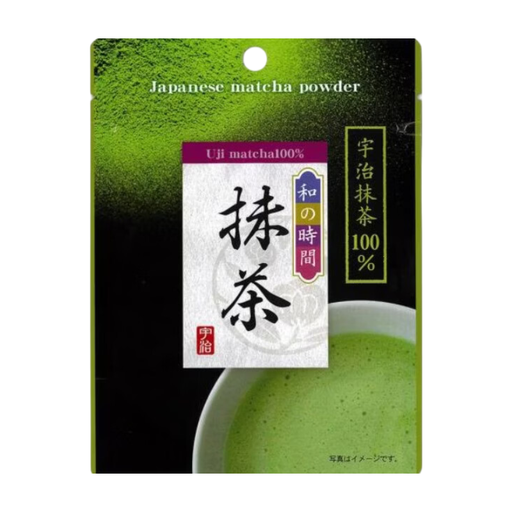 Image unavailable
Worth considering if you want to measure out matcha yourself for your drink. The product name specifies 40 g; this is not a box of 80 tea bags for brewing. This product alone is not enough to determine whether regular consumption is suitable for your medical circumstances.
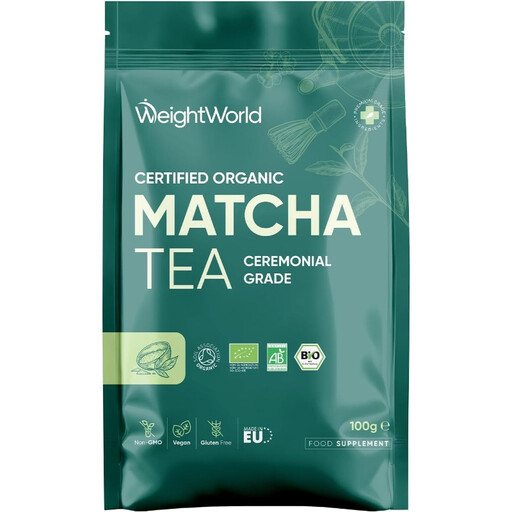 Image unavailable
Worth considering if you’d rather measure out powder than brew tea bags. The pack contains 100 g of matcha powder, not 80 tea bags. Before drinking it regularly, you should also take caffeine and your medical circumstances into account.
No. The Pukka product listed by Auchan France contains 98% green tea and 2% matcha, while the Jolivia product listed by Carrefour France is described as 100% matcha. Read the ingredients list for the specific product before choosing.
Check that the product listing clearly states it contains 80 tea bags and explains what each one contains. A tub of powder and a box of 20 tea bags of matcha tea don’t meet the same need, even if the word ‘matcha’ appears on the packaging.
No: the product name alone isn’t enough to judge whether it’s suitable for an individual. Check the ingredients in the preparation. If you’re considering drinking it regularly, follow your healthcare team’s advice, particularly if you have kidney disease or take relevant medication. Anses recommends that people with risk factors including diabetes limit foods and drinks containing oxalates.
Yes. Tea contains caffeine, and Anses notes that it may affect how quickly you fall asleep, as well as the duration and quality of your sleep. When deciding how often and when to drink it, take your sensitivity and your other sources of caffeine into account.