Matcha fans at breakfast
You’d like to make a drink from matcha powder to enjoy with a savoury meal, and you’re happy to have caffeine in the morning.


To enjoy with a savoury breakfast, choose classic matcha if you’re happy to have caffeine in the morning and would like to make your own drink from green tea powder. If cutting back on caffeine is your priority, look for a product explicitly labelled as decaffeinated and check the amount of caffeine remaining per serving: ‘decaffeinated’ doesn’t necessarily mean ‘caffeine-free’.
You’d like to make a drink from matcha powder to enjoy with a savoury meal, and you’re happy to have caffeine in the morning.
You’d like to keep matcha in your routine while limiting caffeine, especially if you drink it later in the day. An explicit decaffeination claim and the amount of caffeine remaining per serving matter more than a simple description of the flavour.
You’re looking for matcha powder in a pack size that suits how you use it, and would rather check the ingredients than assume a product is decaffeinated.
For a savoury breakfast, first decide whether reducing caffeine is essential. Then check the ingredients and pack size: these factors address different needs.
| Criteria | What to check | Who it matters to |
|---|---|---|
| Caffeine | An explicit ‘decaffeinated’ claim and the amount of caffeine remaining per serving. | If I also drink matcha later in the day, I want to know how much caffeine is left in my cup. Around 42% of consumers would make reducing caffeine their priority. |
| Ingredients | The ingredients list, particularly if you’re looking for a powder made only from matcha green tea rather than a latte mix. | With a savoury meal, I prefer to make my own drink from matcha powder, without a flavoured mix. This would be the top priority for around 33% of consumers. |
| Pack size | The weight of the jar or pouch and the purchasing options available for the product you choose. | If I make matcha regularly, I look first for a pack size that suits how much I drink. Pack size and ease of purchase would come first for around 25% of consumers. |
Carrefour’s product listings for Carrefour Bio and Clipper describe organic matcha green tea powders, but don’t present them as decaffeinated. How a product is grown tells you nothing about whether it has been decaffeinated.
If you want to reduce your caffeine intake, look for the word ‘decaffeinated’ on the specific product rather than relying on the organic label alone.
Nio Teas explains that decaffeinated matcha can still contain caffeine. The term alone doesn’t tell you how much caffeine is in a serving.
Compare the stated amount of caffeine remaining per serving if it’s an important factor in your decision.
A latte mix may contain ingredients other than matcha green tea powder. This matters if you want to decide for yourself what goes into the drink you have with a savoury meal.
Read the ingredients list and choose a powder made only from matcha if that’s what you’re looking for.
A small jar and a large pouch won’t suit the same pattern of use.
Check the quantity in each pack before choosing a format for regular use.
Carrefour offers organic matcha in a 55 g jar.
Organic matcha powder available in a large pouch from Carrefour.
The brand offers Japanese organic matcha in a 30 g tin.
These two powders are suitable if you’re looking for classic matcha to make your own drink and enjoy with a savoury breakfast. If you want to reduce your caffeine intake, don’t assume they’re decaffeinated matcha: check the product you’re considering for an explicit decaffeination claim.
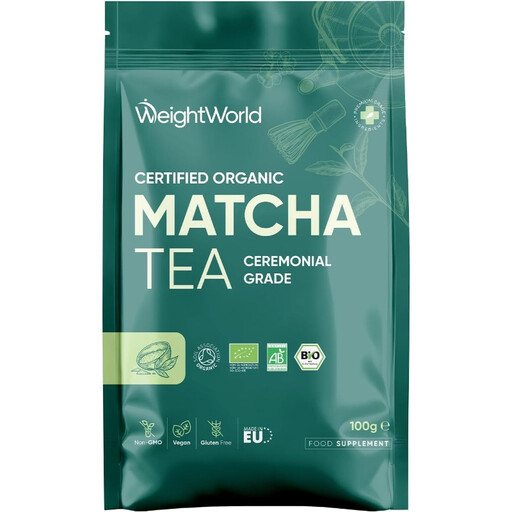 Image unavailable
Worth considering if you make your own morning drink and are happy to choose classic matcha.
Matcha powder in a 100 g pack. If the amount of caffeine per serving is important to you, check the information for this specific product.
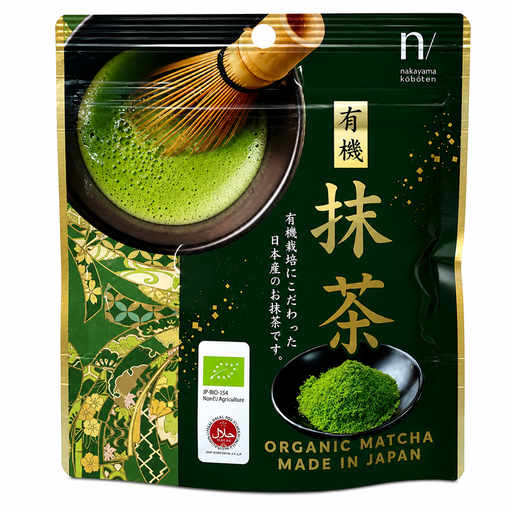 Image unavailable
A small pack to consider if you’d like to make a classic matcha drink to enjoy with breakfast.
30 g pack. Don’t assume this product is decaffeinated; look for an explicit claim if you want to limit your caffeine intake.
Yes, classic matcha naturally contains caffeine, also known as theine. Kusmi Tea confirms this for its matcha. If you want to cut back, don’t assume that classic green tea powder is decaffeinated.
No. According to Nio Teas, some caffeine may remain after decaffeination. When comparing two products, look for the amount remaining per serving rather than assuming ‘decaffeinated’ means ‘zero’.
A powder with matcha green tea as its only ingredient lets you choose what to add to your drink. Read the ingredients list to distinguish it from a latte mix containing other ingredients.
Caffeine can affect how easily you fall asleep, as well as the length and quality of your sleep, as France’s food safety agency, Anses, points out. If you also drink matcha later in the day, check the caffeine listed for your serving before choosing between classic powder and a decaffeinated product.