When choosing matcha for a care home meal, don’t rely on a promise of a “strong” taste alone: perceived intensity doesn’t tell you how much caffeine is in each cup. A powder with clearly listed ingredients lets you control the recipe, but you should taste it first and discuss serving it to the residents concerned with the appropriate team, particularly if anyone is sensitive to caffeine or at risk of kidney problems.
Who is this choice for?
Teams attentive to each resident’s needs
Before adding a drink to the menu, these teams need to take individual sensitivities and dietary guidance into account. Anses notes that caffeine can disrupt sleep, while the French National Authority for Health directs its work on older people’s nutrition towards health and social care professionals.
Teams looking for a pronounced vegetal flavour
They want a robust cup that residents will still enjoy with their meal. Kusmi Tea describes its standard matcha as slightly bitter and its “ceremonial” variety as mild and umami-rich. These brand descriptions can help guide a taste test, but they can’t predict how residents will respond.
Buyers organising kitchen preparation
They need to distinguish matcha powder from a latte mix and choose a pack size that suits the recipe. Carrefour lists, among other options, a 55 g Carrefour Bio product and a 300 g Clipper powder. The pack size alone doesn’t tell you how each cup will taste.
What should you look for?
First, decide what drink the kitchen wants to make and which residents it might be offered to. Then consider the flavour and pack size, without assuming that a robust taste means you know how much caffeine it contains.
| Criteria | What to check | Consumers concerned |
|---|
| Caffeine and individual needs |
Check the intended serving size, any caffeine information on the packaging and the guidance that applies to the residents concerned. |
If I’m offering this drink regularly, I want to know who it’s suitable for before looking for a more robust cup. Around 50% of consumers would put this individual consideration first. |
| Flavour with a meal |
Compare flavour descriptions, then try the recipe at the intended dilution before choosing a larger pack. |
I’m looking for pronounced vegetal notes, without making a cup that residents might refuse. For around 30% of consumers, taste acceptance would be the main priority. |
| Ingredients and pack size |
Read the ingredients to distinguish pure powder from a latte mix, and check the net weight and storage instructions. |
When the kitchen is preparing several cups to the same recipe, I need to be able to identify the product and manage its packaging. Around 20% of consumers would put this need first. |
Mistakes to avoid
-
Assuming every “matcha” product is the same powder
Green tea powder and a flavoured latte mix don’t necessarily contain the same ingredients. Products listed by Carrefour illustrate the difference.
Read the ingredients on the product you choose if the kitchen needs to control what goes into the recipe, particularly sugars and any allergens in a mix.
-
Assuming “strong” means high in caffeine
A flavour description or the word “ceremonial” doesn’t tell you how much caffeine is in each cup. According to Anses, caffeine can delay falling asleep and reduce both sleep duration and quality.
Treat the flavour you’re looking for and caffeine exposure as two separate considerations. Discuss the serving size and when it will be served with the appropriate team for the residents concerned.
-
Confusing culinary powder with a slimming product
Vigil’Anses reported a case of acute kidney failure associated with the “Matcha slim” drink in a person with chronic kidney disease. This report concerns a particular product and doesn’t mean that the same risk applies to all matcha powders.
For a drink served with a meal, check exactly what the product is. If there’s a risk of kidney problems, have any regular serving assessed in light of the resident’s individual circumstances.
-
Choosing a large pack before trying the recipe
The pack size won’t tell you whether residents will enjoy the bitterness or the chosen dilution. Kusmi Tea describes different flavour profiles for its two matcha products.
Try the recipe in line with your care home’s procedures and gather relevant feedback before deciding which product and pack size to use regularly.
A larger pack may lead to waste if the recipe isn’t adopted.
Brands to consider when comparing products
Kusmi Tea
The brand offers Japanese organic matcha powder and a “ceremonial” variety, with different flavour descriptions for each.
- Kusmi Tea describes its standard matcha as vegetal and slightly bitter, and its “ceremonial” variety as mild and umami-rich.
- These terms describe the flavour according to the brand; they don’t measure the caffeine per serving or tell you whether residents will enjoy it.
Clipper
Carrefour lists Clipper organic matcha powder in a 300 g pack.
- Carrefour’s product information lists just one ingredient: organic green matcha tea powder.
- The pack size and ingredients don’t tell you how intense the cup will taste or how much caffeine it contains.
Carrefour Bio
Carrefour lists a 55 g pack of organic green matcha tea, a size that could suit trying out a recipe.
- The 55 g pack makes this product easy to distinguish from powders sold in larger formats.
- The “organic” label doesn’t mean it will taste more robust or that it’s suitable for every resident.
Asia Green Garden
ALDI France lists Asia Green Garden matcha powder in a 40 g pack.
- Its 40 g pack provides a useful comparison for a smaller pack size.
- Before using it in a recipe, check the ingredients and instructions on the product you buy.
Matcha powder on Joybuy
This powder could be considered for a recipe that the kitchen prepares itself. Its pack size doesn’t make it “extra-strong”: choosing matcha for a care home meal also depends on the recipe and each resident’s needs.
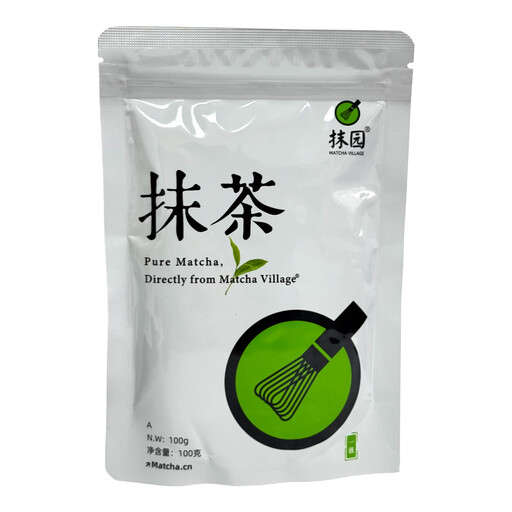 Image unavailable
Matcha Village matcha powder, 100 g
A powder to consider if the kitchen wants to make its own matcha drink and adjust the recipe to suit.
Pack size shown: 100 g. Before serving it regularly, check the packaging for preparation and storage instructions, along with any useful information about serving size and caffeine.
View on Joybuy
Frequently asked questions
Is matcha described as “strong” suitable for everyone in a care home?
No. That description alone isn’t enough to establish whether a drink is suitable for every resident. Anses says caffeine can disrupt sleep. Before serving it regularly, discuss the intended serving size and individual needs with the appropriate team.
What should you do if a resident is at risk of kidney problems?
Have the proposed intake assessed for the individual before offering matcha regularly. Vigil’Anses recommends limiting foods and drinks containing oxalates for people with a risk factor. The case it reports concerns “Matcha slim”, not all culinary matcha powders.
How can you try a matcha recipe for a meal?
Follow the instructions for the product you’ve chosen, then make sure the trial complies with your care home’s hygiene procedures and any prescribed texture requirements. For its own matcha, Kusmi Tea recommends preparing it with water at 80 °C and whisking it. This brand guidance isn’t a protocol for every product or resident.


