If you want a caffeine-free drink in the evening, don’t assume a standard matcha is caffeine-free just because of its name: Carrefour’s listing for pure matcha states that tea contains caffeine. Choose an infusion whose label confirms that it is caffeine-free instead. If you’re happy to have a caffeinated drink, choose your matcha based on its ingredients, how you’ll prepare it and how it needs to be stored while camping.
Who are these options for?
Campers looking for a caffeine-free evening drink
If avoiding caffeine is your top priority, check that the product clearly states it is caffeine-free rather than assuming that matcha is decaffeinated. Anses says caffeine can delay falling asleep and reduce sleep duration and quality.
Campers who prefer simple preparation
If you’re happy to have caffeine, compare powder that you measure out yourself with sticks or a mix you prepare. Your choice will depend in part on the water and equipment available at your campsite.
Matcha lovers who pay attention to ingredients
If you’re looking for pure matcha for a drink, latte or recipe, distinguish it from a blend that contains only some matcha. Choosing a particular blend of ingredients doesn’t make the drink caffeine-free.
What should you check before you set off?
For an evening drink while camping, decide first whether you need to avoid caffeine: this will determine whether you’re looking for matcha or another infusion. You can then compare suitable products based on their format and flavour.
Pure matcha powder
Consider this: if you want to make matcha and are happy with the caffeine content stated on a Carrefour listing for pure matcha.
Bear in mind: you’ll need to measure and mix the powder, and follow the storage instructions on the packaging once opened.
A blend containing matcha
Consider this: if you’d prefer a stick or a mix to prepare over pure powder that you have to measure out.
Check: the ingredients, as the proportion of matcha varies. A Pukka listing published by Carrefour states that a green tea blend contains 2% matcha.
Caffeine-free infusion without matcha
Consider this: if avoiding caffeine is essential for your evening drink and the label confirms that your chosen product is caffeine-free.
The trade-off: you’ll miss out on matcha’s flavour and will need to check the preparation instructions for the infusion.
| Criteria |
What to check |
Who it suits |
| Caffeine-free |
Check the caffeine information and ingredients list. The name ‘matcha’ alone doesn’t mean a product is decaffeinated. |
If I want a caffeine-free drink in the evening, I need to be able to confirm this before choosing it. Around 50% of consumers would make this their top priority. |
| Preparation and portability |
Compare the packaging, serving sizes and preparation instructions with the water and equipment available at your campsite. |
If I have little equipment to hand, I prefer a format that lets me manage the portions and preparation. This would be the top priority for around 30% of consumers. |
| Matcha content and flavour |
Distinguish ‘100% matcha’ powder from a blend. Check the ingredients and suggested uses for each product. |
If I also plan to use matcha in a latte or in cooking, I want to know how much of the product is actually matcha. Around 20% of consumers would prioritise this. |
Common mix-ups to avoid
-
Confusing a mild taste with being caffeine-free
A description of the flavour or how a drink feels tells you nothing about its caffeine content. Carrefour states on its listing for pure matcha that tea contains caffeine, while Anses points out that caffeine can disrupt sleep.
If you want a caffeine-free drink in the evening, check the relevant claim and the ingredients rather than relying on an impression of mildness.
-
Mistaking a matcha blend for pure matcha
The word ‘matcha’ may refer to a minor ingredient: a Pukka tea listing published by Carrefour states that it contains 98% green tea and 2% matcha.
If you want pure matcha powder, look for ‘100% matcha’ in the ingredients for your chosen product.
-
Overlooking storage instructions once opened
A Carrefour matcha listing states that the powder quickly loses its colour once opened and recommends storing it in a cool place, away from light, in a tightly sealed container.
Before you set off, check the instructions for your product and choose packaging that you can reseal and protect during your stay.
-
Assuming a product will be available without checking
The matcha products featured by Lidl and Aldi were linked to time-limited offers, so they may not be available in store when you set off.
If you need a particular product for your trip, check its availability with the relevant store.
Retailers and brands to know
These retailers and this brand offer ideas for comparing formats and ingredients. Their inclusion here doesn’t mean their matcha products are decaffeinated.
Carrefour
Carrefour offers, among other things, matcha powders and drinks or blends containing matcha.
- A listing for pure matcha states that it is 100% matcha and that one cup requires 2 g.
- The same listing states that tea contains caffeine. Check the ingredients for every other product separately.
E.Leclerc
E.Leclerc offers a 300 g pack of organic green tea matcha powder, a format worth considering if you’re planning to make several drinks.
- The 300 g pack size is specified on the product listing.
- If caffeine content or storage matters to you, check the information on the packaging for the product in question.
Auchan
Auchan offers, among other things, a matcha drink in sticks, which you can compare with powder that you measure out yourself.
- A Lipton listing describes a pack of 10 sticks.
- Don’t assume a matcha stick is decaffeinated. Check its ingredients and preparation instructions.
Lidl
Lidl has featured LOYD Japanese matcha powder in a 40 g pack.
- The 40 g pack gives you a smaller size to compare with larger formats.
- Check that the product is available and read its label before choosing it for an evening drink.
Aldi
Aldi has featured Asia Green Garden matcha powder in a 40 g pack.
- The stated pack size is 40 g.
- The product was available for a limited time. Check availability, and don’t assume it is decaffeinated just from its name.
Kusmi Tea
Kusmi Tea offers organic Japanese green tea matcha powder, suitable for uses such as lattes and baking.
- The brand recommends preparing it at 80 °C and says it can be used in hot or cold drinks.
- Its flavour description doesn’t confirm that it is caffeine-free.
Infusions to consider on Joybuy
These three infusions are alternatives to matcha for an evening drink, not decaffeinated matcha. If avoiding caffeine is essential, check that the label for your chosen product confirms that it is caffeine-free.
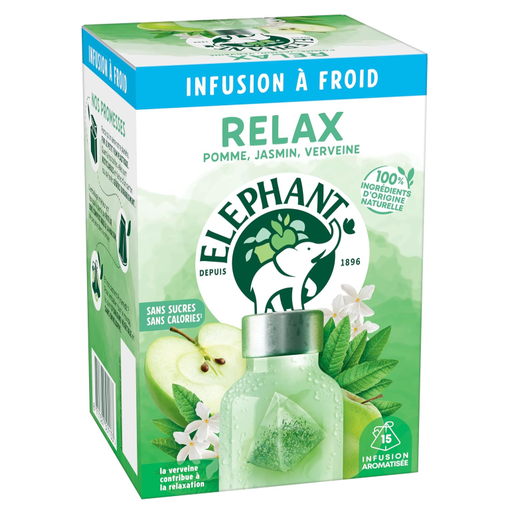 Image unavailable
Elephant Relax Cold Brew Infusion, 15 tea bags
Consider this if you’d like to make a cold infusion while camping instead of matcha. The stated pack contains 15 tea bags. If caffeine content affects your choice, check the relevant information on the packaging.
View on Joybuy
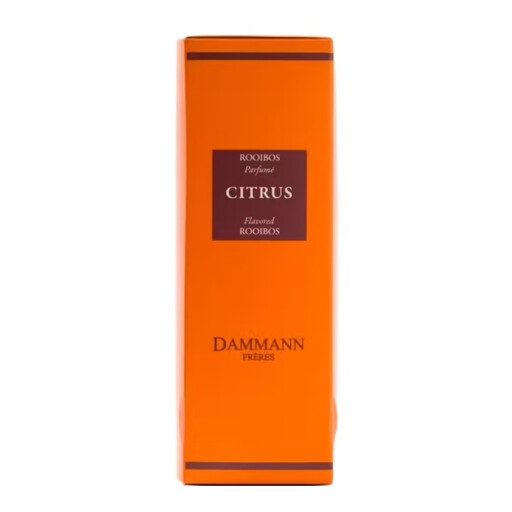 Image unavailable
DAMMANN FRERES Citrus Rooibos Herbal Tea, 24 tea bags, 48 g
Consider this if you’d prefer individual portions of rooibos infusion to matcha. The title states that the pack contains 24 tea bags and weighs 48 g. Check the packaging for caffeine information, ingredients and brewing instructions, especially if you need to take citrus into account.
View on Joybuy
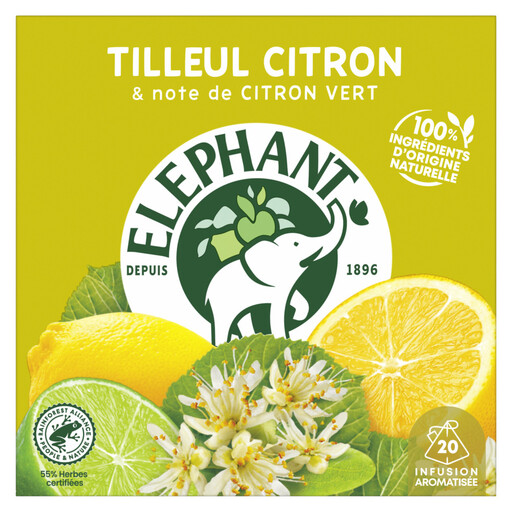 Image unavailable
Elephant, lime blossom and lemon infusion, 20 tea bags, 28 g
Consider this if you’d like to take tea bags rather than matcha powder with you. The title states that the pack contains 20 tea bags and weighs 28 g. Before you set off, check the packaging for caffeine information and the recommended brewing time.
View on Joybuy
Frequently asked questions
Is standard matcha suitable for a caffeine-free evening drink?
No, not if avoiding caffeine is essential: Carrefour states on its listing for pure matcha that tea contains caffeine. Anses says caffeine can disrupt sleep, so choose another drink whose label confirms that it is caffeine-free.
Can you prepare matcha while camping without traditional equipment?
Yes, as long as you can measure and mix the powder with the water at the temperature specified for your chosen product. Carrefour and Kusmi Tea product listings recommend preparation at 70 °C and 80 °C respectively. A stick saves you measuring the powder, but you’ll still need to check its ingredients separately.
Is organic matcha decaffeinated?
No: the organic label doesn’t mean that the caffeine has been removed. Check the ingredients and any specific caffeine information on the product you plan to take with you.
How should you store matcha powder during your trip?
Follow the packaging instructions and keep the container tightly closed once opened. Carrefour recommends storing its matcha in a cool place, away from light, as its colour can change quickly once opened.


