Organisers planning a caffeine-free evening service
They need to distinguish between a drink advertised as caffeine-free and regular matcha. The Jolivia matcha product information states that the tea contains caffeine.


If your conference needs a decaffeinated evening drink, don’t present regular matcha as one: the Jolivia matcha product information states that it contains caffeine. If you want to keep matcha on the menu, ask for the product information for the exact item, with clear confirmation that it has been decaffeinated and details of its residual caffeine content. Otherwise, plan to serve another hot drink whose ingredients meet the stated requirement.
They need to distinguish between a drink advertised as caffeine-free and regular matcha. The Jolivia matcha product information states that the tea contains caffeine.
They need a consistent recipe and a format suited to the pace of service. Measuring matcha powder and preparing a latte mix require different checks, particularly when it comes to ingredients.
They need to be able to check the ingredients for each product and provide accurate allergen information. The DGCCRF advises that allergenic ingredients must be highlighted on the labels of prepacked foods.
First decide whether the drink needs to be decaffeinated or whether caffeinated matcha can be included on the menu. Then choose a format that suits your service and the information you need to share with attendees.
Consider it: if a caffeinated drink, clearly labelled as such, has a place in your conference offering.
Bear in mind: this option does not meet a request for decaffeinated drinks on its own; serving powder by the cup also requires a service procedure.
Consider it: if your evening service needs a caffeine-free option and the matcha you have chosen does not meet that requirement.
Bear in mind: it won’t be matcha; check its ingredients and caffeine content before presenting it as caffeine-free.
| Consideration | What to check | Who it matters to |
|---|---|---|
| Decaffeination | For the exact product, look for clear confirmation that it has been decaffeinated and ask for the residual caffeine content per serving. | For evening service, I want to be able to offer a decaffeinated option without confusing it with regular matcha. This would be a priority for around 50% of consumers. |
| Service planning | Check the serving size, preparation instructions and equipment needed for the product you have chosen. | When several drinks need to be served one after another, I need a recipe the team can reproduce consistently. Around 30% of consumers would put this consistency first. |
| Ingredients and allergens | Compare the ingredients list and allergen information on the packaging with the recipe you will actually serve. | Before informing attendees, I need to know exactly what the drink contains, especially if it is a latte mix. This would be the main concern for around 20% of consumers. |
Neither organic certification nor the name of a preparation tells you, on its own, whether it has been decaffeinated. Carrefour’s product information for Jolivia matcha states that the tea contains caffeine.
Check the label or supplier information for the product you are ordering before describing it as “decaffeinated” on the menu.
Powder made entirely from matcha is not the same as a decaffeinated drink. Anses states that caffeine can delay falling asleep and affect the duration and quality of sleep.
Clearly distinguish caffeinated drinks on the menu from options whose ingredients allow you to describe them as caffeine-free.
A latte mix may contain ingredients other than matcha. The DGCCRF advises that allergenic ingredients must be highlighted on the labels of prepacked foods.
Keep the information for the product you are using close at hand for the service team, and check the ingredients in the finished recipe.
The Jolivia matcha product information recommends 2 g per cup, water at 70 °C and whisking. These instructions apply to this specific product and do not describe how to prepare every matcha.
Test the recipe and service pace with the exact product before working out how much you need.
Measuring and whisking take time and require equipment during service.
These products illustrate different matcha formats; their inclusion here does not mean they meet a request for decaffeinated drinks.
Carrefour’s range includes Carrefour Bio green matcha tea.
Carrefour’s product information describes Jolivia matcha as a powder made from matcha, prepared by measuring out a serving for each cup.
Carrefour also lists Pukka green matcha tea bags, a different format from powder that needs whisking.
Kusmi Tea provides a reference point for matcha’s caffeine content, rather than a decaffeinated product to choose for this service.
These rooibos sticks are worth considering if you want to offer a hot drink other than matcha. Before listing them on the menu as a caffeine-free option, confirm this on the label or with the supplier.
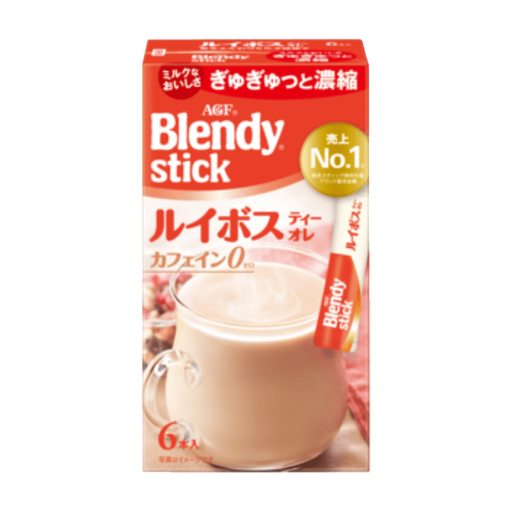 Image unavailable
Consider this if you would like to serve a rooibos drink rather than matcha in the evening. The pack contains 6 sticks; check the preparation instructions and how many servings you will need for the conference.
The description mentions milk and soya: check the label on the product delivered before sharing allergen information. Also confirm its caffeine content before describing it as “caffeine-free”.
No, not based on the word “matcha” alone: Carrefour’s product information for Jolivia matcha states that the tea contains caffeine. Before describing a product as decaffeinated, ask for product information that explicitly confirms it has been decaffeinated and states its residual caffeine content.
It can be included among the drinks on offer if it is clearly labelled as caffeinated, rather than presented as the answer to a request for decaffeinated drinks. Anses states that caffeine can affect how easily you fall asleep, as well as the duration and quality of your sleep.
Check the ingredients, allergens and caffeine information for the exact product. For prepacked foods, the DGCCRF advises that allergenic ingredients must be highlighted on the label; the word “latte” alone does not tell you what it contains.
Follow the instructions for the product you will be serving, and test it before deciding how much to order. For reference, the Jolivia matcha product information recommends 2 g per cup, water at 70 °C and whisking; these instructions do not automatically apply to another powder.