If your priority is to reduce calories per 100 g, compare specific products: Carrefour Bio dried apricots and Auchan prunes each contain 232 kcal per 100 g, compared with 640 kcal per 100 g for Auchan roasted almonds with no added salt. For a crunchy snack, you might prefer unsalted nuts, but don’t assume that “no added salt” means “low in calories”. If you’re keeping an eye on sugars, check the ingredients and the “of which sugars” line too, especially for mixes.
Who are these choices for?
For anyone who puts calories first
You’re looking for dried fruit and nuts to share during the match, and your first comparison is calories per 100 g. The figures shown by Carrefour and Auchan highlight why it’s worth distinguishing dried fruit from almonds, then checking the sugars.
For anyone who wants crunch without added salt
You prefer almonds or other nuts for your match-night snacks, but want to avoid salted varieties. “No added salt” meets that requirement, but doesn’t tell you how many calories the product contains.
For anyone who checks ingredients before sharing
You’re choosing dried fruit or a mix and want to spot sweetened ingredients and check the allergens in the specific product you’re serving. It’s best to read the ingredients list and nutrition information together.
Which criteria should you check first?
For match night, compare the nutrition information per 100 g, then choose between packs based on what matters most to you: calories, salt or ingredients.
| Criterion |
What to check |
Who is it for? |
| Calories |
Compare kcal per 100 g, then check the sugars. Carrefour and Auchan list 232 kcal per 100 g for Carrefour Bio dried apricots and Auchan prunes, compared with 640 kcal per 100 g for Auchan roasted almonds with no added salt. |
If I mainly want to choose a lower-calorie snack, the per-100 g figure helps me compare the packs. Around 42% of consumers put reducing calories at the top of their list. |
| Salt |
Look for “no added salt”, then check the salt content and energy value of the same product. |
To enjoy a crunchy snack during the match without choosing a salted variety, I check the salt first. This is the priority for around 25% of consumers. |
| Sugars and ingredients |
Read the ingredients list, the “of which sugars” line per 100 g and the allergen information for the exact product. |
Before offering a mix to a group, I want to know whether it contains sweetened dried fruit and which allergens are listed. Checking the ingredients comes first for around 33% of consumers. |
Common mix-ups to avoid
-
Assuming “no added salt” means “low in calories”
Auchan roasted almonds with no added salt contain 640 kcal per 100 g. Not adding salt doesn’t change that figure.
If calories are your main concern, compare the energy information on each pack first.
-
Judging a mix by a single claim on the pack
A TOKAPI mix with no added salt sold by E.Leclerc contains 486 kcal and 41 g of sugars per 100 g.
Check energy, sugars and salt separately instead of using a single claim to judge the product’s overall nutritional profile.
-
Overlooking sweetened ingredients in mixes
The TOKAPI walnut and almond mix with no added salt contains sweetened dried cranberries. Santé publique France also points out that dried fruit is naturally high in sugars.
If this matters to you, check the ingredients before comparing the “of which sugars” figure per 100 g.
-
Serving a pack without checking its allergen information
One Auchan almond product warns that it may contain traces of peanuts, other nuts, gluten, soya, sesame and sulphites. These warnings apply to the specific product.
Before sharing, check the information on the pack you’ve chosen, even if you’re familiar with another product from the same retailer.
Retailers to compare specific products
Carrefour
A retailer where you can compare dried fruit and nuts using the product information for each item.
- Carrefour Bio soft dried apricots contain 232 kcal per 100 g; the listed ingredients are organic dried apricots and water.
- This figure applies to this product, not to all dried fruit and nuts sold by the retailer.
Auchan
Product information that lets you compare prunes with roasted almonds that have no added salt.
- Agen prunes contain 232 kcal and 38 g of sugars per 100 g; roasted almonds with no added salt contain 640 kcal per 100 g.
- One almond product warns that it may contain traces of several allergens. Check the exact pack before sharing it.
E.Leclerc
TOKAPI products combine dried fruit and nuts, so it’s worth checking the ingredients of each one separately.
- The TOKAPI walnut and almond mix with no added salt contains sweetened dried cranberries and lists 510 kcal per 100 g.
- Another TOKAPI product with no added salt contains 486 kcal and 41 g of sugars per 100 g. The salt claim alone won’t help you choose based on calories or sugars.
Lidl
The Alesto range includes nuts, dried fruit and products for snacking.
- To compare calories or salt, check the information for the product you’re interested in rather than relying on details for the range as a whole.
Aldi
The retailer stocks, among other products, a TRADER JOE’S® variety of shelled almonds with no salt.
- The product name makes it easy to spot a no-added-salt option if you’re looking for almonds.
- Check the nutrition information for the product before comparing it with dried fruit.
Monoprix
The range includes almonds, cashews, walnut kernels and mixes.
- To compare these options by calories, sugars or allergens, open the information for the specific product.
Dried fruit available on Joybuy
These four dried fruit products could make a handy snack to enjoy during the match. Compare their pack sizes, ingredients and nutrition information based on what matters most to you.
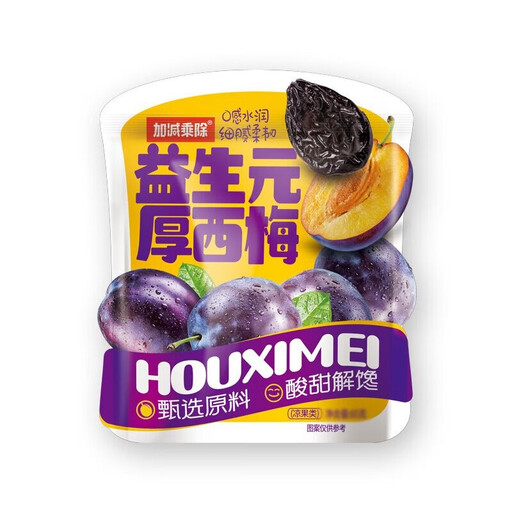 Image unavailable
Jia Jian Cheng Chu Prebiotic Thickened, prunes 65 g
The 65 g pack could be a handy option if you want to take a snack along for match night. If sugars are your priority, check the packaging: the product information lists fructose syrup as an ingredient.
View on Joybuy
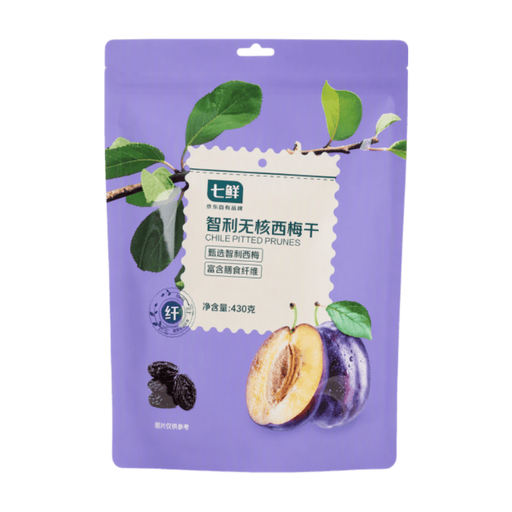 Image unavailable
7FRESH, pitted prunes 430 g
The 430 g pack is worth considering if you’re planning to share dried fruit. The product information lists plums as the only ingredient, but if sugars matter to you, check the “of which sugars” figure too.
View on Joybuy
 Image unavailable
Haoxiangni Red Dates, pitted Grade 2, 500 g
This 500 g pack is another dried fruit option to share as a snack. The product information lists a single ingredient, but also gives a sugar content worth checking before you buy if this is important to you.
View on Joybuy
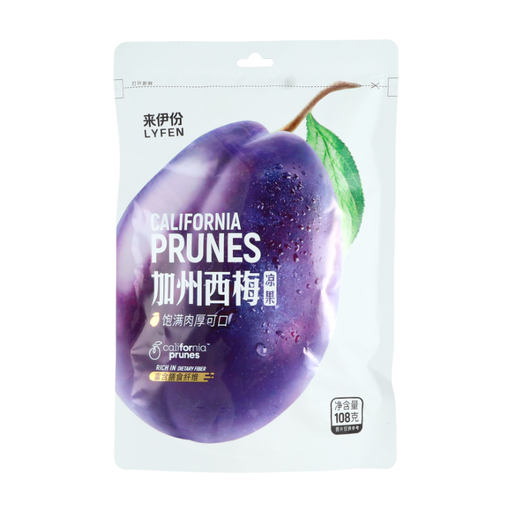 Image unavailable
LYFEN California, dried plums 108 g
The 108 g pack could be an option for a match-night snack. Before choosing it based on sugars or salt, check the packaging: the associated product information lists sugar as an ingredient, while the table shows 0 g of sugars per 100 g, and also mentions salt.
View on Joybuy
Frequently asked questions
Are all dried fruit and nuts low in calories?
No. Check the energy value per 100 g for each product. Carrefour and Auchan list 232 kcal per 100 g for Carrefour Bio dried apricots and Auchan prunes, while Auchan roasted almonds with no added salt contain 640 kcal per 100 g.
Does “no added salt” also mean fewer calories?
No. This claim refers to added salt, not the product’s energy content. Check the salt and kcal per 100 g separately.
How do you compare sugars in a dried fruit mix?
Check both the ingredients and the “of which sugars” figure per 100 g. Santé publique France points out that dried fruit is naturally high in sugars; some mixes, such as a TOKAPI product sold by E.Leclerc, also contain sweetened dried cranberries.
What should you check before serving dried fruit and nuts to someone with an allergy?
Check the ingredients and allergen information on the packaging for the exact product. The DGCCRF states that allergenic ingredients must be highlighted on food labels; any warnings about possible traces may vary from one pack to another.


