
Livraison le jour même ou le lendemain

Qualité garantie

Débloquez vos offres de bienvenue: Livraison GRATUITE | Jusqu'à -80 % | 30 jours d'essai gratuits à JoyPlus
Téléchargez l'application
Giving a key to a relative, tenant, home carer or employee should not mean hiding a spare under a plant pot. However, choosing a Master Lock key safe is not simply a matter of counting the dials or judging the appearance of the casing. Where it is installed, its internal capacity and the level of protection required all have a direct impact on everyday use.
Before placing your order, take the time to identify common pitfalls and check a few practical features.
An outdoor key safe with a cover will generally protect the dials from rain, dust and splashes. That does not mean it can remain submerged or exposed to the elements for years without maintenance. For installation on a façade, under a porch or on a gate, check for a protective cover, the design of the casing and how easy the mechanism is to maintain.
A weather-resistant key safe is suitable for sharing access, but it is not a substitute for a fireproof, waterproof safe designed to protect documents or digital media.
A flat key and an access fob do not take up the same amount of space. Large gate remotes, car keys or several keyrings can quickly make a small key box unusable. So check the internal dimensions, not just the external ones.
For an Airbnb rental, second home or home visit, allow enough room to handle the keys without having to force the door open.
A key safe with a code avoids the need to hand out physical keys, but the code must remain confidential and be changed as soon as someone no longer needs access to the property. A biometric lock can speed up access to a safe intended for valuables, but it relies on batteries and requires a back-up solution, such as an emergency key.
The level of protection should match the contents. A combination key box is primarily designed to manage access, while a security safe is intended to protect documents, cash or sensitive equipment.
A wall-mounted installation is suitable for a house, office, workshop or regularly used property. The mounting surface must be sufficiently sturdy, with fixings suitable for the wall, fence or structure concerned. A poorly secured wall-mounted key safe can become the weakest link in the whole setup.
By contrast, a portable key safe with a shackle or cable can be attached to a handle, barrier, gate or rail without permanent drilling. This is a practical solution for temporary rentals, property viewings and occasional visits. However, choose a robust attachment point and make sure the shackle is fully closed.
The internal dimensions show what you will actually be able to store. As a guide, some medium-capacity models can hold several keys or cards, while large-format versions can accommodate up to 10 keys, bulky keyrings and access fobs.
The spacing between the dials, the opening lever and the presence of integrated lighting are just as important as the number of digits. Struggling to open the safe in the dark or while wearing gloves can quickly make access difficult for a carer or professional.
For a safe intended to protect important papers, look for precise information about its fire and water resistance. Master Lock models presented as certified notably mention a UL classification for half-hour fire resistance at 843 °C, as well as ETL verification for certain digital media or for water immersion, depending on the model.
These indications relate to conditions defined by the relevant organisations. They do not guarantee protection against every type of incident and do not make the safe impossible to break into. For jewellery, cash or computers, securing the safe to the floor or a piece of furniture can also reduce the risk of it being carried away.
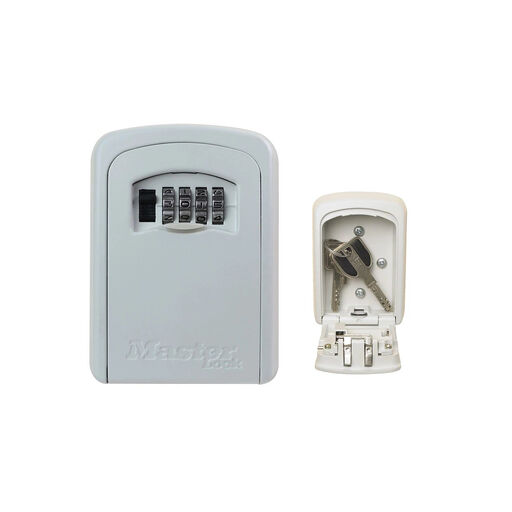
Why this choice suits this profile : Its wall-mounted format, measuring 119 × 85 × 36 mm, and its mounting kit make it a straightforward solution for a first installation near an entrance or in a utility room.
The internal dimensions are specified, while the cover protects the dials from dirt and the elements.
Resettable 4-digit code, metal casing and wall-mounted installation with accessories included.
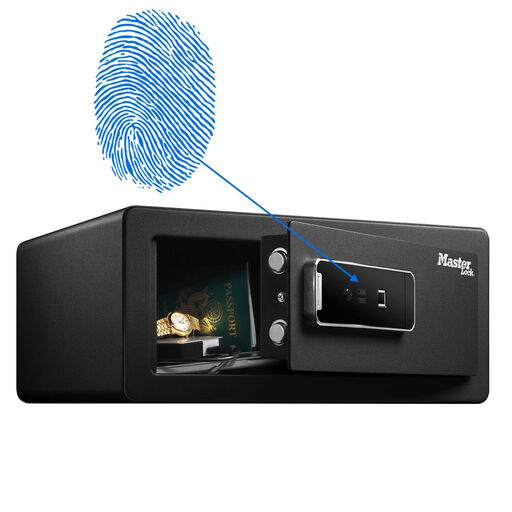
Why this choice suits this profile : This biometric safe is designed for anyone looking to protect jewellery, cash, devices and documents at home or in the office.
It does not rely solely on fingerprint recognition : a back-up key is supplied and it is powered by 4 AA batteries.
Stores up to 30 fingerprints, two motorised bolts, concealed hinge and interior lighting.
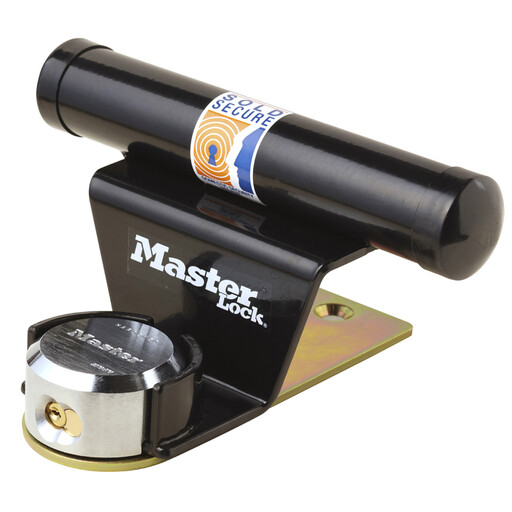
Why this choice suits this profile : This high-security garage lock is designed for garages, workshops and outbuildings that require permanent installation.
The manufacturer states that it has Sold Secure and Secured by Design certifications : these are not based on a simple advertising claim.
Hardened steel, 6-pin cylinder, vinyl cover and security bolts included.
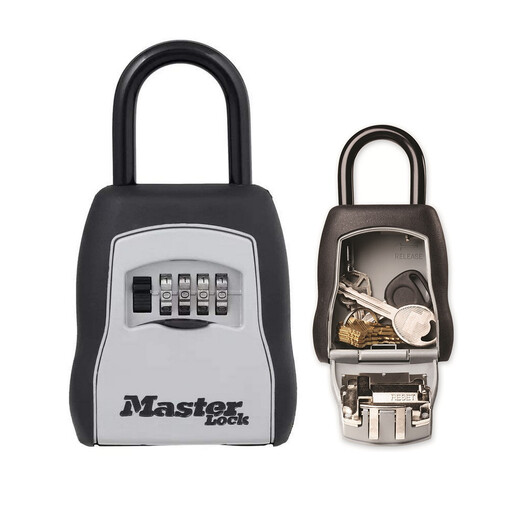
Why this choice suits this profile : Its integrated shackle allows you to move the safe from a handle to a barrier or rail without drilling or using tools.
The format and internal capacity are clearly specified : 74 × 68 × 30 mm, providing enough space for several keys or access cards.
Resettable 4-digit combination, metal casing and protective cover for indoor and outdoor use.
We have put together a complete, real-time updated list of products that meet these demanding selection criteria and European security standards.
Models with a metal casing and a cover or protective flap are designed for indoor and outdoor use. However, they should be installed in a suitable location, inspected regularly and protected from the build-up of dirt. Weather resistance does not mean that the safe can withstand prolonged immersion.
A combination key box is mainly used to share a key or access card. A biometric safe is more suited to storing valuables and operates on batteries. For sensitive documents, a fireproof and waterproof safe with a key or combination lock may be more appropriate, depending on the certifications required and the capacity needed.
Routine maintenance is generally limited to cleaning with a soft cloth. Mechanical combination models do not require batteries. Versions equipped with illuminated dials or a biometric system run on batteries, whose lifespan depends on how often they are used and the type of mechanism.