
Livraison le jour même ou le lendemain

Qualité garantie

Débloquez vos offres de bienvenue: Livraison GRATUITE | Jusqu'à -80 % | 30 jours d'essai gratuits à JoyPlus
Téléchargez l'application
A Master Lock safe can protect important documents, digital media, cash or small electronic devices. But not every model is designed for the same threats. A portable safe with a cable, intended for a hotel room, is no substitute for a fire-resistant model bolted to the floor in a home.
Before comparing prices, take a moment to avoid three common mistakes:
To protect documents, look for precise information on duration, temperature and the type of content involved. The specifications for some Master Lock safes mention a UL classification for 30 minutes of fire resistance at 843 °C. Other models claim one hour at 927 °C.
Digital media may have specific protection. Several models display an ETL verification for CDs, DVDs, USB sticks or memory cards. This indication doesn't automatically mean that all electronic devices are protected.
For a waterproof safe, also check the details of the claim: complete immersion, defined water depth or precise duration. This information is far more meaningful than a vague marketing statement like "water-resistant".
A 5-litre model can hold passports, deeds, contracts and a few USB sticks. For larger files, an 18.5 or 23-litre safe will give you more room.
Measure your items before ordering:
A safe intended for home or office use should also be able to fit in a cupboard, under a desk or next to a fixed piece of furniture. Check its depth, the lid opening angle and access to the keypad.
The right choice depends mainly on how often you'll use it and how you manage access:
Never store the code or emergency keys inside the safe. For family or business use, establish a clear and secure procedure for keeping access methods safe.
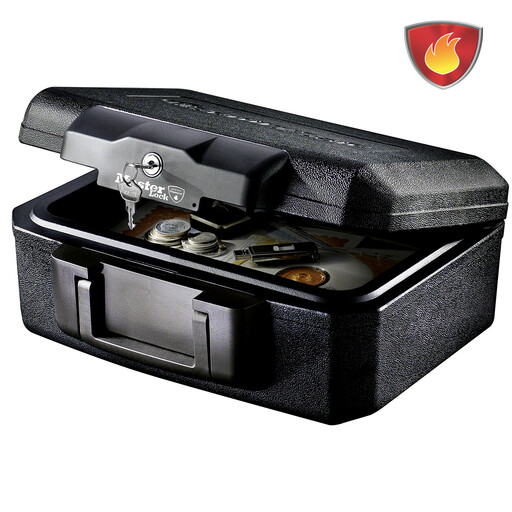
Why it suits this profile: With its 5-litre capacity and key lock, this safe offers a practical first layer of protection for personal documents, passports and digital media.
The specification details internal dimensions of 8.9 × 30.5 × 19.1 cm and a UL classification of 30 minutes at 843 °C, rather than relying on a vague promise.
Portable format, two keys included and claimed protection for documents as well as digital media.
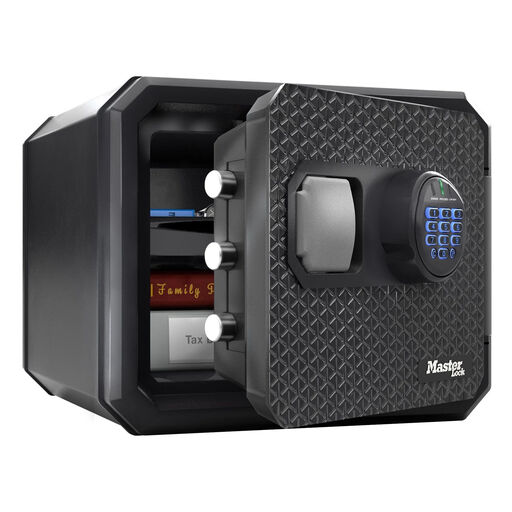
Why it suits this profile: This model is ideal for an office or home where you need to store files, valuables and digital media in an organised way.
The specification clearly distinguishes between fire resistance, water resistance and impact protection during a fire. Floor fixing, using the supplied kit, also reduces the risk of the safe being carried away.
Claimed fire resistance for one hour at 927 °C, backlit keypad, three automatic locking bolts, interior light and adjustable shelf.
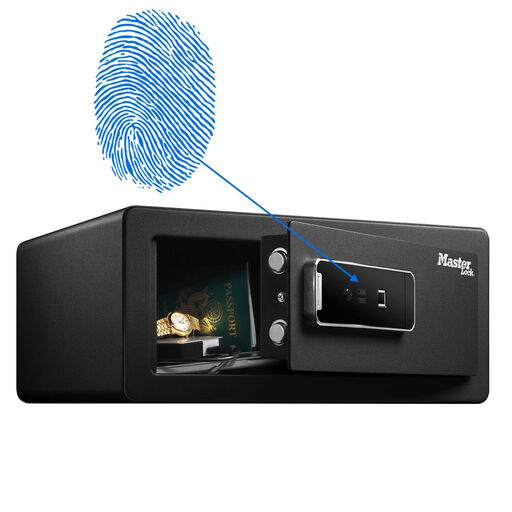
Why it suits this profile: If you need frequent access to jewellery, cash, devices or files, a biometric safe installed at home or in the office can save you time.
The emergency key means you won't be locked out if the battery dies or fingerprint recognition fails. Fixing hardware is also supplied.
Up to 30 fingerprints can be stored, two motorised locking bolts, concealed hinge, interior light and protective floor mat.
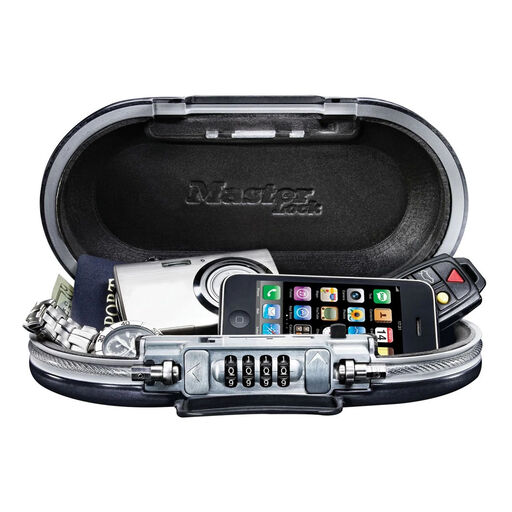
Why it suits this profile: Its 0.7-litre capacity is enough for passports, cards, cash and small devices, whether travelling, in student accommodation or at work.
The specification clearly states this is temporary protection against opportunistic theft. The 50 cm cable must be attached to a solid, immovable object; it isn't presented as unbreakable.
Resettable four-dial combination, water-resistant shell, shock-absorbing foam and pass-through for charging cable or headphones.
We've selected a full range, updated in real time, of products that meet these demanding criteria and European safety standards.
For a safe installed at home or in the office, choose a dry, discreet location that's difficult to move. Follow the fixing instructions carefully so you don't compromise the claimed water or fire performance. A portable model shouldn't be treated as a permanent installation.
With an electronic or biometric lock:
Clean the exterior with a slightly damp, soft cloth. Avoid abrasive products and never attempt to open a safe after a fire or prolonged exposure to heat.
Some models have an interior large enough to hold A4 sheets flat. However, you need to compare the internal dimensions, not just the stated capacity in litres. Safes of 7.8, 18.5 or 23 litres generally offer more space than smaller 5-litre models.
A key lock doesn't rely on batteries, while a code makes controlled sharing between multiple users easier. Fingerprint access is quick but requires a working power supply and an emergency key. The choice should primarily match how often you'll open it and how many users there are.
Power consumption is generally limited to the batteries for the keypad or biometric reader. It varies depending on the model and frequency of use. Plan for regular replacement, keep an eye on the charge indicator and store the emergency access procedure in a separate, secure place.